


Dim Light at Night Exposure Induces Cold Hyperalgesia and Mechanical Allodynia in Male Mice
- PMID: 32201267
- PMCID: PMC7176554
- DOI: 10.1016/j.neuroscience.2020.03.022
Dim Light at Night Exposure Induces Cold Hyperalgesia and Mechanical Allodynia in Male Mice
Abstract
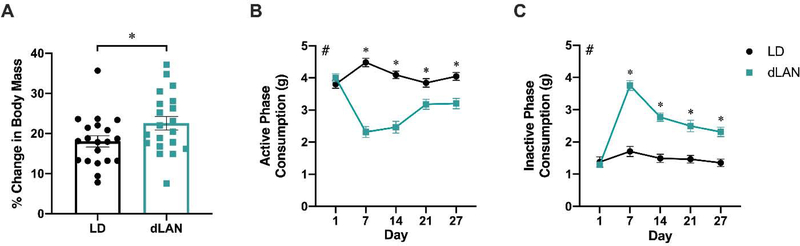
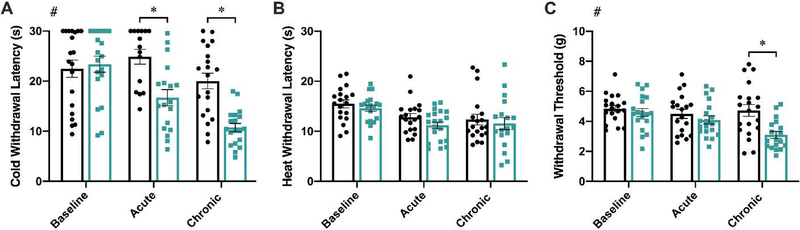
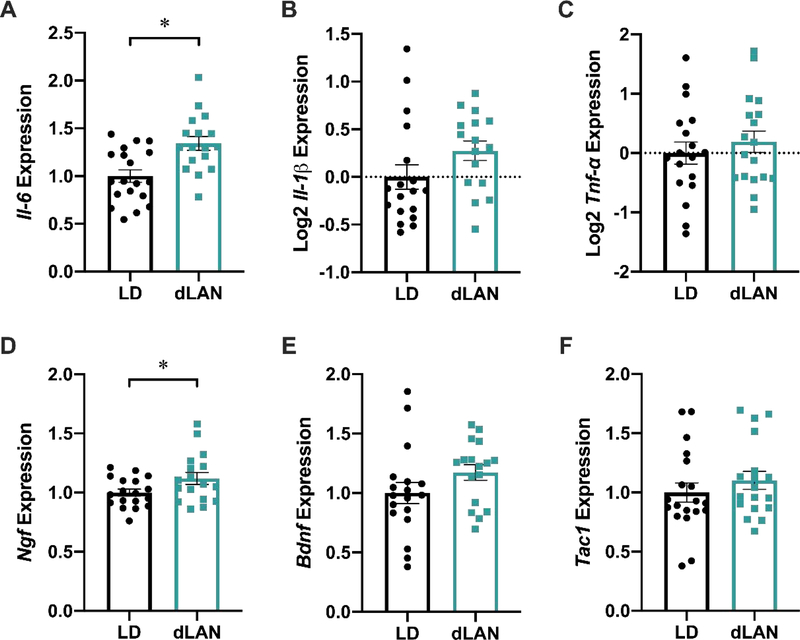
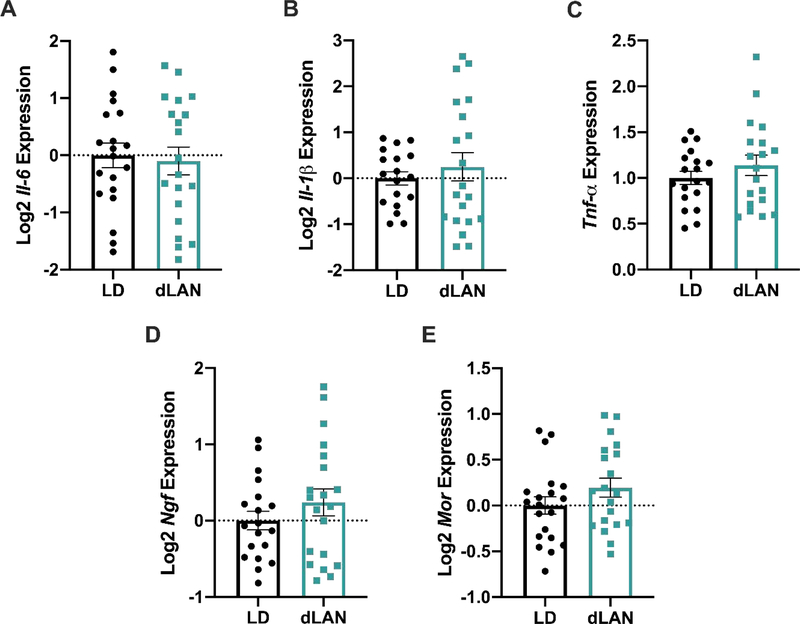
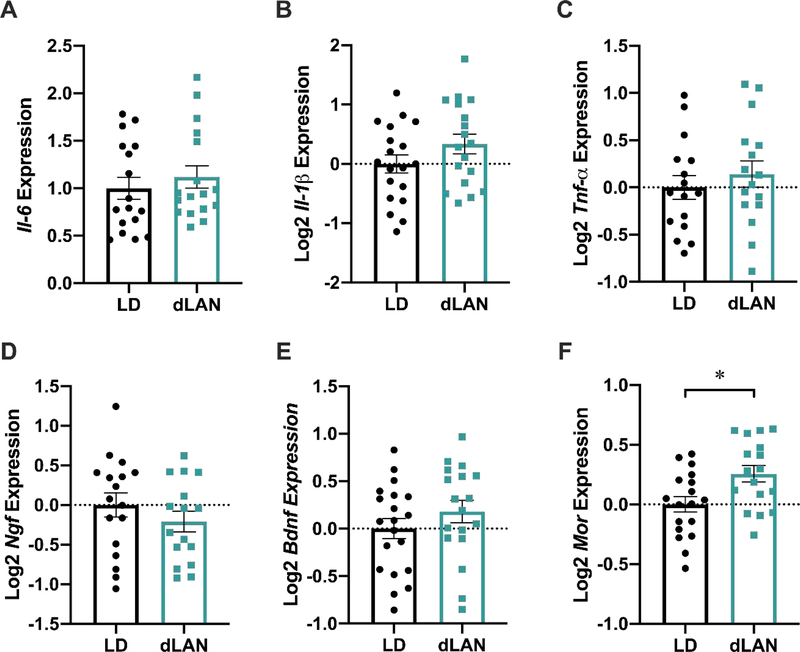
The growing presence of artificial lighting across the globe presents a number of challenges to human and ecological health despite its societal benefits. Exposure to artificial light at night, a seemingly innocuous aspect of modern life, disrupts behavior and physiological functions. Specifically, light at night induces neuroinflammation, which is implicated in neuropathic and nociceptive pain states, including hyperalgesia and allodynia. Because of its influence on neuroinflammation, we investigated the effects of dim light at night exposure on pain responsiveness in male mice. In this study, mice exposed to four days of dim (5 lux) light at night exhibited cold hyperalgesia. Further, after 28 days of exposure, mice exhibited both cold hyperalgesia and mechanical allodynia. No heat/hot hyperalgesia was observed in this experiment. Altered nociception in mice exposed to dim light at night was concurrent with upregulated interleukin-6 and nerve growth factor mRNA expression in the medulla and elevated μ-opioid receptor mRNA expression in the periaqueductal gray region of the brain. The current results support the relationship between disrupted circadian rhythms and altered pain sensitivity. In summary, we observed that dim light at night induces cold hyperalgesia and mechanical allodynia, potentially through elevated neuroinflammation and dysregulation of the endogenous opioid system.
Keywords: allodynia; hyperalgesia; light at night; neuroinflammation; opioid; pain.
Copyright © 2020 IBRO. Published by Elsevier Ltd. All rights reserved.
Figures
References
-
- Angst MS, Clark JD (2006) Opioid-induced hyperalgesia: A qualitative systematic review. Anesthesiol 104:570–587. - PubMed
-
- Arruda JL, Sweitzer S, Rutkowski MD, DeLeo JA (2000) Intrathecal anti-il-6 antibody and igg attenuates peripheral nerve injury-induced mechanical allodynia in the rat: Possible immune modulation in neuropathic pain. Brain Res 879:216–225. - PubMed
-
- Bannon AW, Malmberg AB (2007) Models of nociception: Hot plate, tail flick, and formalin tests in rodents. Curr Protoc Neurosci 41:8.9.1–8.9.16. - PubMed
-
- Bedrosian TA, Fonken LK, Walton JC, Haim A, Nelson RJ (2011a) Dim light at night provokes depression-like behaviors and reduces ca1 dendritic spine density in female hamsters. Psychoneuroendocrinology 36:1062–1069. - PubMed
Publication types
MeSH terms
Grants and funding
LinkOut - more resources
Full Text Sources
Other Literature Sources
Medical
Molecular Biology Databases
Research Materials
