The global and regional burden of genital ulcer disease due to herpes simplex virus: a natural history modelling study
- PMID: 32201620
- PMCID: PMC7061890
- DOI: 10.1136/bmjgh-2019-001875
The global and regional burden of genital ulcer disease due to herpes simplex virus: a natural history modelling study
Abstract
Introduction: Herpes simplex virus (HSV) infection can cause painful, recurrent genital ulcer disease (GUD), which can have a substantial impact on sexual and reproductive health. HSV-related GUD is most often due to HSV type 2 (HSV-2), but may also be due to genital HSV type 1 (HSV-1), which has less frequent recurrent episodes than HSV-2. The global burden of GUD has never been quantified. Here we present the first global and regional estimates of GUD due to HSV-1 and HSV-2 among women and men aged 15-49 years old.
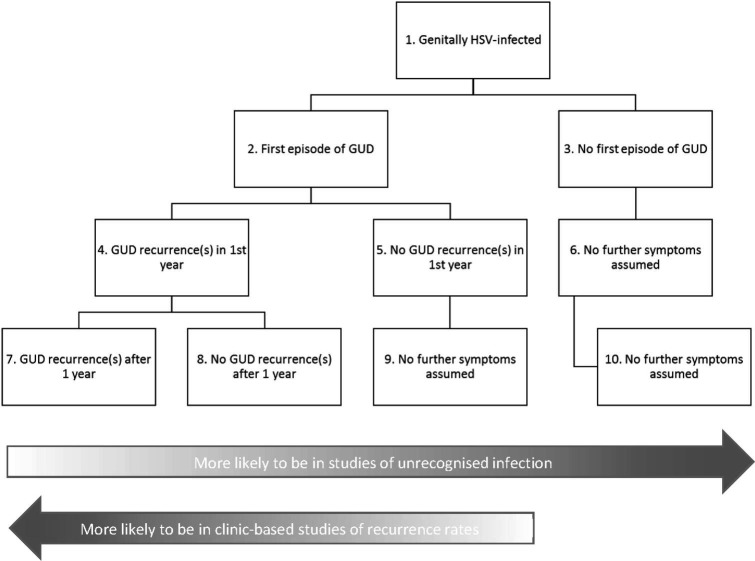
Methods: We developed a natural history model reflecting the clinical course of GUD following HSV-2 and genital HSV-1 infection, informed by a literature search for data on model parameters. We considered both diagnosed and undiagnosed symptomatic infection. This model was then applied to existing infection estimates and population sizes for 2016. A sensitivity analysis was carried out varying the assumptions made.
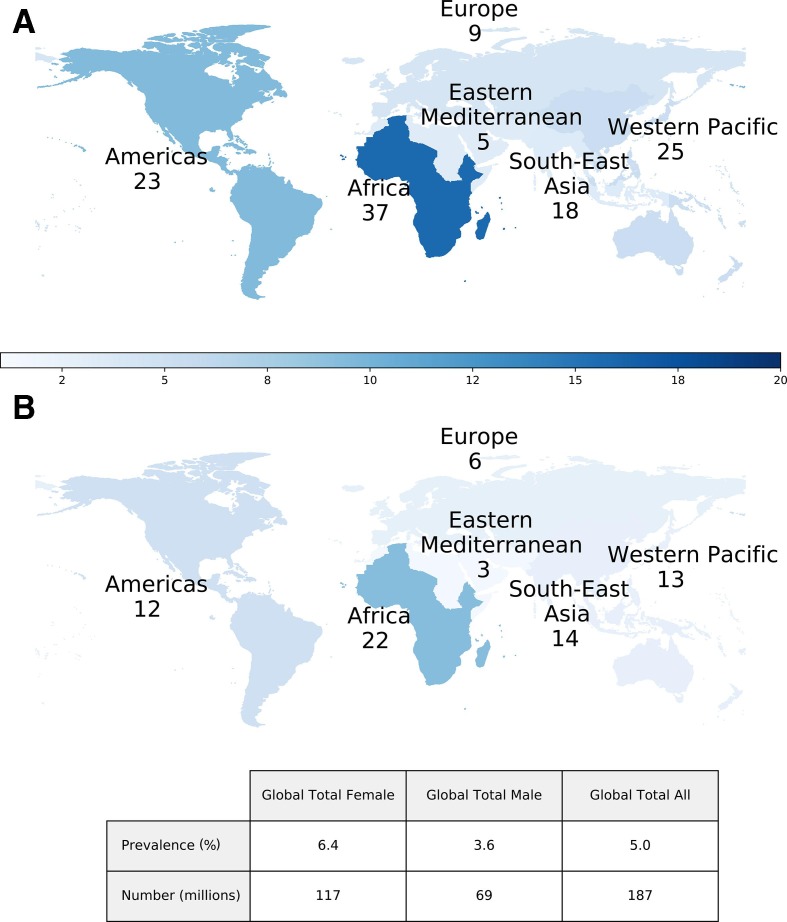
Results: We estimated that 187 million people aged 15-49 years had at least one episode of HSV-related GUD globally in 2016: 5.0% of the world's population. Of these, 178 million (95% of those with HSV-related GUD) had HSV-2 compared with 9 million (5%) with HSV-1. GUD burden was highest in Africa, and approximately double in women compared with men. Altogether there were an estimated 8 billion person-days spent with HSV-related GUD globally in 2016, with 99% of days due to HSV-2. Taking into account parameter uncertainty, the percentage with at least one episode of HSV-related GUD ranged from 3.2% to 7.9% (120-296 million). However, the estimates were sensitive to the model assumptions.
Conclusion: Our study represents a first attempt to quantify the global burden of HSV-related GUD, which is large. New interventions such as HSV vaccines, antivirals or microbicides have the potential to improve the quality of life of millions of people worldwide.
Keywords: epidemiology; infections, diseases, disorders, injuries.
© Author(s) (or their employer(s)) 2020. Re-use permitted under CC BY. Published by BMJ.
Conflict of interest statement
Competing interests: KJL reports grants from WHO during the conduct of the study and outside the submitted work. CJo reports grants from Sanofi Pasteur, the US National Institutes of Health, and the US Centers for Disease Control and Prevention, consultancy fees from Novavax, and royalties from UpToDate, outside the submitted work. In addition, CJo has a patent 'Epitopes cross-reactive between HSV-1, HSV-2 and VZV' issued. NW reports grants from the National Institute for Health Research during the conduct of the study and grants from Pfizer outside the submitted work. M-CB reports grants and other from WHO outside the submitted work. SLG reports grants from the National Institute of Allergy and Infectious Diseases during the conduct of the study.
Figures
References
-
- Durukan D, Fairley CK, Bradshaw CS, et al. Increasing proportion of herpes simplex virus type 1 among women and men diagnosed with first-episode anogenital herpes: a retrospective observational study over 14 years in Melbourne, Australia. Sex Transm Infect 2019;95:307–13. 10.1136/sextrans-2018-053830 - DOI - PubMed
Publication types
MeSH terms
Grants and funding
LinkOut - more resources
Full Text Sources
Other Literature Sources
Medical