Impact of the antidepressant citalopram on the behaviour of two different life stages of brown trout
- PMID: 32201650
- PMCID: PMC7073243
- DOI: 10.7717/peerj.8765
Impact of the antidepressant citalopram on the behaviour of two different life stages of brown trout
Abstract
Background: Over the last two decades, there has been a constant increase in prescription rates of antidepressants. In parallel, neuroactive pharmaceuticals are making their way into aquatic environments at increasing concentrations. Among the antidepressants detected in the environment citalopram, a selective serotonin reuptake inhibitor, is one of the most commonly found. Given citalopram is specifically designed to alter mood and behaviour in humans, there is growing concern it can adversely affect the behaviour on non-target wildlife.
Methods: In our study, brown trout were exposed to citalopram (nominal concentrations: 1, 10, 100, 1000 µg/L) in two different life stages. Larvae were exposed at 7 and 11 °C from the eyed ova stage until 8 weeks post yolk sac consumption, and juvenile brown trout were exposed for 4 weeks at 7 °C. At both stages we measured mortality, weight, length, tissue citalopram concentration, behaviour during exposure and behaviour in a stressfull environment. For brown trout larvae additionally hatching rate and heart rate, and for juvenile brown trout the tissue cortisol concentration were assessed.
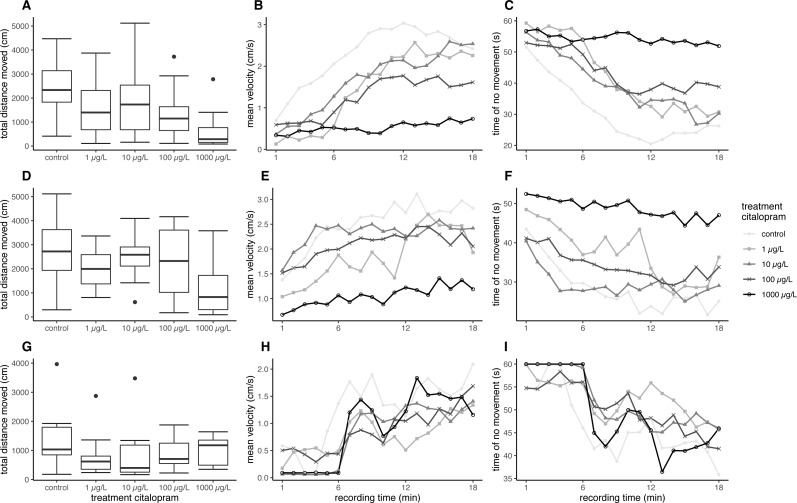
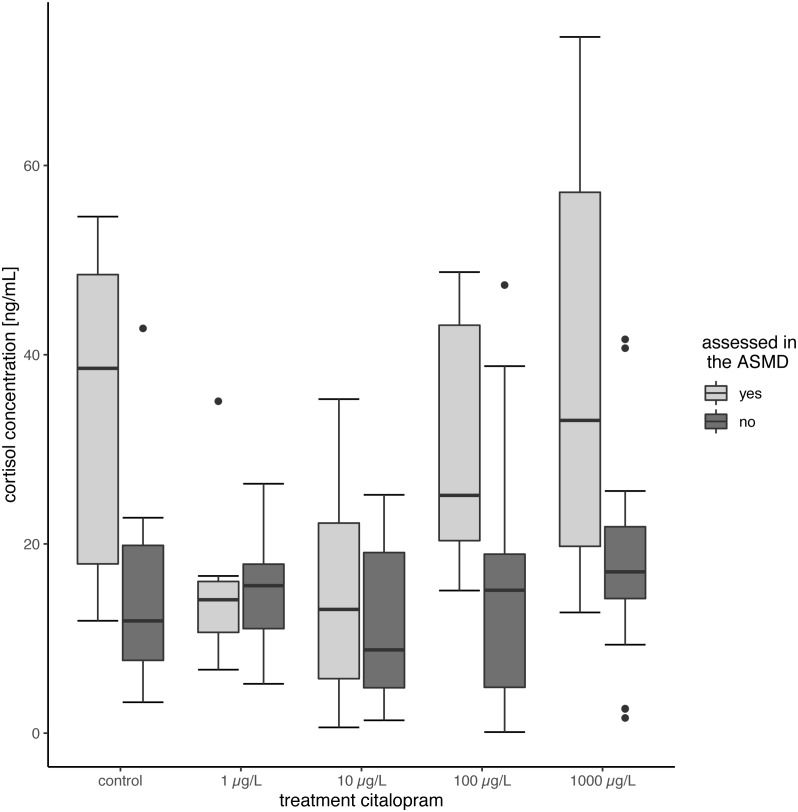
Results: During the exposure, both larvae and juvenile fish exposed to the highest test concentration of citalopram (1 mg/L) had higher swimming activity and spent longer in the upper part of the aquaria compared to control fish, which is an indicator for decreased anxiety. Most probably due to the higher swimming activity during the exposure, the juveniles and larvae exposed to 1 mg/L citalopram showed decreased weight and length. Additionally, in a stressful artificial swimming measurement device, brown trout larvae displayed the anxiolytic effect of the antidepressant by reduced swimming activity during this stress situation, already at concentrations of 100 µg/L citalopram. Chemical analysis of the tissue revealed rising citalopram tissue concentrations with rising exposure concentrations. Tissue concentrations were 10 times higher in juvenile fish compared to brown trout larvae. Fish plasma concentrations were calculated, which exceeded human therapeutic levels for the highest exposure concentration, matching the behavioural results. Developmental parameters like hatching rate and heart rate, as well as mortality and tissue cortisol content were unaffected by the antidepressant. Overall, we could trace the pharmacological mode of action of the antidepressant citalopram in the non-target organism brown trout in two different life stages.
Keywords: Antidepressant; Behaviour; Brown trout; Citalopram; Corisol; Fish; Pharmaceutical; Stress hormone.
©2020 Ziegler et al.
Conflict of interest statement
The authors declare there are no competing interests.
Figures
References
-
- Acuna V, Von Schiller D, Garcia-Galan MJ, Rodriguez-Mozaz S, Corominas L, Petrovic M, Poch M, Barcelo D, Sabater S. Occurrence and in-stream attenuation of wastewater-derived pharmaceuticals in Iberian rivers. Science of the Total Environment. 2015;503–504:133–141. doi: 10.1016/j.scitotenv.2014.05.067. - DOI - PubMed
-
- Alvarez-Munoz D, Rodriguez-Mozaz S, Maulvault AL, Tediosi A, Fernandez-Tejedor M, Van den Heuvel F, Kotterman M, Marques A, Barcelo D. Occurrence of pharmaceuticals and endocrine disrupting compounds in macroalgaes, bivalves, and fish from coastal areas in Europe. Environmental Research. 2015;143:56–64. doi: 10.1016/j.envres.2015.09.018. - DOI - PubMed
-
- aus der Beek T, Grüttner G, Carius A. Pharmaceuticals in the environment: global occurence and potential cooperative action under the Strategic Appoach to International Chemicals Management (SAICM), Agency GE, editor. German Environment Agency; Dessau-Roßlau: 2016.
-
- Demin KA, Kolesnikova TO, Khatsko SL, Meshalkina DA, Efimova EV, Morzherin YY, Kalueff AV. Acute effects of amitriptyline on adult zebrafish: potential relevance to antidepressant drug screening and modeling human toxidromes. Neurotoxicology and Teratology. 2017;62:27–33. doi: 10.1016/j.ntt.2017.04.002. - DOI - PubMed
LinkOut - more resources
Full Text Sources