Associations Between Screen Use and Child Language Skills: A Systematic Review and Meta-analysis
- PMID: 32202633
- PMCID: PMC7091394
- DOI: 10.1001/jamapediatrics.2020.0327
Associations Between Screen Use and Child Language Skills: A Systematic Review and Meta-analysis
Erratum in
-
Error in Figures.JAMA Pediatr. 2022 May 1;176(5):528. doi: 10.1001/jamapediatrics.2022.0738. JAMA Pediatr. 2022. PMID: 35344004 Free PMC article. No abstract available.
Abstract
Importance: There is considerable public and scientific debate as to whether screen use helps or hinders early child development, particularly the development of language skills.
Objective: To examine via meta-analyses the associations between quantity (duration of screen time and background television), quality (educational programming and co-viewing), and onset of screen use and children's language skills.
Data sources: Searches were conducted in MEDLINE, Embase, and PsycINFO in March 2019. The search strategy included a publication date limit from 1960 through March 2019.
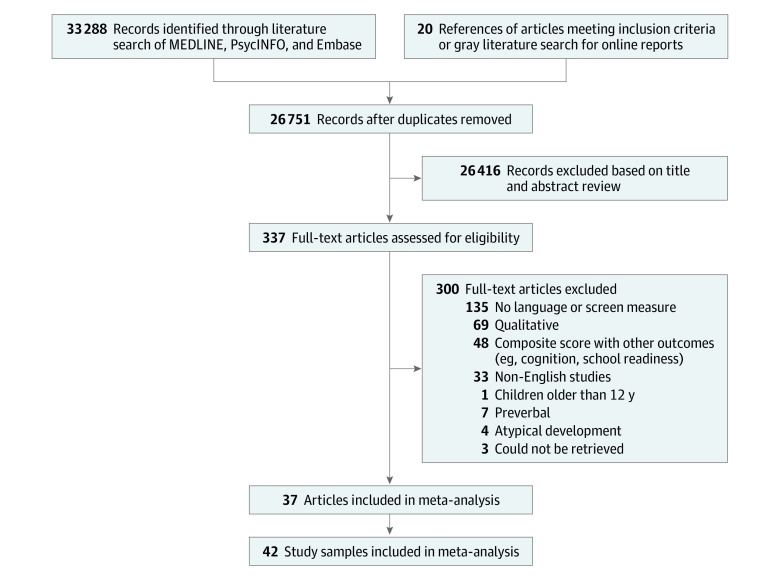
Study selection: Inclusion criteria were a measure of screen use; a measure of language skills; and statistical data that could be transformed into an effect size. Exclusion criteria were qualitative studies; child age older than 12 years; and language assessment preverbal.
Data extraction and synthesis: The following variables were extracted: effect size, child age and sex, screen measure type, study publication year, and study design. All studies were independently coded by 2 coders and conducted in accordance with the Preferred Reporting Items for Systematic Reviews and Meta-Analyses guidelines.
Main outcomes and measures: Based on a priori study criteria, quantity of screen use included duration of screen time and background television, quality of screen use included co-viewing and exposure to educational programs, and onset of screen use was defined as the age children first began viewing screens. The child language outcome included assessments of receptive and/or expressive language.
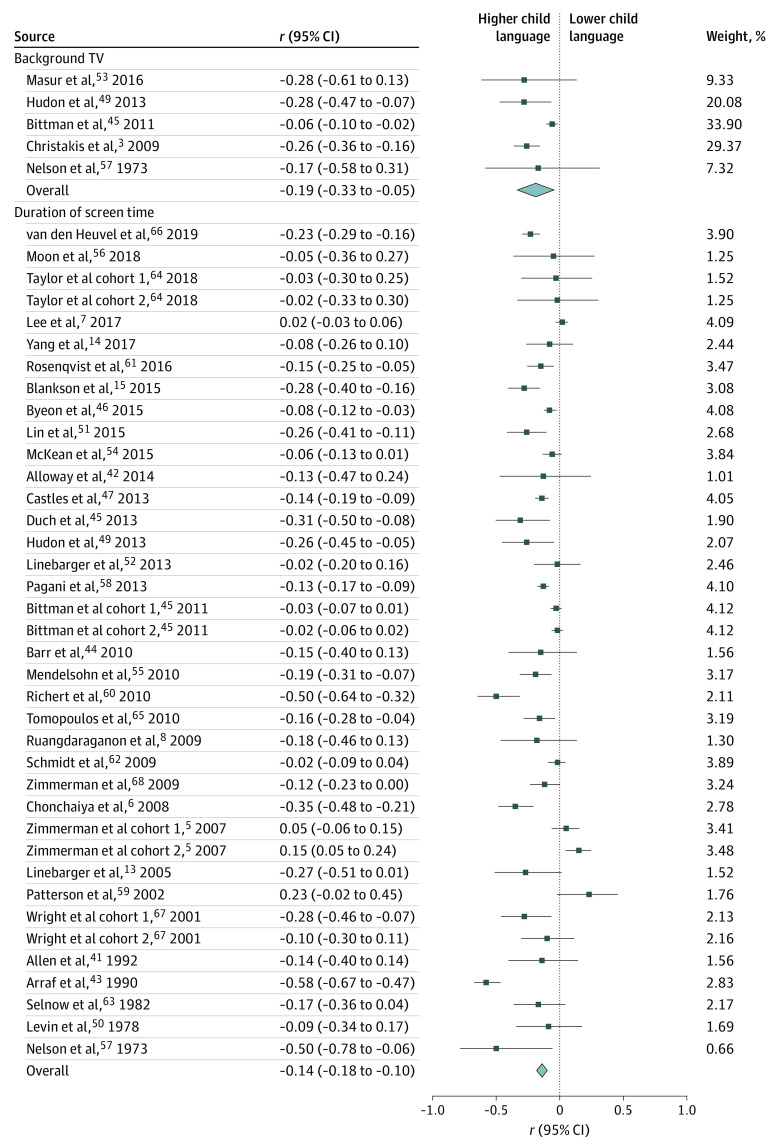
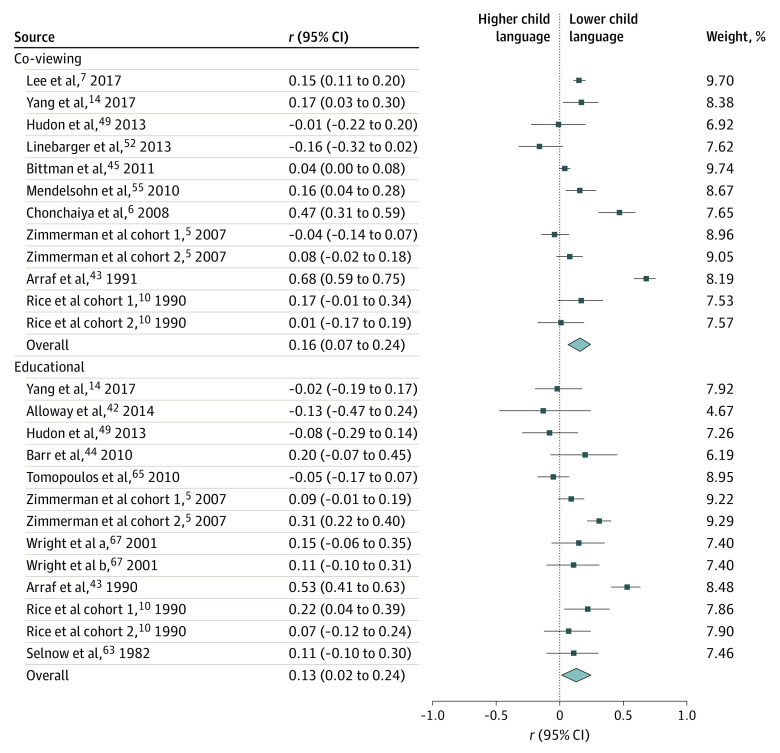
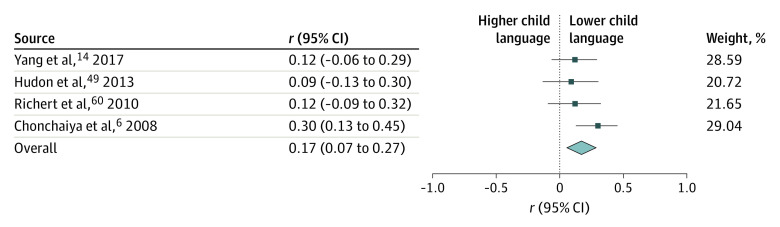
Results: Participants totaled 18 905 from 42 studies included. Effect sizes were measured as correlations (r). Greater quantity of screen use (hours per use) was associated with lower language skills (screen time [n = 38; r = -0.14; 95% CI, -0.18 to -0.10]; background television [n = 5; r = -0.19; 95% CI, -0.33 to -0.05]), while better-quality screen use (educational programs [n = 13; r = 0.13; 95% CI, 0.02-0.24]; co-viewing [n = 12; r = 0.16; 95% CI, 0.07-.24]) were associated with stronger child language skills. Later age at screen use onset was also associated with stronger child language skills [n = 4; r = 0.17; 95% CI, 0.07-0.27].
Conclusions and relevance: The findings of this meta-analysis support pediatric recommendations to limit children's duration of screen exposure, to select high-quality programming, and to co-view when possible.
Conflict of interest statement
Figures
References
-
- Rideout V. The Common Sense Census: Media Use by kids Zero to Eight. Common Sense Media; 2017.