Review
. 2020 Apr;52(4):363-369.
doi: 10.1038/s41588-020-0596-3. Epub 2020 Mar 23.

Modeling the complex genetic architectures of brain disease

Affiliations
Review

Modeling the complex genetic architectures of brain disease

Michael B Fernando et al. Nat Genet. 2020 Apr.

Abstract

The genetic architecture of each individual comprises common and rare variants that, acting alone and in combination, confer risk of disease. The cell-type-specific and/or context-dependent functional consequences of the risk variants linked to brain disease must be resolved. Coupling human induced pluripotent stem cell (hiPSC)-based technology with CRISPR-based genome engineering facilitates precise isogenic comparisons of variants across genetic backgrounds. Although functional-validation studies are typically performed on one variant in isolation and in one cell type at a time, complex genetic diseases require multiplexed gene perturbations to interrogate combinations of genes and resolve physiologically relevant disease biology. Our aim is to discuss advances at the intersection of genomics, hiPSCs and CRISPR. A better understanding of the molecular mechanisms underlying disease risk will improve genetic diagnosis, drive phenotypic drug discovery and pave the way toward precision medicine.


Conflict of interest statement

COMPETING FINANCIAL INTEREST STATEMENT

The authors declare no conflicts of interest.

Figures
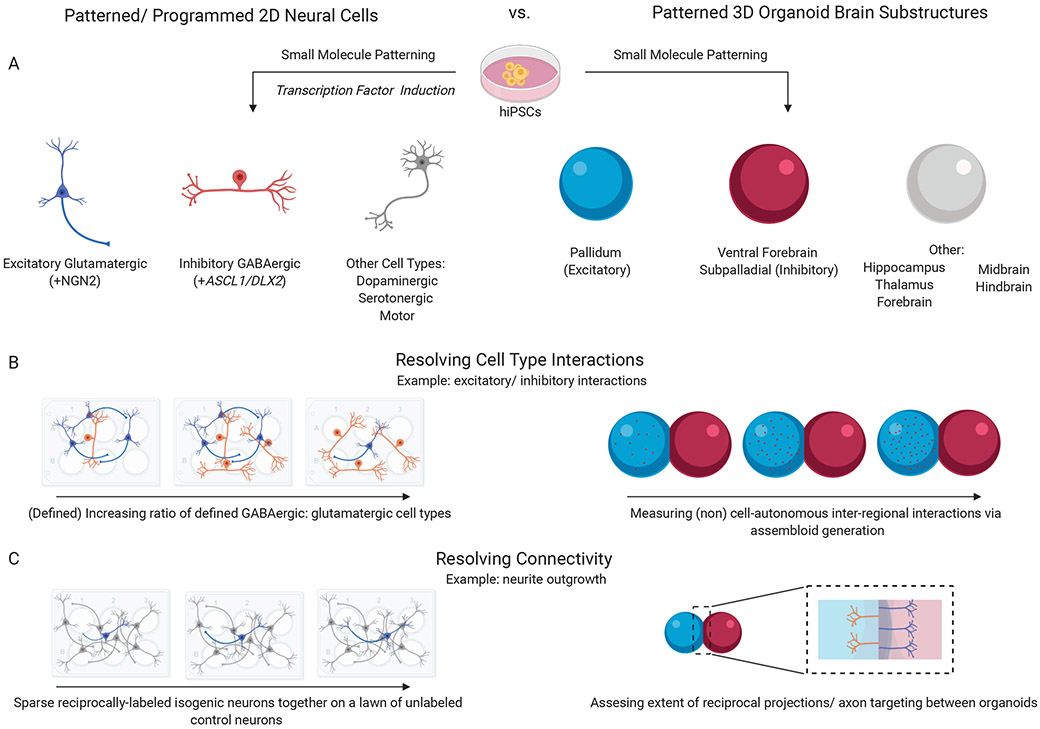
Figure 1:
Figure 1:. 2D vs. 3D culture systems to resolve cell type effects and interactions.
A, Schematic of types of 2D cell cultures and 3D substructures via small molecule patterning or transcription factor induction (2D only). B, Example assays to resolve cell type interactions. 2D-defined generation of glutamatergic and GABAergic cultures and 3D fusion of excitatory and inhibitory organoids (assembloid). C. Example assays to resolve connectivity in 2D sparsely seeded isogenic neurons on unlabeled control cells, or 3D organoid projection/axon targeting assessment. All figures were created using Biorender.com.
Figure 2:
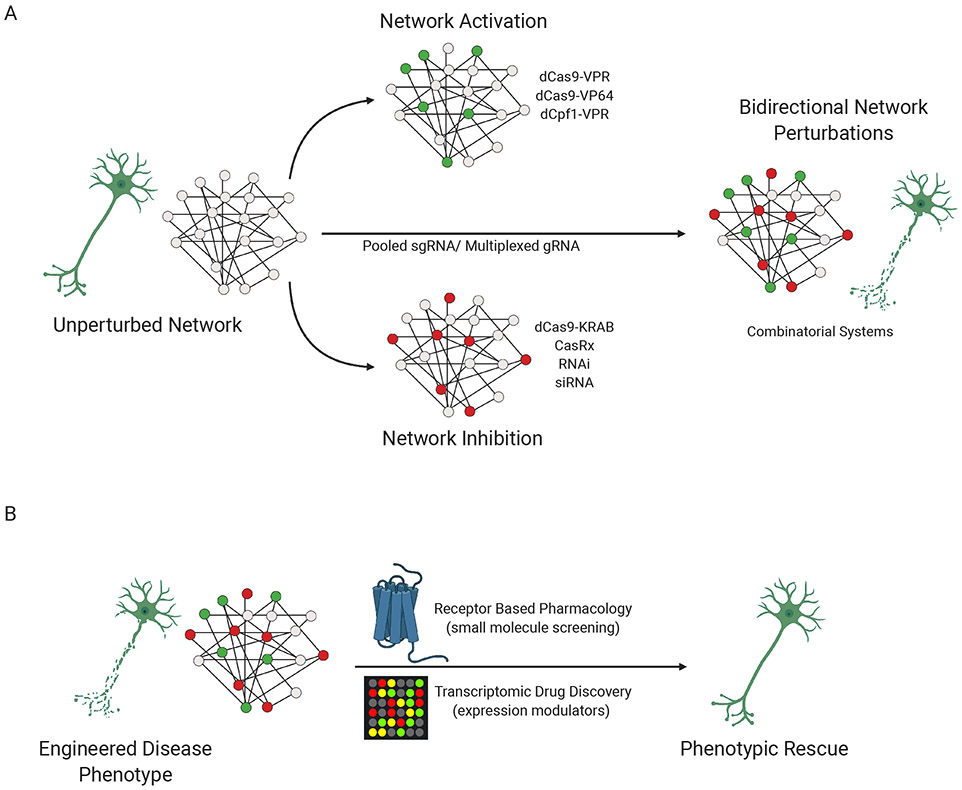
Figure 2:. Unidirectional and bidirectional network perturbations.
A, The workflow schematic represents a concept of using modulatory and combinatorial CRISPR systems to perturb gene networks unidirectionally, and potentially bidirectionally. B, Phenotypic rescue based drug screens originating from CRISPR-engineered disease phenotypes.
FIGURE 3:
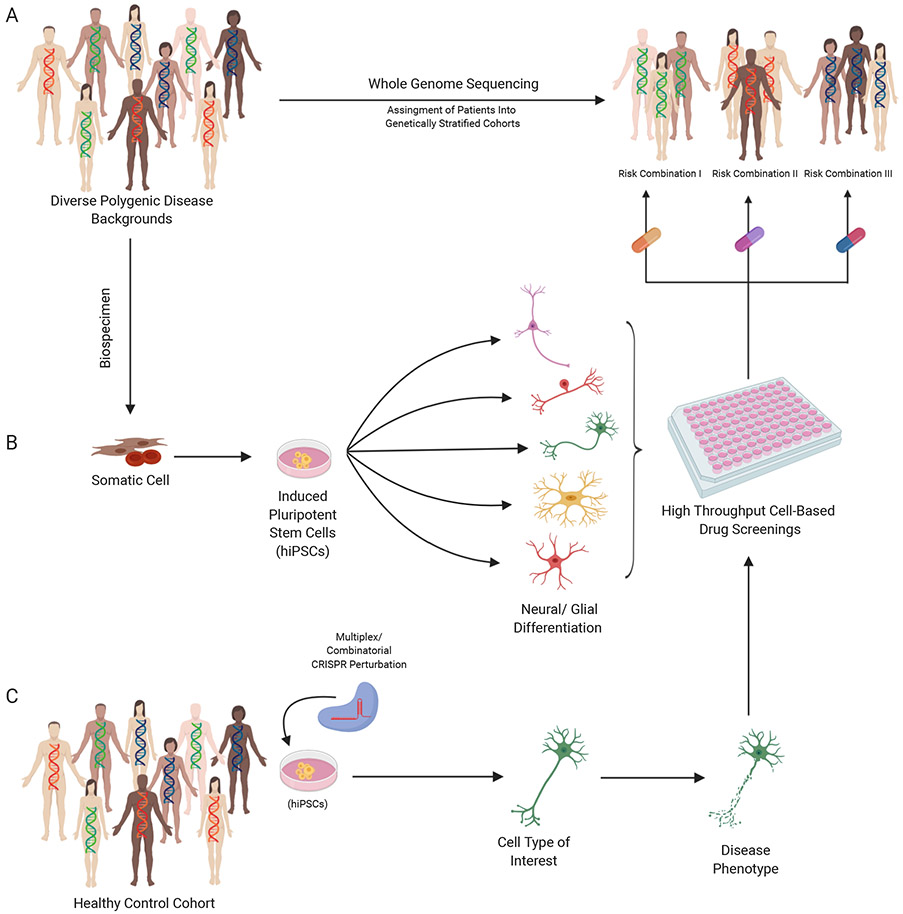
FIGURE 3:. Coupling hiPSC and CRISPR platforms to accelerate functional validations of brain disease risk loci.
The rising reality of precision medicine via the integration of A, whole-genome sequencing to stratify patients with overlapping risk combinations into genetically defined cohorts, B, hiPSCs platforms to obtain patient-specific cell types and screened for phenotypic rescue, C, CRISPR-mediated network perturbations for engineered risk combinations and systematic cell-based drug screening, ultimately for genetically targeted therapeutics.

References

    1. Sullivan PF & Geschwind DH Defining the Genetic, Genomic, Cellular, and Diagnostic Architectures of Psychiatric Disorders. Cell 177, 162–183 (2019). - PMC - PubMed
    1. Flint J & Ideker T The great hairball gambit. PLoS Genet 15, e1008519 (2019). - PMC - PubMed
    1. Finucane HK et al. Heritability enrichment of specifically expressed genes identifies disease-relevant tissues and cell types. Nat Genet 50, 621–629 (2018). - PMC - PubMed
    1. Skene NG et al. Genetic identification of brain cell types underlying schizophrenia. Nat Genet 50, 825–833 (2018). - PMC - PubMed
    1. Sims R et al. Rare coding variants in PLCG2, ABI3, and TREM2 implicate microglial-mediated innate immunity in Alzheimer's disease. Nat Genet 49, 1373–1384 (2017). - PMC - PubMed

Publication types

MeSH terms