


Understanding mechanisms of integrated behavioral therapy for co-occurring obesity and depression in primary care: a mediation analysis in the RAINBOW trial
- PMID: 32203569
- PMCID: PMC7963297
- DOI: 10.1093/tbm/ibaa024
Understanding mechanisms of integrated behavioral therapy for co-occurring obesity and depression in primary care: a mediation analysis in the RAINBOW trial
Abstract
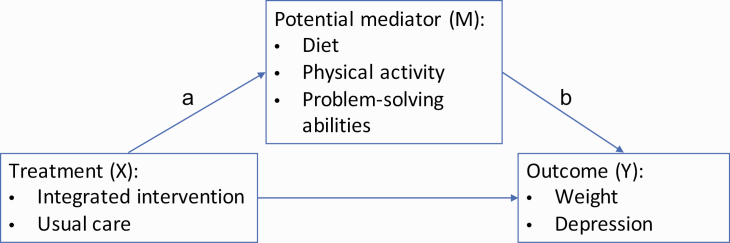
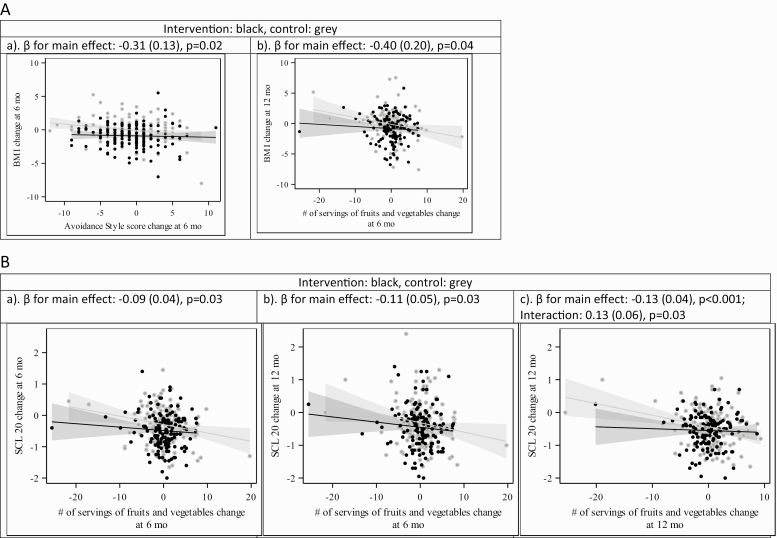
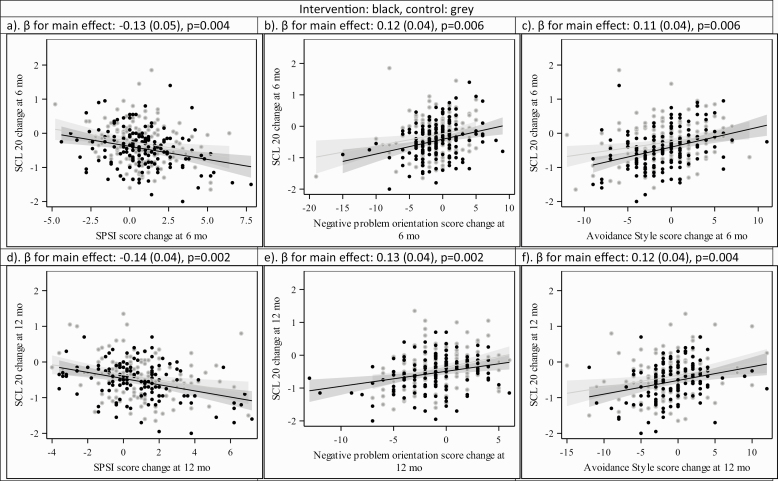
The RAINBOW trial demonstrated that an integrated collaborative care intervention was effective for improving weight and depression. This study examined mediation of the treatment effect by a priori specified lifestyle behaviors and cognitive functioning. Participants were randomized to a 12-month integrated intervention (n = 204) or usual care (n = 205). Body mass index (BMI) and 20-item Depression Symptom Check List (SCL-20) were co-primary outcomes (Y). To examine mediation, we assessed (a) the effect of the integrated intervention (X) on lifestyle behaviors (diet and physical activity) and cognitive functioning (problem-solving; M, X→M path a) and (b) the association of these behaviors with BMI and SCL-20 (M→Y path b). Mediation existed if paths a and b were significant or if path a and the product of coefficients test (paths a and b) were significant. Compared with usual care, the intervention led to significant improvements in leisure time physical activity (201.3 MET minutes/week [SD, 1,457.6]) and total calorie intake (337.4 kcal/day [818.3]) at 6 months but not 12 months (path a). These improvements were not significantly associated with improvements in BMI or SCL-20 (path b). However, avoidant problem-solving style score and increased fruit and vegetable intake significantly correlated with improvements in BMI at 6 and 12 months, respectively. Also, increased fruit and vegetable intake, higher dietary quality, and better problem-solving abilities significantly correlated with improvements in SCL-20 at 6 and 12 months. These findings did not support the hypothesized mediation, but suggest lifestyle behaviors and cognitive functioning to target in future intervention optimization.
Keywords: Obesity; depression; health behavior; mediation.
© Society of Behavioral Medicine 2020. All rights reserved. For permissions, please e-mail: journals.permissions@oup.com.
Figures
References
-
- Buttorff C, Ruder T, Bauman M. Multiple chronic conditions in the United States. Santa Monica, CA: RAND; 2017.
-
- Berwick DM, Nolan TW, Whittington J. The triple aim: care, health, and cost. Health Aff (Millwood). 2008;27(3):759–769. - PubMed
-
- Hales CM, Carroll MD, Fryar CD, Ogden CL. Prevalence of obesity among adults and youth: United States, 2015–2016. US Department of Health and Human Services, Centers for Disease Control and Prevention, National Center for Health Statistics NCHS data brief; no. 288 ; DHHS publication; no. (PHS) 2018–1209; 2017.
Publication types
MeSH terms
Grants and funding
LinkOut - more resources
Full Text Sources
Medical
Research Materials
Miscellaneous
