


Liver Transplantation for Pediatric Liver Cancer
- PMID: 32204368
- PMCID: PMC7140094
- DOI: 10.3390/cancers12030720
Liver Transplantation for Pediatric Liver Cancer
Abstract
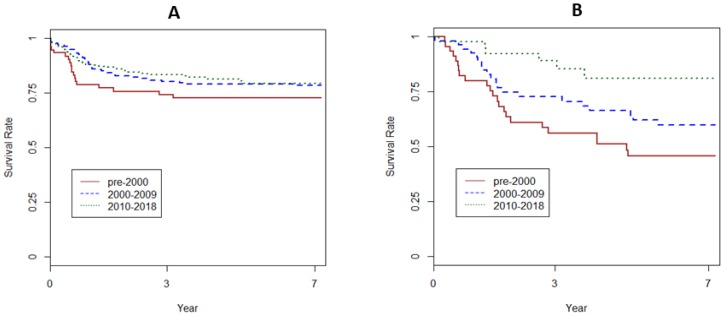
Unresectable hepatocellular carcinoma (HCC) was first removed successfully with total hepatectomy and liver transplantation (LT) in a child over five decades ago. Since then, children with unresectable liver cancer have benefitted greatly from LT and a confluence of several equally important endeavors. Regional and trans-continental collaborations have accelerated the development and standardization of chemotherapy regimens, which provide disease control to enable LT, and also serve as a test of unresectability. In the process, tumor histology, imaging protocols, and tumor staging have also matured to better assess response and LT candidacy. Significant trends include a steady increase in the incidence of and use of LT for hepatoblastoma, and a significant improvement in survival after LT for HCC with each decade. Although LT is curative for most unresectable primary liver sarcomas, such as embryonal sarcoma, the malignant rhabdoid tumor appears relapse-prone despite chemotherapy and LT. Pediatric liver tumors remain rare, and diagnostic uncertainty in some settings can potentially delay treatment or lead to the selection of less effective chemotherapy. We review the current knowledge relevant to diagnosis, LT candidacy, and post-transplant outcomes for these tumors, emphasizing recent observations made from large registries or larger series.
Keywords: PRE-TEXT; chemotherapy; hepatoblastoma; hepatocellular carcinoma; histopathology; liver cancer; liver sarcoma; liver transplantation; neuroendocrine tumor; pediatric.
Conflict of interest statement
The authors declare no conflict of interest. SRTR Disclaimer: This review used some data from the Scientific Registry of Transplant Recipients (SRTR). The SRTR data system includes data on all donor, wait-listed candidates, and transplant recipients in the US, submitted by the members of the Organ Procurement and Transplantation Network (OPTN). The Health Resources and Services Administration (HRSA), US Department of Health and Human Services provides oversight to the activities of the OPTN and SRTR contractors. The SRTR data reported here have been supplied by the Minneapolis Medical Research Foundation (MMRF) as the contractor for the Scientific Registry of Transplant Recipients (SRTR). The interpretation and reporting of these data are the responsibility of the author(s) and in no way should be seen as an official policy of or interpretation by the SRTR or the US Government.
Figures
References
-
- Demirleau N., Noureddine B., Vignes P., Prawerman A., Reziciner L., Larraud P., Louvier N. Attempted hepatic homograft. Mem. Acad. Chir. 1964;90:177–179. - PubMed
Publication types
Grants and funding
LinkOut - more resources
Full Text Sources
Medical
