


Immunofluorescence and molecular diagnosis of bovine respiratory syncytial virus and bovine parainfluenza virus in the naturally infected young cattle and buffaloes from India
- PMID: 32205208
- PMCID: PMC7118649
- DOI: 10.1016/j.micpath.2020.104165
Immunofluorescence and molecular diagnosis of bovine respiratory syncytial virus and bovine parainfluenza virus in the naturally infected young cattle and buffaloes from India
Abstract
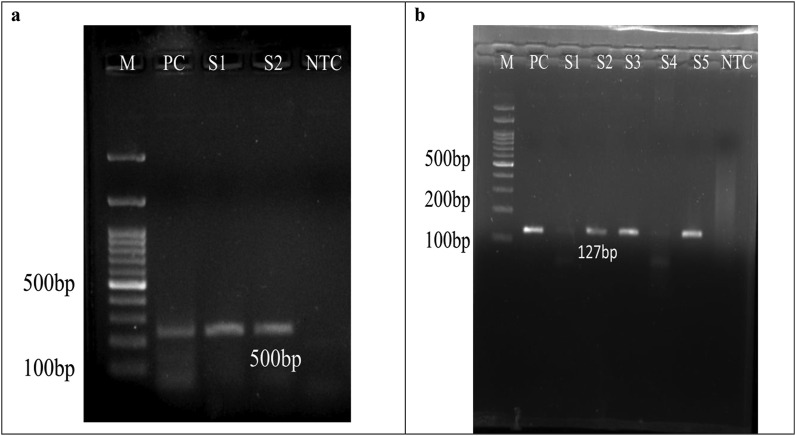
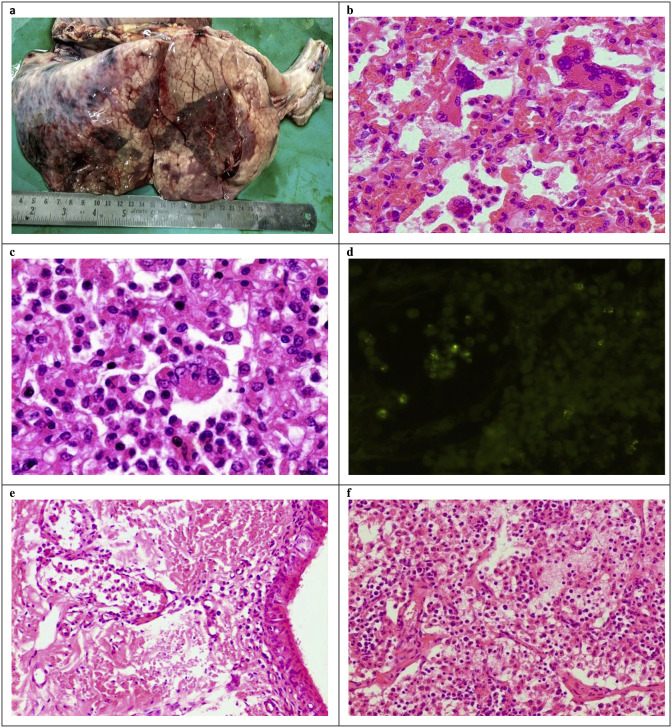
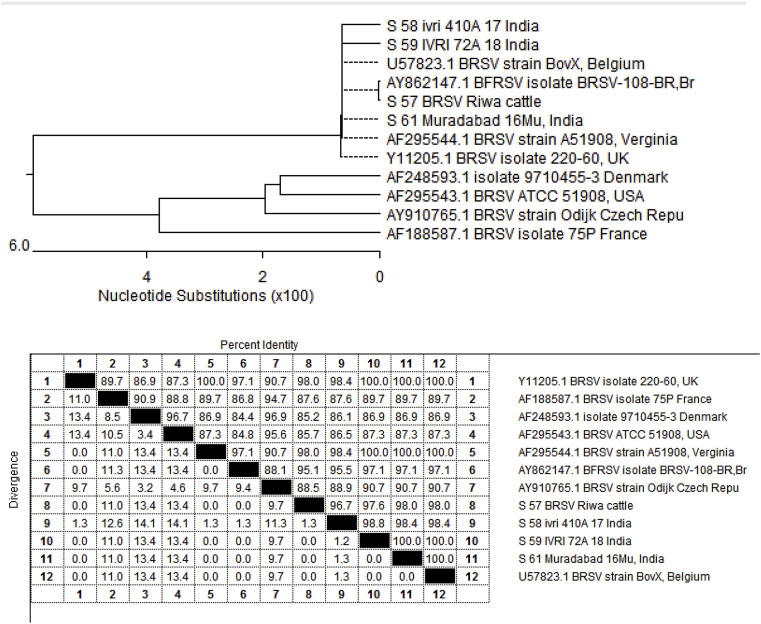
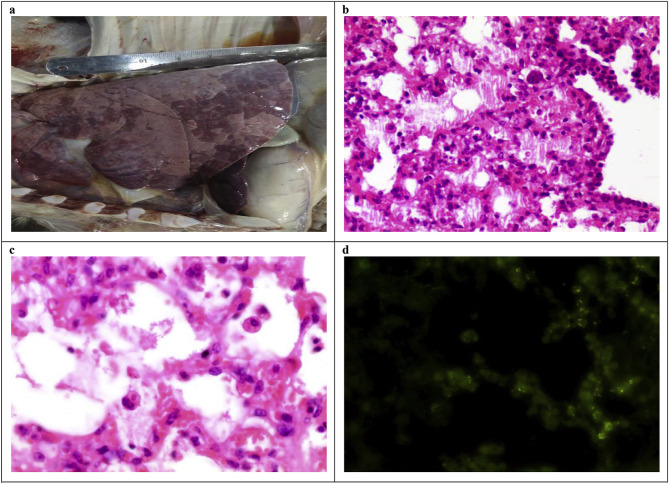
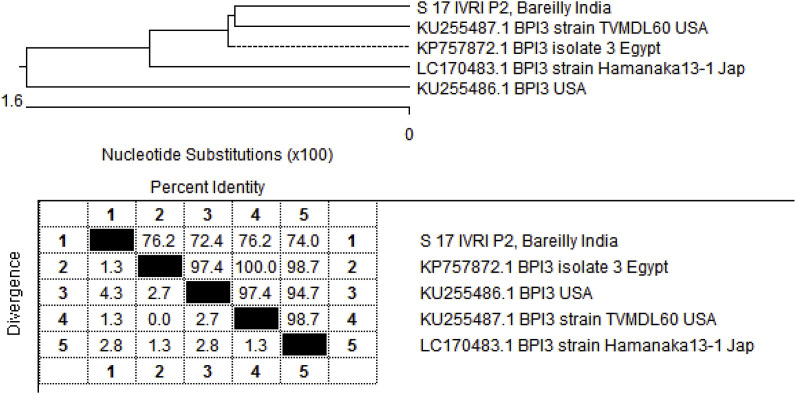
Pneumonia in bovines is a multifactorial disease manifestation leading to heavy economic losses. Infections of bovine respiratory syncytial virus (BRSV) and bovine parainfluenza virus-3 (BPI-3) are among the important contributing factors for the development of pneumonia in young animals. These viral agents either primarily cause pneumonia or predispose animals to the development of pneumonia. Although, the role of BRSV and BPI-3 in the pathogenesis of pneumonia is well established, there are no reports of involvement of BRSV and BPI-3 from Indian cattle and buffaloes suffering from pneumonia. In the present investigation, we performed postmortem examinations of 406 cattle and buffaloes, which were below twelve months of age. Out of 406 cases, twelve (2.95%) cases were positive for BRSV and fifteen (3.69%) cases were positive for BPI-3, screened by reverse transcriptase polymerase chain reaction (RT-PCR). Further, positive cases were confirmed by sequence analysis of RT-PCR amplicons and direct immunofluorescence antibody test (d-FAT) in paraffin-embedded lung tissue sections. BRSV positive cases revealed characteristic findings of bronchiolar epithelial necrosis, thickened alveolar septa by mononuclear cells infiltration and edema; alveolar lumens were filled with mononuclear cells and numerous syncytial cells were seen having intracytoplasmic inclusions. The BRSV antigen distribution was found to be in bronchiolar and alveolar epithelium and syncytial cells in the lung sections. In fifteen cases, where BPI-3 was detected, bronchointerstitial pneumonia in the majority of cases with thickened alveolar septa by mild macrophage infiltration, hyperplasia of type-II pneumocytes and bronchiolar necrosis along with syncytial cells having intracytoplasmic inclusions in the majority of cases were observed. The BPI-3 antigen distribution was found to be in bronchiolar and alveolar epithelium and syncytial cells in the lung sections. RT-PCR amplicons of BRSV and BPI-3 obtained were sequenced and their analysis showed homology with already available sequences in the NCBI database. It is the first report of detection of BRSV and BPI-3 from pneumonic cases by RT-PCR and d-FAT from cattle and buffaloes of India, indicating the need for more epidemiological studies.
Keywords: BPI-3; BRSV; Bovine; Immunofluorescence; Pneumonia; Syncytia.
Copyright © 2020 Elsevier Ltd. All rights reserved.
Conflict of interest statement
Declaration of competing interest None.
Figures
References
-
- Razzaque M.A., Bedair M., Abbas S. Performance of pre-weaned female calves confined in housing and open environment hutches in Kuwait. Pak. Vet. J. 2009;29:1–4.
-
- Mellado M., Lopez E., Veliz F.G., De Santiago M.A., Macias-Cruz U., Avendaño-Reyes L., Garcia J.E. Factors associated with neonatal dairy calf mortality in a hot-arid environment. Livest. Sci. 2014;159:149–155.
-
- Blood D.C., Radostits O.M., Gay C.C., Hinchcliff K.W., Constable P.D. Saunders Ltd; 2007. Veterinary Medicine: A Textbook of the Diseases of Cattle, Horses, Sheep, Pigs and Goats.
-
- Wudu T. Faculty of Veterinary Medicine, Addis Ababa University; Ethiopia: 2004. Calf Morbidity and Mortality in Dairy Farms in Debre Zeit and its Envirions, Ethiopia. Doctoral dissertation, Msc thesis.
-
- Veena M.P., Sumathi B.R. Therapeutic management of neonatal calf pneumonia in HF calf-a case report. Vet. World. 2011;4(2):84.
MeSH terms
LinkOut - more resources
Full Text Sources
Medical
