


Big data analytics for preventive medicine
- PMID: 32205918
- PMCID: PMC7088441
- DOI: 10.1007/s00521-019-04095-y
Big data analytics for preventive medicine
Abstract
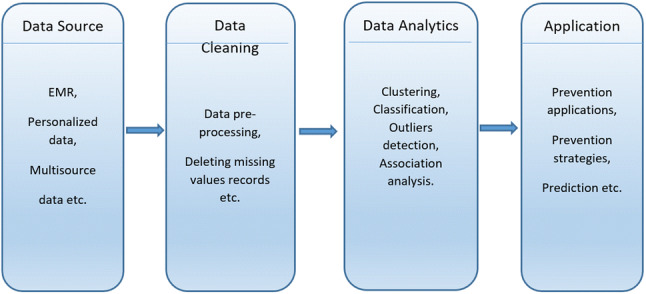
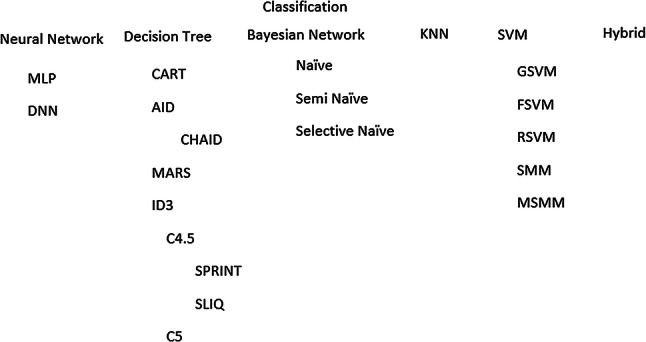
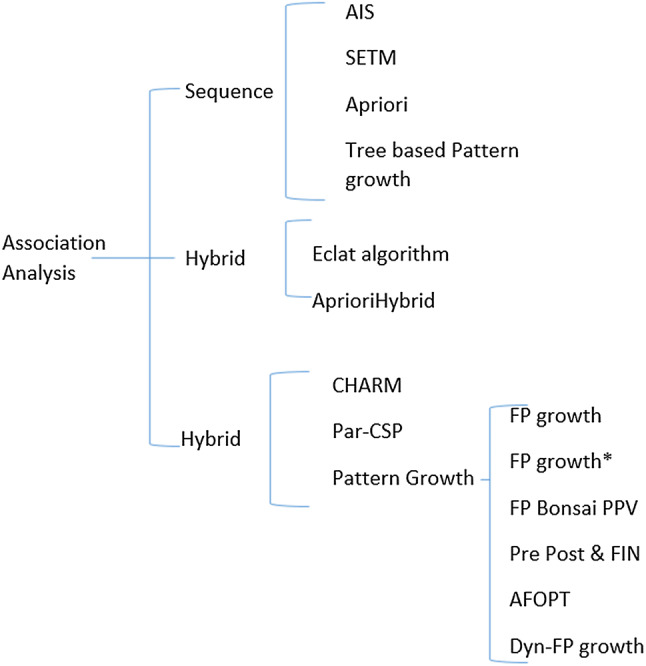
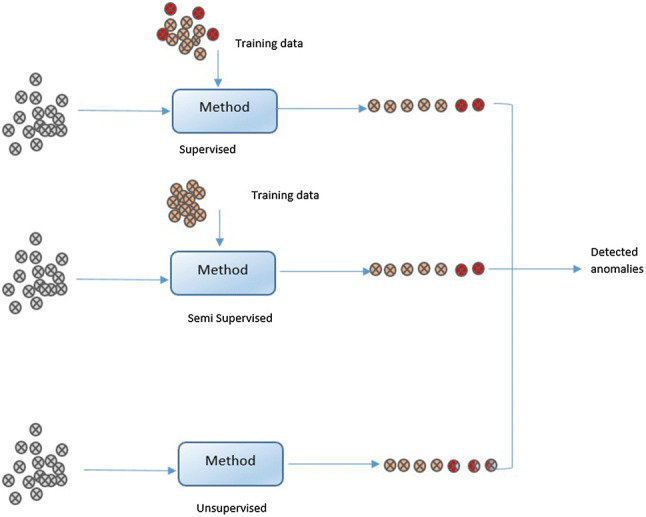
Medical data is one of the most rewarding and yet most complicated data to analyze. How can healthcare providers use modern data analytics tools and technologies to analyze and create value from complex data? Data analytics, with its promise to efficiently discover valuable pattern by analyzing large amount of unstructured, heterogeneous, non-standard and incomplete healthcare data. It does not only forecast but also helps in decision making and is increasingly noticed as breakthrough in ongoing advancement with the goal is to improve the quality of patient care and reduces the healthcare cost. The aim of this study is to provide a comprehensive and structured overview of extensive research on the advancement of data analytics methods for disease prevention. This review first introduces disease prevention and its challenges followed by traditional prevention methodologies. We summarize state-of-the-art data analytics algorithms used for classification of disease, clustering (unusually high incidence of a particular disease), anomalies detection (detection of disease) and association as well as their respective advantages, drawbacks and guidelines for selection of specific model followed by discussion on recent development and successful application of disease prevention methods. The article concludes with open research challenges and recommendations.
Keywords: Data analytics; Disease prevention; Healthcare; Knowledge discovery; Prevention methodologies.
© Springer-Verlag London Ltd., part of Springer Nature 2019.
Figures
References
-
- Razzak MI, Naz S (2017) Microscopic blood smear segmentation and classification using deep contour aware cnn and extreme machine learning. In: 2017 IEEE conference on computer vision and pattern recognition workshops (CVPRW). IEEE, pp 801–807
-
- Children: reducing mortality. 2015: updated September (2016)
-
- Health expenditure, total (% of gdp). World Health Organization Global Health Expenditure Database (2014)
-
- National health expenditure projections 2012–2022 (2012)
-
- Bosworth H. Improving patient treatment adherence: a clinician’s guide. Berlin: Springer; 2010.
LinkOut - more resources
Full Text Sources
Other Literature Sources