


Hypertension in Cancer Patients and Survivors: Epidemiology, Diagnosis, and Management
- PMID: 32206762
- PMCID: PMC7089580
- DOI: 10.1016/j.jaccao.2019.11.009
Hypertension in Cancer Patients and Survivors: Epidemiology, Diagnosis, and Management
Abstract
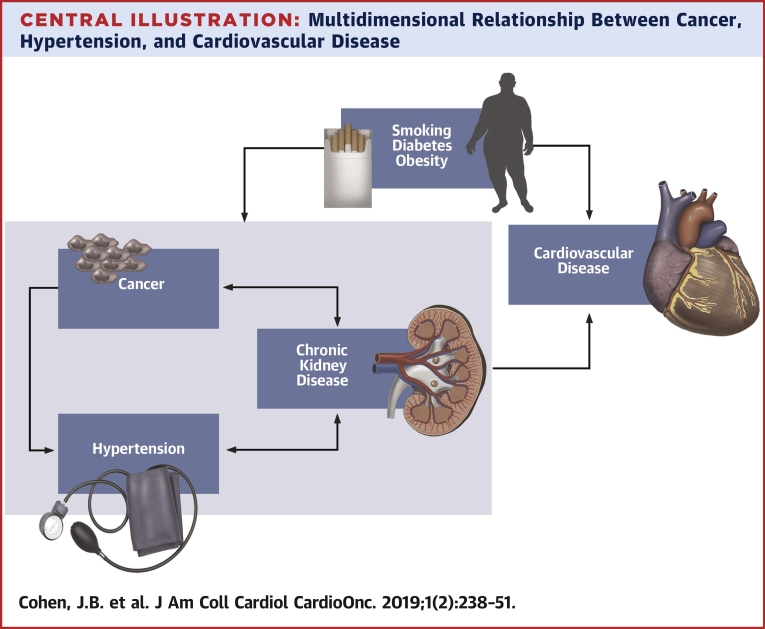
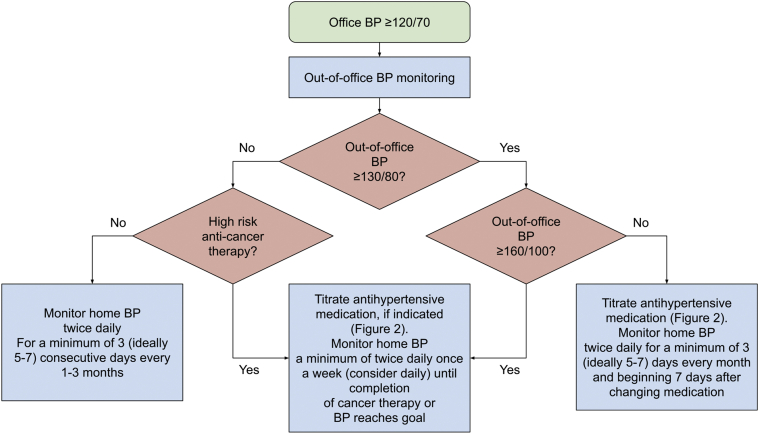
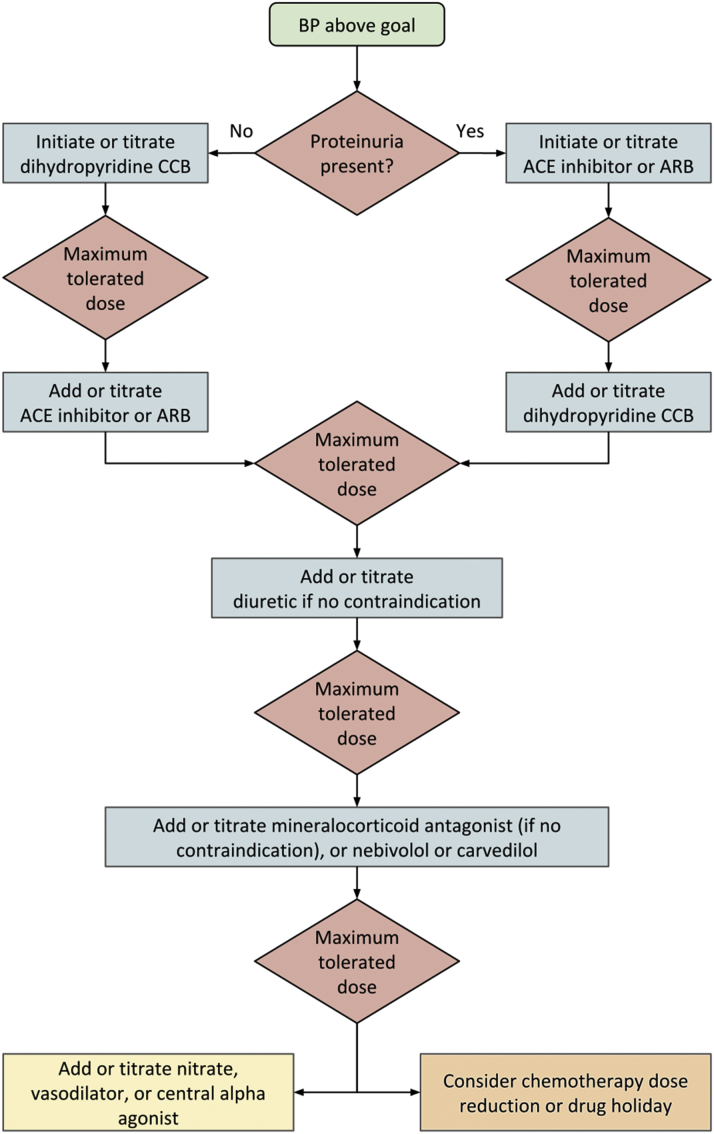
Cancer patients and survivors of cancer have a greater burden of cardiovascular disease compared to the general population. Much of the elevated cardiovascular risk in these individuals is likely attributable to hypertension, as individuals with cancer have a particularly high incidence of hypertension following cancer diagnosis. Treatment with chemotherapy is an independent risk factor for hypertension due to direct effects of many agents on endothelial function, sympathetic activity, and renin-angiotensin system activity as well as nephrotoxicity. Diagnosis and management of hypertension in cancer patients requires accurate blood pressure measurement and consideration of potential confounding factors, such as adjuvant treatments and acute pain, that can temporarily elevate blood pressure readings. Home blood pressure monitoring can be a useful tool to facilitate longitudinal blood pressure monitoring for titration of antihypertensive medications. Selection of antihypertensive agents in cancer patients should account for treatment-specific morbidities and target organ injury.
Keywords: Cancer Survivorship; Hypertension; Outcomes; Pharmacotherapy.
Figures
Comment in
-
A Cardio-Oncology Cardiovascular Prevention Framework.JACC CardioOncol. 2019 Dec 17;1(2):252-255. doi: 10.1016/j.jaccao.2019.11.012. eCollection 2019 Dec. JACC CardioOncol. 2019. PMID: 34396187 Free PMC article.
References
-
- Whelton P.K., Carey R.M., Aronow W.S. 2017 ACC/AHA/AAPA/ABC/ACPM/AGS/APhA/ASH/ASPC/NMA/PCNA guideline for the prevention, detection, evaluation, and management of high blood pressure in adults: a report of the American College of Cardiology/American Heart Association Task Force on Clinical Practice Guidelines. J Am Coll Cardiol. 2018;71:e127–e248. - PubMed
-
- Kantor A.F., Li F.P., Janov A.J., Tarbell N.J., Sallan S.E. Hypertension in long-term survivors of childhood renal cancers. J Clin Oncol. 1989;7:912–915. - PubMed
Grants and funding
LinkOut - more resources
Full Text Sources
