Potential Biomarkers to Improve the Prediction of Osteoporotic Fractures
- PMID: 32207264
- PMCID: PMC7090300
- DOI: 10.3803/EnM.2020.35.1.55
Potential Biomarkers to Improve the Prediction of Osteoporotic Fractures
Abstract
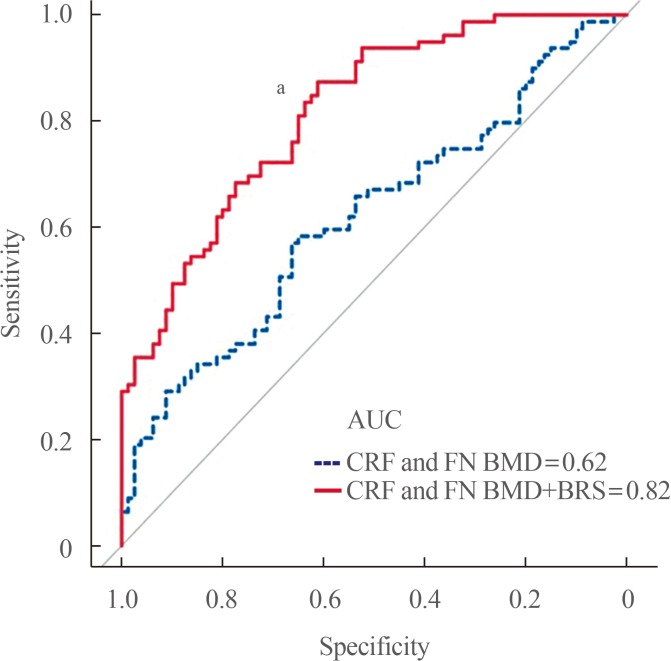
Osteoporotic fracture (OF) is associated with high disability and morbidity rates. The burden of OF may be reduced by early identification of subjects who are vulnerable to fracture. Although the current fracture risk assessment model includes clinical risk factors (CRFs) and bone mineral density (BMD), its overall ability to identify individuals at high risk for fracture remains suboptimal. Efforts have therefore been made to identify potential biomarkers that can predict the risk of OF, independent of or combined with CRFs and BMD. This review highlights the emerging biomarkers of bone metabolism, including sphongosine-1-phosphate, leucine-rich repeat-containing 17, macrophage migration inhibitory factor, sclerostin, receptor activator of nuclear factor-κB ligand, and periostin, and the importance of biomarker risk score, generated by combining these markers, in enhancing the accuracy of fracture prediction.
Keywords: Biomarkers; Bone density; Fracture; Risk factors.
Copyright © 2020 Korean Endocrine Society.
Conflict of interest statement
No potential conflict of interest relevant to this article was reported.
Figures
References
-
- NIH Consensus Development Panel on Osteoporosis Prevention, Diagnosis, and Therapy. Osteoporosis prevention, diagnosis, and therapy. JAMA. 2001;285:785–795.
-
- Bliuc D, Nguyen ND, Milch VE, Nguyen TV, Eisman JA, Center JR. Mortality risk associated with low-trauma osteoporotic fracture and subsequent fracture in men and women. JAMA. 2009;301:513–521. - PubMed
-
- Burge R, Dawson-Hughes B, Solomon DH, Wong JB, King A, Tosteson A. Incidence and economic burden of osteoporosis-related fractures in the United States, 2005–2025. J Bone Miner Res. 2007;22:465–475. - PubMed
-
- Ammann P, Rizzoli R. Bone strength and its determinants. Osteoporos Int. 2003;14 Suppl 3:S13–S18. - PubMed
Publication types
MeSH terms
Substances
Grants and funding
LinkOut - more resources
Full Text Sources
Medical
Research Materials