


EHS and AHS guidelines for treatment of primary ventral hernias in rare locations or special circumstances
- PMID: 32207571
- PMCID: PMC7093793
- DOI: 10.1002/bjs5.50252
EHS and AHS guidelines for treatment of primary ventral hernias in rare locations or special circumstances
Abstract
Background: Rare locations of hernias, as well as primary ventral hernias under certain circumstances (cirrhosis, dialysis, rectus diastasis, subsequent pregnancy), might be technically challenging. The aim was to identify situations where the treatment strategy might deviate from routine management.
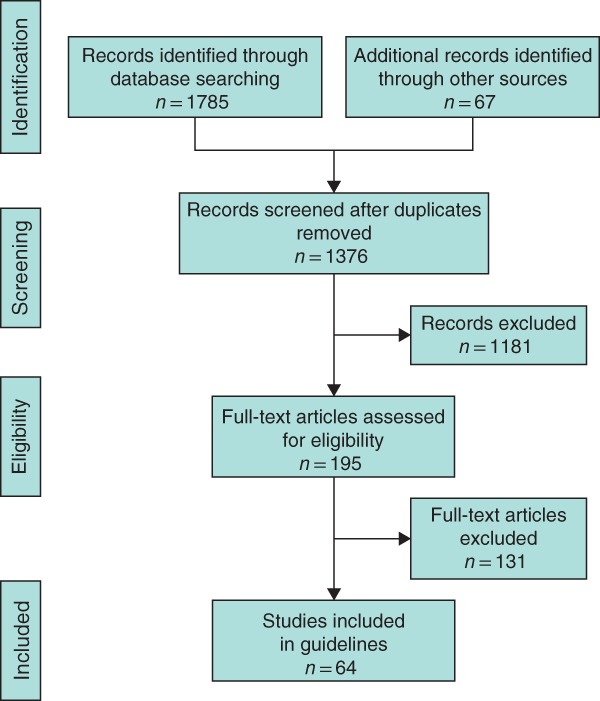
Methods: The guideline group consisted of surgeons from the European and Americas Hernia Societies. The Grading of Recommendations Assessment, Development and Evaluation (GRADE) approach was used in formulating the recommendations. The Scottish Intercollegiate Guidelines Network (SIGN) critical appraisal checklists were used to evaluate the quality of full-text papers. A systematic literature search was performed on 1 May 2018 and updated 1 February 2019. The Appraisal of Guidelines for Research and Evaluation (AGREE) instrument was followed.
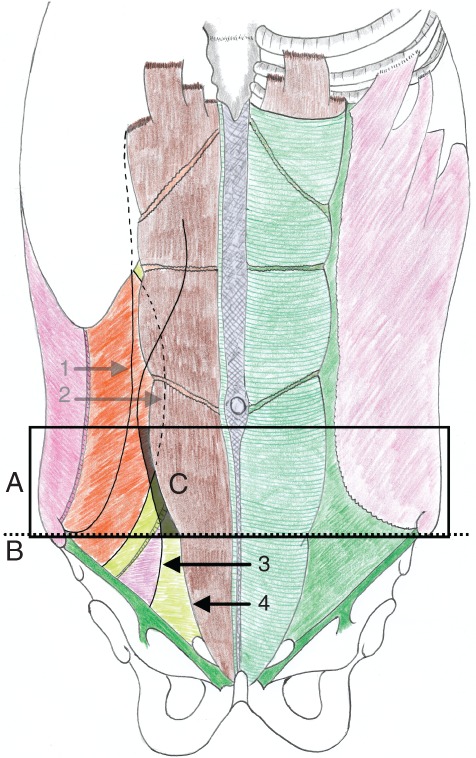
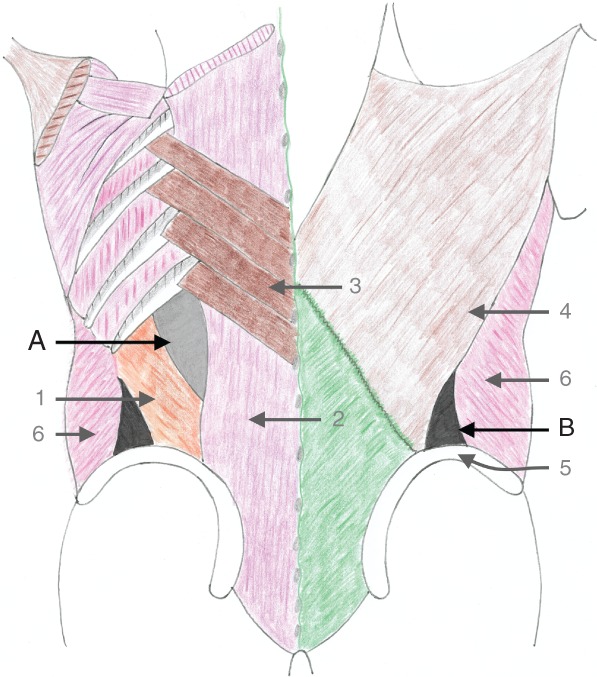
Results: Literature was limited in quantity and quality. A majority of the recommendations were graded as weak, based on low quality of evidence. In patients with cirrhosis or on dialysis, a preperitoneal mesh repair is suggested. Subsequent pregnancy is a risk factor for recurrence. Repair should be postponed until after the last pregnancy. For patients with a concomitant rectus diastasis or those with a Spigelian or lumbar hernia, no recommendation could be made for treatment strategy owing to lack of evidence.
Conclusion: This is the first European and American guideline on the treatment of umbilical and epigastric hernias in patients with special conditions, including Spigelian and lumbar hernias. All recommendations were weak owing to a lack of evidence. Further studies are needed on patients with rectus diastasis, Spigelian and lumbar hernias.
Antecedentes: Las hernias de localización rara, así como las hernias ventrales primarias en determinadas circunstancias (cirrosis, diálisis, diástasis de recto, tras un embarazo) pueden ser complejas desde el punto de vista técnico. El objetivo fue identificar situaciones en las que la estrategia de tratamiento pudiera ser diferente del tratamiento habitual. MÉTODOS: Esta guía fue elaborada por cirujanos de las sociedades europeas y americana de hernia (European Hernia Society, EHS y American Hernia Society, AHS). La búsqueda sistemática de la literatura se efectuó el 1 de mayo de 2018 y se actualizó el 1 de febrero de 2019. Para evaluar la calidad de los artículos completos seleccionados se utilizó la normativa SIGN (Scottish Intercollegiate Guidelines Network). Las recomendaciones formuladas siguieron la metodología GRADE (Grading of Recommendations Assessment, Development and Evaluation) y la redacción de la guía siguió las normas AGREE (Appraisal of Guidelines for Research & Evaluation).
Resultados: La literatura es limitada en cantidad y calidad. La mayoría de las recomendaciones se calificaron como débiles en función de la baja calidad de la evidencia. En pacientes con cirrosis o en diálisis, se sugiere una reparación con malla preperitoneal. Un embarazo tras la reparación de una hernia es un factor de riesgo de recidiva. La reparación debería posponerse hasta después del último embarazo. Debido a la falta de evidencia no se pudo hacer ninguna recomendación para la reparación de hernias en pacientes con diástasis de recto concomitante o con hernias de Spigel o lumbares. CONCLUSIÓN: Esta es la primera guía europea y americana del tratamiento de hernias umbilicales y epigástricas en pacientes con patologías especiales, incluyendo las hernias de Spigel y lumbares. Todas las recomendaciones fueron débiles debido a la falta de evidencia. Se necesitan más estudios en pacientes con diástasis de recto, hernias de Spigel y lumbares.
© 2020 The Authors. BJS Open published by John Wiley & Sons Ltd on behalf of BJS Society Ltd.
Figures
References
-
- Helgstrand F, Jorgensen LN, Rosenberg J, Kehlet H, Bisgaard T. Nationwide prospective study on readmission after umbilical or epigastric hernia repair. Hernia 2013; 17: 487–492. - PubMed
-
- Hansen JB, Thulstrup AM, Vilstup H, Sorensen HT. Danish nationwide cohort study of postoperative death in patients with liver cirrhosis undergoing hernia repair. Br J Surg 2002; 89: 805–806. - PubMed
-
- Cho SW, Bhayani N, Newell P, Cassera MA, Hammill CW, Wolf RF w Umbilical hernia repair in patients with signs of portal hypertension: surgical outcome and predictors of mortality. Arch Surg 2012; 147: 864–869. - PubMed
Publication types
MeSH terms
Grants and funding
LinkOut - more resources
Full Text Sources
