


Impact of single versus double transseptal puncture on outcome and complications in pulmonary vein isolation procedures
- PMID: 32207839
- PMCID: PMC8428934
- DOI: 10.5603/CJ.a2020.0037
Impact of single versus double transseptal puncture on outcome and complications in pulmonary vein isolation procedures
Abstract
Background: The aim of the current study was to analyze the impact of single versus double transseptal puncture (TSP) for atrial fibrillation (AF) ablation.
Methods: Consecutive patients undergoing AF ablation were prospectively included in the AF ablation registry and were analyzed according to single versus double TSP.
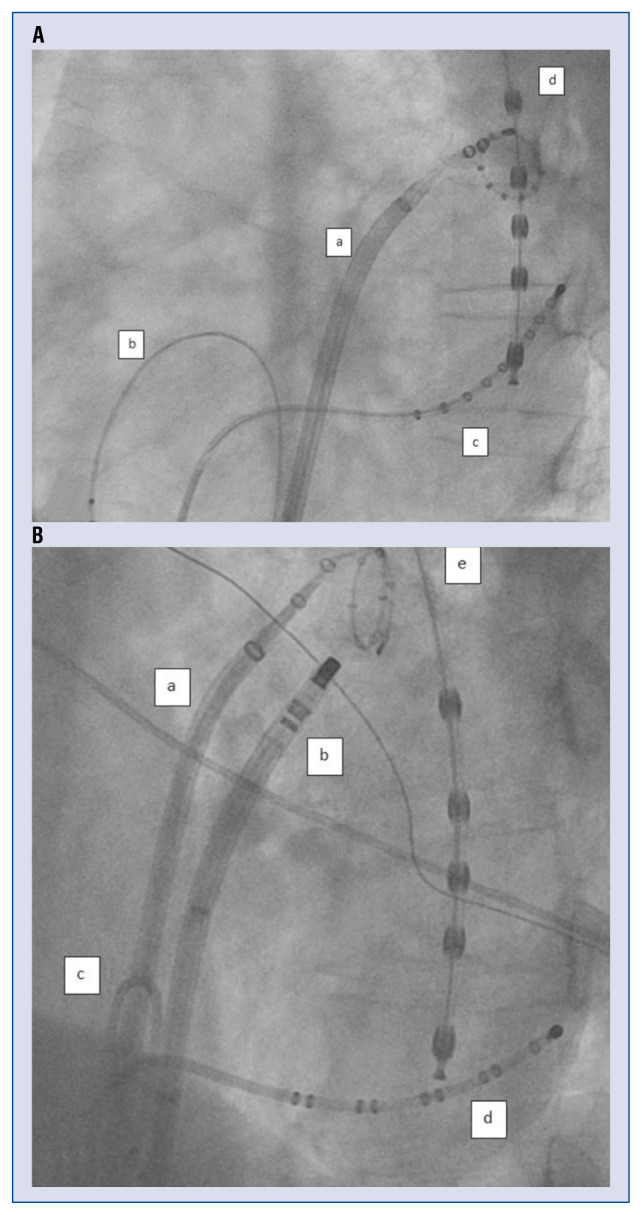
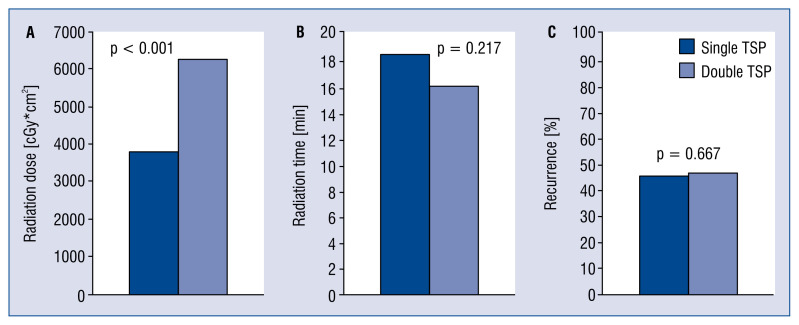
Results: A total of 478 patients (female 35%, persistent AF 67%) undergoing AF ablation between 01/2014 and 09/2014 were included. Single TSP was performed in 202 (42%) patients, double TSP in 276 (58%) patients. Age, gender, body mass index, CHA2DS2-VASc score, left ventricular ejection fraction and operator experience (experienced operator defined as ≥ 5 years of experience in invasive electrophysiology) were equally distributed between the two groups. Repeat procedures (re-dos) were more frequently performed using single TSP access (p < 0.001). Left atrial (LA) diameter was larger in patients with double TSP (p = 0.001). Procedure duration in single TSP was identical to double TSP procedures (p = 0.823). Radiation duration was similar between the two groups (p = 0.217). There were 49 (10%) patients with complications after catheter ablation. There were no differences between complication rates and TSP type (p = 0.555). Similarly, recurrence rates were comparable between both TSP groups (p = 0.788).
Conclusions: There was no clear benefit of single or double TSP in AF ablation.
Keywords: atrial fibrillation; catheter ablation; complications; pulmonary vein isolation; transseptal puncture.
Conflict of interest statement
Figures
References
Publication types
MeSH terms
LinkOut - more resources
Full Text Sources
Medical
Miscellaneous
