


The "Ought-Is" Problem: An Implementation Science Framework for Translating Ethical Norms Into Practice
- PMID: 32208070
- PMCID: PMC7164659
- DOI: 10.1080/15265161.2020.1730483
The "Ought-Is" Problem: An Implementation Science Framework for Translating Ethical Norms Into Practice
Abstract
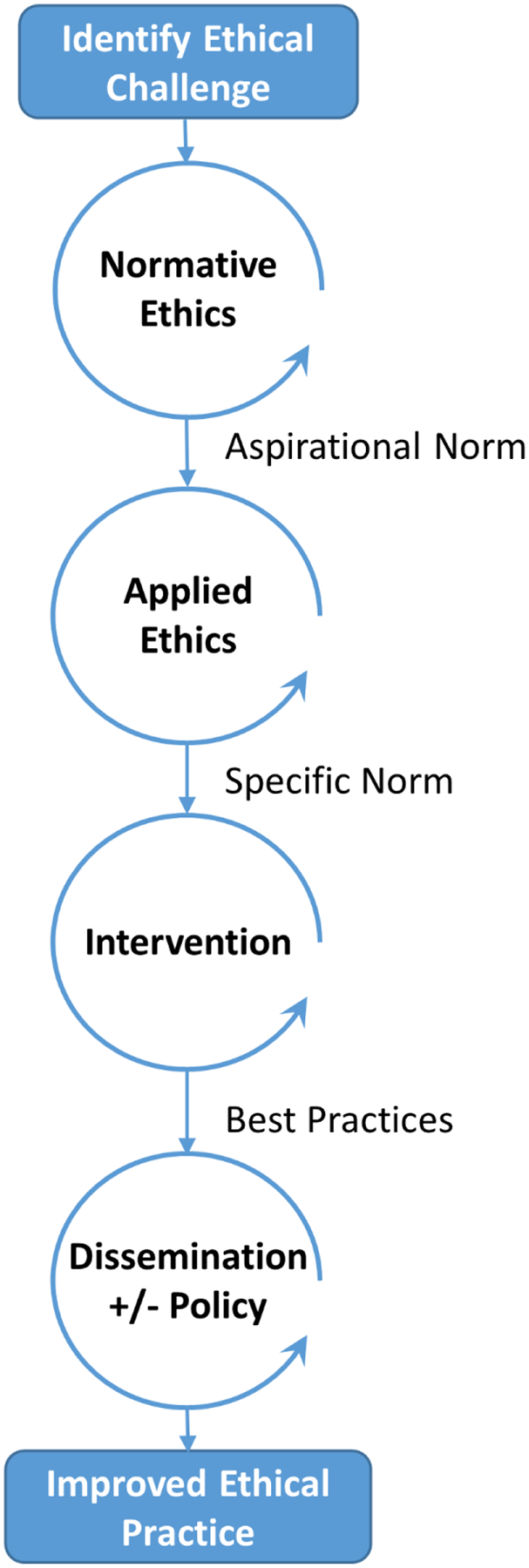
We argue that once a normative claim is developed, there is an imperative to effect changes based on this norm. As such, ethicists should adopt an "implementation mindset" when formulating norms, and collaborate with others who have the expertise needed to implement policies and practices. To guide this translation of norms into practice, we propose a framework that incorporates implementation science into ethics. Implementation science is a discipline dedicated to supporting the sustained enactment of interventions. We further argue that implementation principles should be integrated into the development of specific normative claims as well as the enactment of these norms. Ethicists formulating a specific norm should consider whether that norm can feasibly be enacted because the resultant specific norm will directly affect the types of interventions subsequently developed. To inform this argument, we will describe the fundamental principles of implementation science, using informed consent to research participation as an illustration.
Keywords: Ethics; applied ethics; empirical ethics; implementation science; normative ethics.
Conflict of interest statement
Figures
Comment in
-
Using Implementation Science to Enact Specific Ethical Norms: The Case of Code Status Policy.Am J Bioeth. 2020 May;20(4):6-7. doi: 10.1080/15265161.2020.1735874. Am J Bioeth. 2020. PMID: 32208071 No abstract available.
-
Translational Ethics and Challenges Involved in Putting Norms Into Practice.Am J Bioeth. 2020 May;20(4):71-73. doi: 10.1080/15265161.2020.1730520. Am J Bioeth. 2020. PMID: 32208072 No abstract available.
-
Mind the Gap: How Should We Translate Specific Ethical Norms Into Interventions?Am J Bioeth. 2020 May;20(4):89-91. doi: 10.1080/15265161.2020.1730500. Am J Bioeth. 2020. PMID: 32208074 No abstract available.
-
Implementation in Bioethics: A Plea for a Participatory and Dialogical Approach.Am J Bioeth. 2020 May;20(4):78-80. doi: 10.1080/15265161.2020.1730509. Am J Bioeth. 2020. PMID: 32208076 No abstract available.
-
The Feasibility of Implementing Normative Claims That Are Especially Strong and Important.Am J Bioeth. 2020 May;20(4):97-99. doi: 10.1080/15265161.2020.1730492. Am J Bioeth. 2020. PMID: 32208079 No abstract available.
-
Responsible Innovation For and From Ethical Integration.Am J Bioeth. 2020 May;20(4):94-97. doi: 10.1080/15265161.2020.1730496. Am J Bioeth. 2020. PMID: 32208082 No abstract available.
-
An "Implementation Mindset" in Normative Bioethics Will Have Unintended Consequences.Am J Bioeth. 2020 May;20(4):76-78. doi: 10.1080/15265161.2020.1730497. Am J Bioeth. 2020. PMID: 32208083 No abstract available.
-
Making Ethics Happen: Addressing Injustice in Health Inequalities.Am J Bioeth. 2020 May;20(4):100-101. doi: 10.1080/15265161.2020.1730498. Am J Bioeth. 2020. PMID: 32208085 Free PMC article.
-
Bioethical Ideals, Actual Practice, and the Double Life of Norms.Am J Bioeth. 2020 May;20(4):86-88. doi: 10.1080/15265161.2020.1730499. Am J Bioeth. 2020. PMID: 32208086 No abstract available.
-
Implementation Science Can Do Even More for Translational Ethics.Am J Bioeth. 2020 May;20(4):83-85. doi: 10.1080/15265161.2020.1730511. Am J Bioeth. 2020. PMID: 32208087 Free PMC article. No abstract available.
-
Beyond Translating Ethical Norms Into Practice: Integrating Implementation and Assessment Mindsets.Am J Bioeth. 2020 May;20(4):92-94. doi: 10.1080/15265161.2020.1730516. Am J Bioeth. 2020. PMID: 32208088 No abstract available.
-
Ethical Training Can Turn an "Ought" to a "Can".Am J Bioeth. 2020 May;20(4):73-75. doi: 10.1080/15265161.2020.1730517. Am J Bioeth. 2020. PMID: 32208089 No abstract available.
-
Implementation Science and Bioethics: Lessons From European Empirical Bioethics Research?Am J Bioeth. 2020 May;20(4):80-82. doi: 10.1080/15265161.2020.1730518. Am J Bioeth. 2020. PMID: 32208090 No abstract available.
References
-
- Agre Patricia, Campbell Frances A., Goldman Barbara D., Kass Nancy E., Boccia Maria L., McCullough Laurence B., Merz Jon F., Miller Suzanne M., Mintz Jim, Rapkin Bruce, Sugarman Jeremy, Sorenson James, and Wirshing Donna. 2003. “Improving informed consent: The medium is not the message.” IRB: Ethics & Human Research Suppl 25 (5):S11–S19. - PubMed
-
- Aristotle. 1980. The Nicomachean ethics. Oxford: Oxford University Press.
-
- Balas EA, and Boren SA. 2000. “Managing Clinical Knowledge for Health Care Improvement.” Yearb Med Inform (1):65–70. - PubMed
-
- Brownson Ross C., Colditz Graham A., and Proctor Enola Knisley. 2012. Dissemination and implementation research in health : translating science to practice. Oxford; New York: Oxford University Press.
Publication types
MeSH terms
Grants and funding
LinkOut - more resources
Full Text Sources
Research Materials