


Antitumor properties of certain spirooxindoles towards hepatocellular carcinoma endowed with antioxidant activity
- PMID: 32208781
- PMCID: PMC7144320
- DOI: 10.1080/14756366.2020.1743281
Antitumor properties of certain spirooxindoles towards hepatocellular carcinoma endowed with antioxidant activity
Abstract
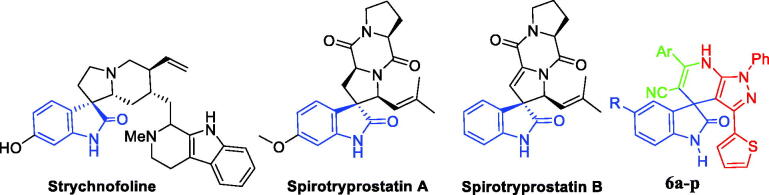
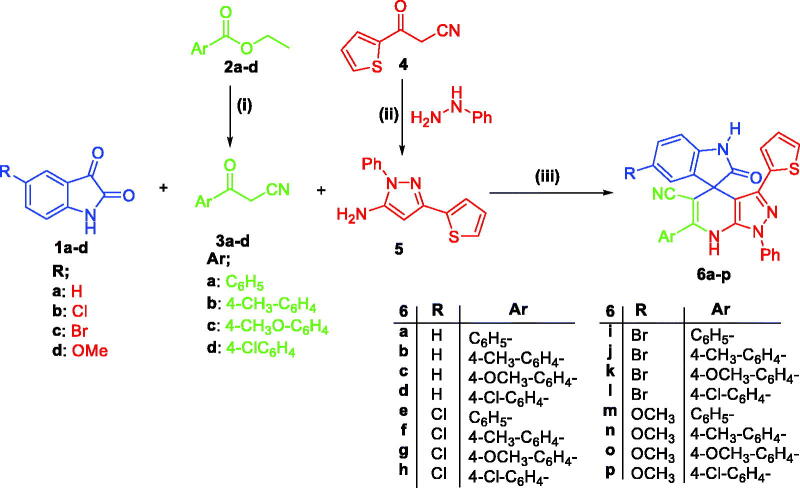
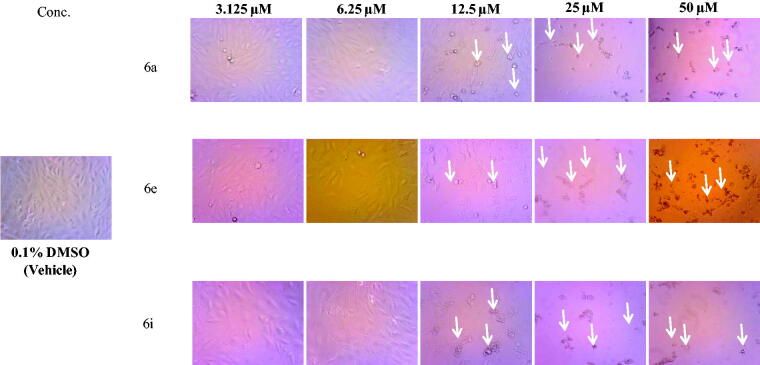
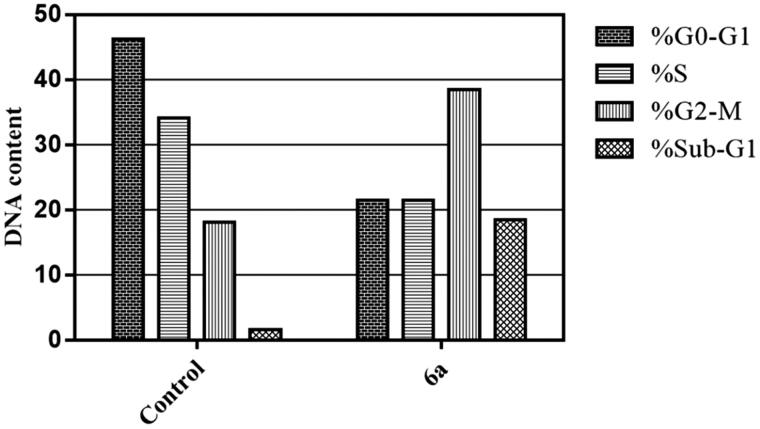
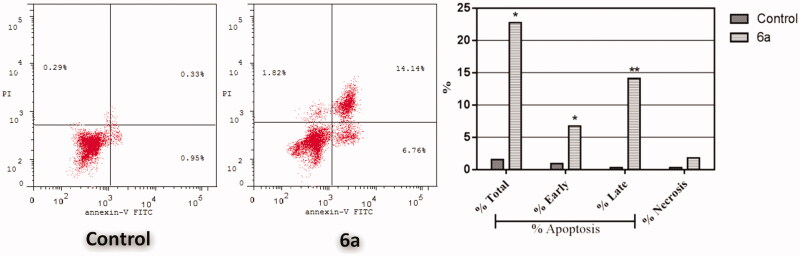
In the current medical era, spirooxindole motif stands out as a privileged heterospirocyclic scaffold that represents the core for a wide range of bioactive naturally isolated products (such as Strychnofoline and spirotryprostatins A and B) and synthetic compounds. Interestingly, no much attention has been paid to develop spirooxindole derivatives with dual antioxidant and anticancer activities. In this context, a series of spirooxindoles 6a-p was examined for their anticancer effect towards HepG2 hepatocellular carcinoma and PC-3 prostate cancer cell lines. Spirooxindole 6a was found to be an efficient anti-proliferative agent towards both HepG2 and PC-3 cells (IC50 = 6.9 and 11.8 µM, respectively). Afterwards, spirooxindole 6a was assessed for its apoptosis induction potential in HepG2 cells, where its pro-apoptotic impact was approved via the significant elevation in the Bax/Bcl-2 ratio and the expression levels of caspase-3.
Keywords: Anti-proliferative; antioxidants; apoptosis; spiroxindoles; synthesis.
Conflict of interest statement
No potential conflict of interest was reported by the author(s).
Figures
References
-
- (a) de Torre MP, Cavero RY, Calvo MI, Vizmanos JL, A simple and a reliable method to quantify antioxidant activity in vivo. Antioxidants 2019;8:142. - PMC - PubMed
- (b) Kundu T, Bhattacharjee B, Hazra S, et al. Synthesis and biological assessment of pyrrolobenzoxazine scaffold as a potent antioxidant. J Med Chem 2019;62:6315–29. - PubMed
-
- Habrant D, Poigny S, Ségur-Derai M, et al. Evaluation of antioxidant properties of monoaromatic derivatives of pulvinic acids. J Med Chem 2009;52:2454–64. - PubMed
-
- (a) Yanovsky I, Finkin-Groner E, Zaikin A, et al. Carbamate derivatives of indolines as cholinesterase inhibitors and antioxidants for the treatment of Alzheimer’s disease. J Med Chem 2012;55:10700–15. - PubMed
- (b) Zhang C, Zhou Q, Wu XN, et al. Discovery of novel PDE9A inhibitors with antioxidant activities for treatment of Alzheimer’s disease. J Enzym Inhib Med Chem 2019;34:260–70. - PMC - PubMed
-
- Hassan SZ, Gheita TA, Kenawy SA, et al. Oxidative stress in systemic lupus erythematosus and rheumatoid arthritis patients: relationship to disease manifestations and activity. Int J Rheum Dis 2011;14:325–31. - PubMed
-
- Segovia J, Perez-Severiano F.. Oxidative damage in Huntington’s disease. Methods Mol Biol 2004;277:321–34. - PubMed
MeSH terms
Substances
LinkOut - more resources
Full Text Sources
Medical
Research Materials
