


Antisecretory Factor May Reduce ICP in Severe TBI-A Case Series
- PMID: 32210902
- PMCID: PMC7067821
- DOI: 10.3389/fneur.2020.00095
Antisecretory Factor May Reduce ICP in Severe TBI-A Case Series
Abstract
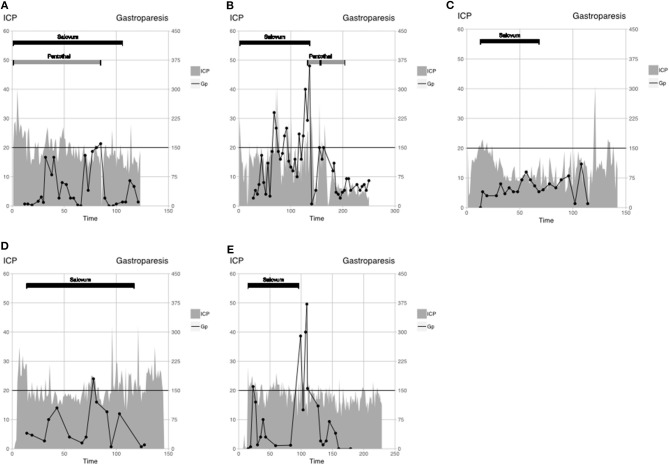
Traumatic brain injury (TBI) constitutes a global epidemic. Overall outcome is poor, with mortality ranging from 10 to 70% and significant long-term morbidity. Several experimental reports have claimed effect on traumatic edema, but all clinical trials have failed. Antisecretory factor, an endogenous protein, is commercially available as Salovum®, which is classified as a medical food by the European Union and has been proven effective in experimental trauma models. It has, however, previously not been tested in humans with severe TBI. We hereby report a case series of five adult patients with severe TBI, treated with Salovum. The objective of the intervention was to evaluate safety and, if possible, its effect on intracranial pressure and outcome. Patients received 1 g Salovum per kilo of body weight divided into six doses per 24 h. Each dose was administered through the nasogastric tube. Patients were scheduled for 5 days of treatment with Salovum. Intracranial pressure was controlled in all patients. In three of five patients, intracranial pressure could be controlled with Salovum and deep sedation (no barbiturates), except during periods of gastroparesis. Five of five patients had a favorable short-term outcome, and four of five patients had a favorable long-term outcome. No toxicity was observed. We conclude that at least three of the five treated patients experienced an effect of Salovum with signs of reduction of intracranial pressure and signs of clinical benefit. In order to validate the potential of antisecretory factor in TBI, a prospective, randomized, double-blind, placebo-controlled trial with Salovum has been initiated. Primary outcome for the trial is 30-day mortality; secondary outcomes are treatment intensity level, intracranial pressure, and number of days at the neurointensive care unit.
Keywords: ICP reduction; anti-inflammatory therapy; intracranial hypertension; novel treatments against traumatic brain edema; therapeutic agents per oral treatment; traumatic brain injury.
Copyright © 2020 Cederberg, Hansson, Visse and Siesjö.
Figures
References
Publication types
LinkOut - more resources
Full Text Sources
