. 2020 Sep 10;63(17):8880-8900.
doi: 10.1021/acs.jmedchem.9b01927. Epub 2020 Mar 26.

How We Think about Targeting RNA with Small Molecules

Affiliations

How We Think about Targeting RNA with Small Molecules

Matthew G Costales et al. J Med Chem. .

Abstract

RNA offers nearly unlimited potential as a target for small molecule chemical probes and lead medicines. Many RNAs fold into structures that can be selectively targeted with small molecules. This Perspective discusses molecular recognition of RNA by small molecules and highlights key enabling technologies and properties of bioactive interactions. Sequence-based design of ligands targeting RNA has established rules for affecting RNA targets and provided a potentially general platform for the discovery of bioactive small molecules. The RNA targets that contain preferred small molecule binding sites can be identified from sequence, allowing identification of off-targets and prediction of bioactive interactions by nature of ligand recognition of functional sites. Small molecule targeted degradation of RNA targets (ribonuclease-targeted chimeras, RIBOTACs) and direct cleavage by small molecules have also been developed. These growing technologies suggest that the time is right to provide small molecule chemical probes to target functionally relevant RNAs throughout the human transcriptome.


Conflict of interest statement

The authors declare the following competing financial interest(s): M.D.D. is a founder of Expansion Therapeutics.

Figures

Figure 1.
Figure 1.
RNA as a viable drug target. (A) The conventional binary approach to small molecule drugs is their molecular recognition of proteins. Among the ~20 000 proteins that comprise the proteome, only about 15% are in traditional “druggable” protein families. In turn, this only represents a fraction of the genome that is transcribed, leaving much of the transcriptome underexploited as therapeutic targets. (B) Noncoding genes relate to the complexity of the organism, as the relative number of coding bases remains similar, while the relative number of long noncoding RNAs (lncRNA) significantly increases, indicating that much of the intricacies of human biology and disease are represented among noncoding regions. (C) Due to the importance of coding and noncoding RNA to biology, small molecules interacting with RNA can act on the transcriptome, resulting in varied downstream effects. Importantly, validated activities for small molecules that target human RNA include: (i) changing gene expression by modulating the stability of mRNA by direct binding; (ii) affecting its noncoding RNA effectors; (iii) affecting the epitranscriptome; or (iv) influencing alternative splicing. Affecting the transcriptome with small molecule drugs can rescue disease by modulating the translation of beneficial or detrimental proteins.
Figure 2.
Figure 2.
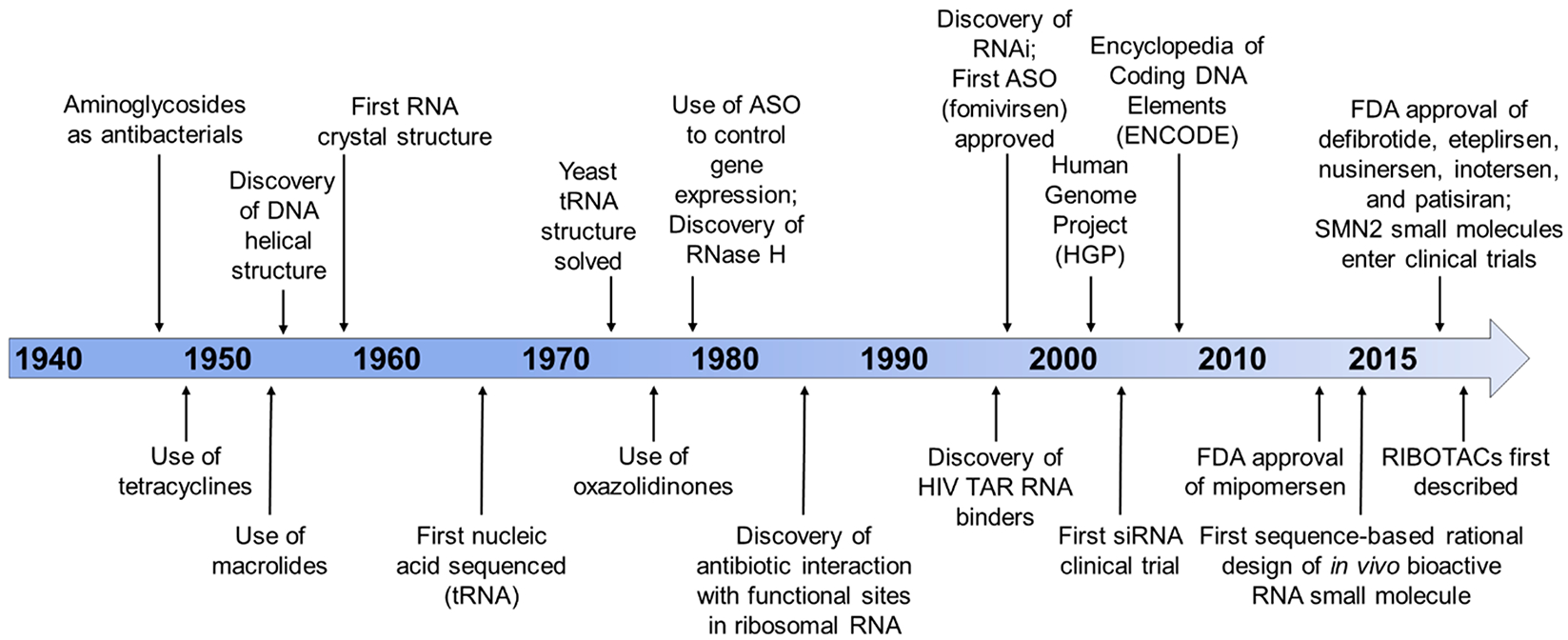
Timeline of major developments in the RNA-targeting field. The history of drugging RNA is tied closely with molecular biology discoveries (DNA/RNA structural determination). Antibacterials that targeted RNA preceded the first investigations into antisense oligonucleotides. However, FDA approvals of antisense oligonucleotides increased upon completion of the human genome project. Recent developments, such as the use of rational design-based approaches, the initiation of clinical trials for small molecule drugs treating spinal muscular atrophy (SMA), and the first report of ribonuclease targeting chimeras (RIBOTACs), demonstrate the rapid development of small molecules targeting RNA. These advancements provide a convincing argument to turn our focus to the druggable transcriptome.
Figure 3.
Figure 3.
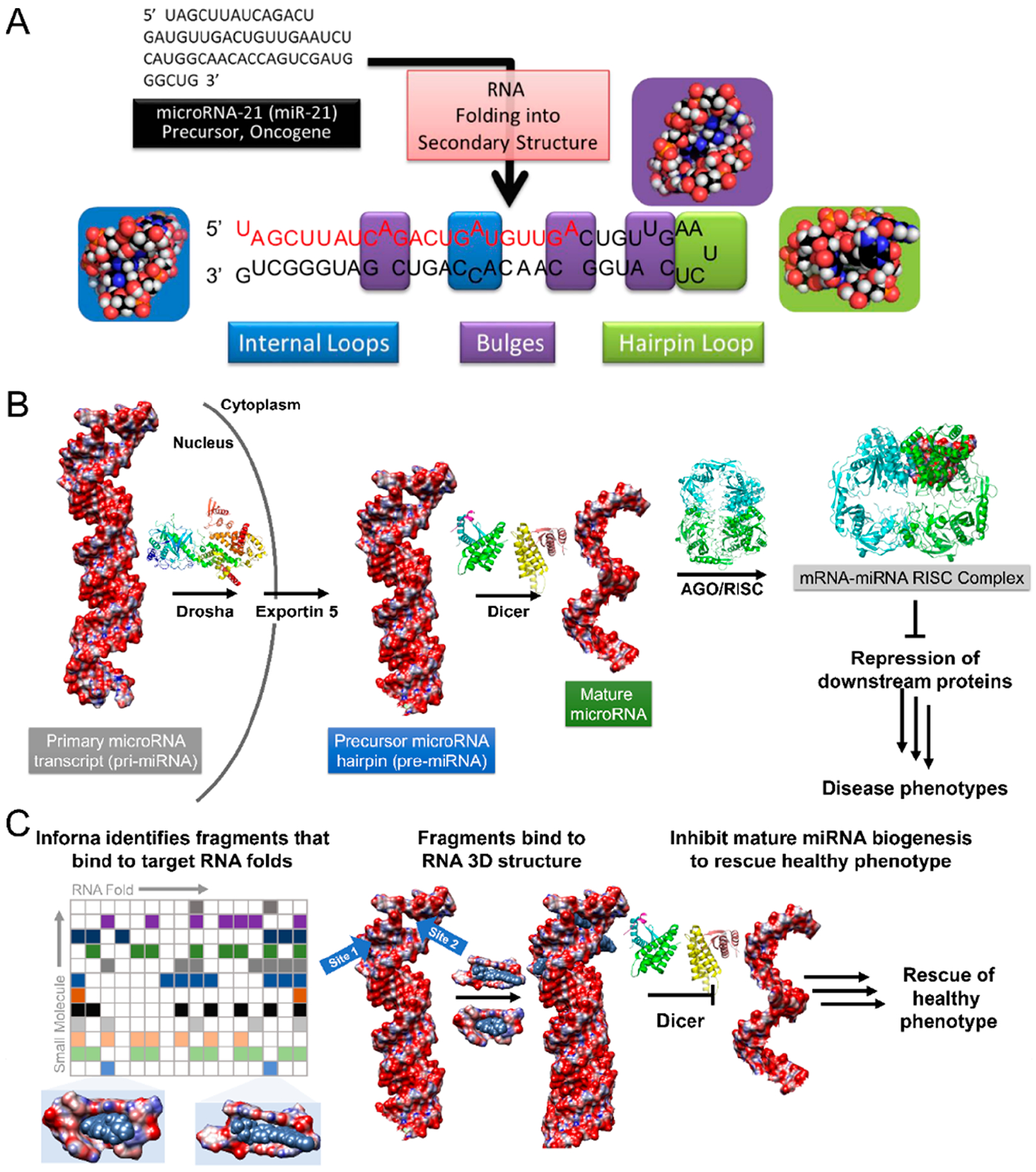
Modular RNA secondary structure motifs form three-dimensional structures. (A) Hierarchical assembly of RNA structure from sequence to secondary structure. Many of these secondary structures can form modular RNA motifs that can allow for small molecule recognition. (B) Structural schematic of microRNA processing. Primary transcripts (pri-miRNAs) are processed by the Drosha endonuclease to yield precursor hairpins (pre-miRNAs), which are exported to the cytoplasm and subsequently processed by the Dicer endonuclease to liberate a mature miRNA. One of the mature strands is then loaded into the argonaute/RNA-induced silencing complex (AGO/RISC), whereupon it acts on RNAs to modulate gene expression. Aberrant miRNA expression can be causative of disease phenotypes. (C) One rational design approach to target RNA is to understand the molecular recognition of structural elements by small molecules, those elements that are preferred by the small molecule and those that are discriminated against. Inforna compares structural elements within an RNA target to a database of these preferred interactions to afford lead small molecules. For example, binding to the pri- or pre-miRNAs at functional Drosha or Dicer sites can prevent their processing to the active, mature strand, thus allowing the rescue of disease-associated phenotypes through the inhibition of biogenesis.
Figure 4.
Figure 4.
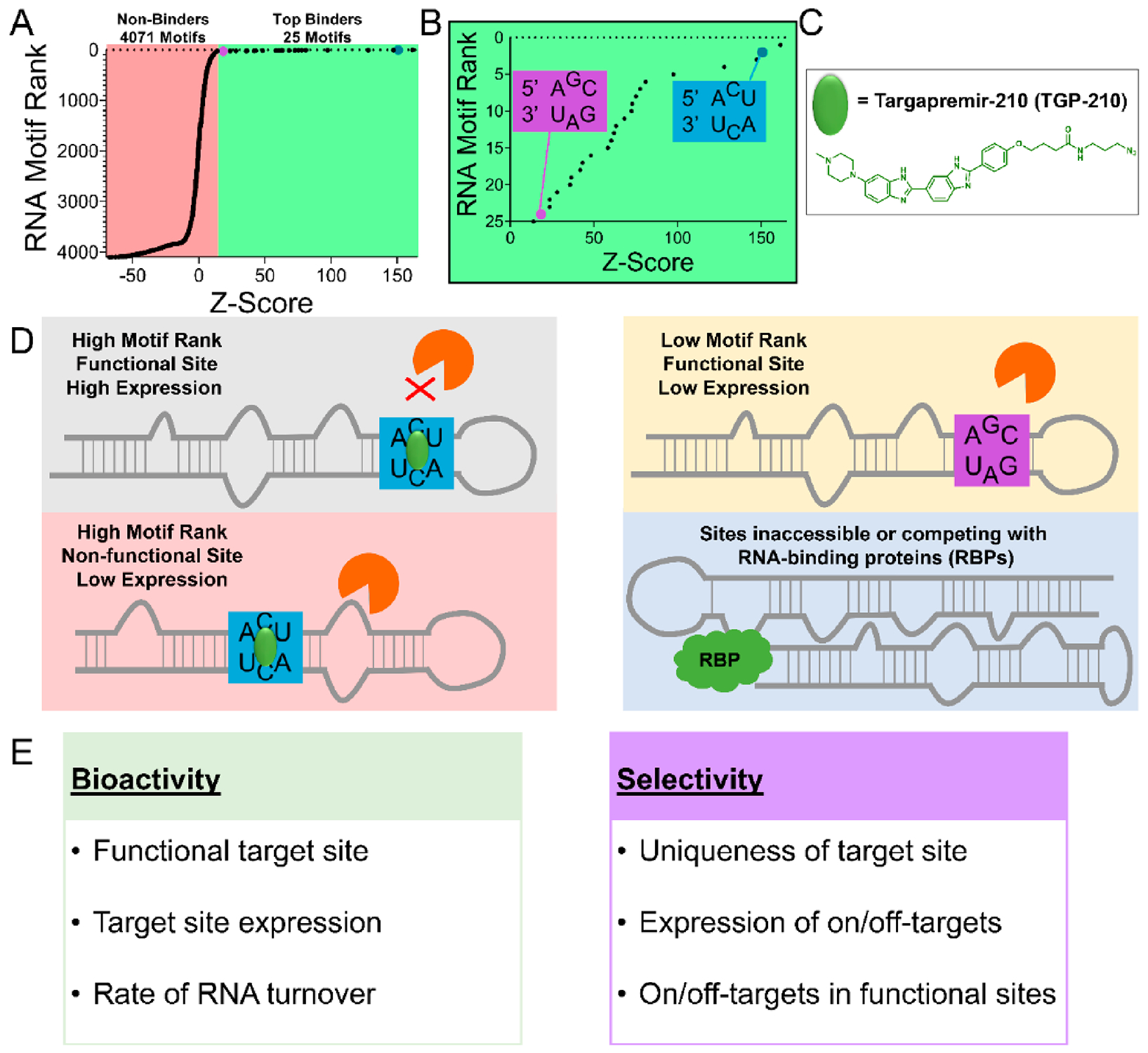
Factors that influence bioactivity and selectivity of RNA-binding ligands. (A) 2DCS selection and HiT-StARTS analysis identifies the top binding RNA motifs and nonbinders to targapremir-210 (TGP-210). Z-Score is a calculated value that represents fitness of the RNA-small molecule interaction. (B) Fitness plot of the top 25 binding motifs are shown. One of the highest fitness RNA motif interactions with TGP-210 is the 5′ ACU/3′ UCA 3 × 3 internal loop (blue box) found in the functional Dicer site of miR-210. The 5′ AGC/3′ UAG RNA motif is a lower affinity interaction (purple box). (C) Structure of TGP-210. (D, E) The bioactivity of TGP-210 to selectively inhibit miR-210 biogenesis is a function of multiple factors, including the fitness of the RNA motif-small molecule interaction, the expression and turnover of the target RNA(s), whether or not occupancy of the target site will result in a functional interaction (i.e., occupying a Dicer/Drosha site), and the accessibility of TGP-210 to off-target sites.
Figure 5.
Figure 5.
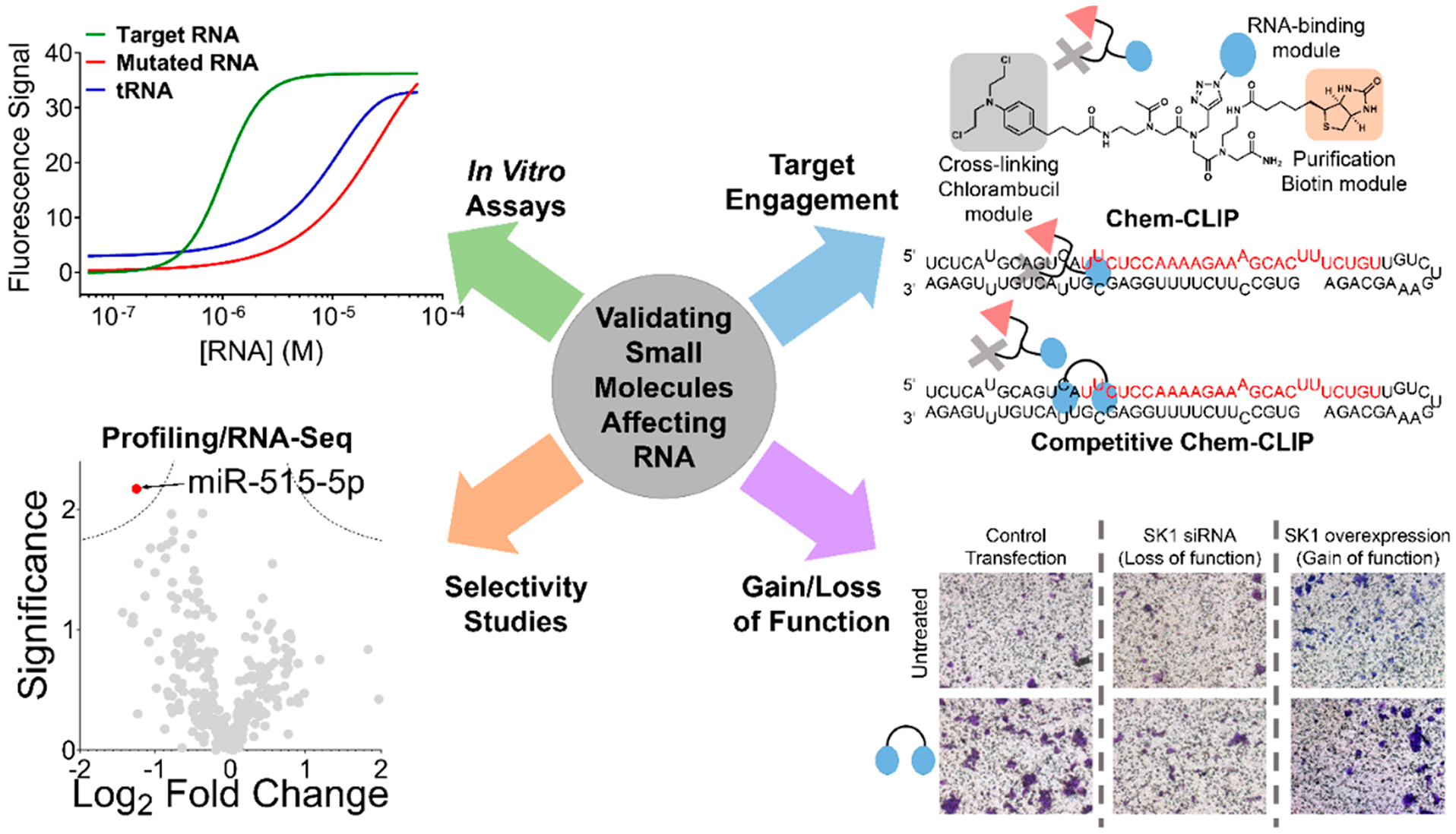
Tools to assess target engagement and selectivity of small molecules targeting RNA. Developing small molecules against RNA starts with identification of a hit, whether through Inforna (Figure 3) or screening approaches (target-based, phenotypic, fragment-based, DNA-encoded, etc.). Considering the factors from Figure 4, the hit must then be validated and optimized, including for in vitro binding affinity to the RNA structural element over RNAs that do not contain the motif and other abundant RNA/DNAs. Further validation in vitro and in cells can be accomplished with target engagement approaches that use chemical probing methods that measure RNA enrichment (Chem-CLIP) or RNA depletion (Competitive (C)-Chem-CLIP), among others. Comprehensively evaluating cellular selectivity on a transcriptome- and proteome-wide scale is also part of the workflow to validate a small molecule RNA target. After demonstration of selective on-target effects, the compound’s functional effect must then be validated in more advanced models, including the effect of a gain or loss in expression of the target.
Figure 6.
Figure 6.
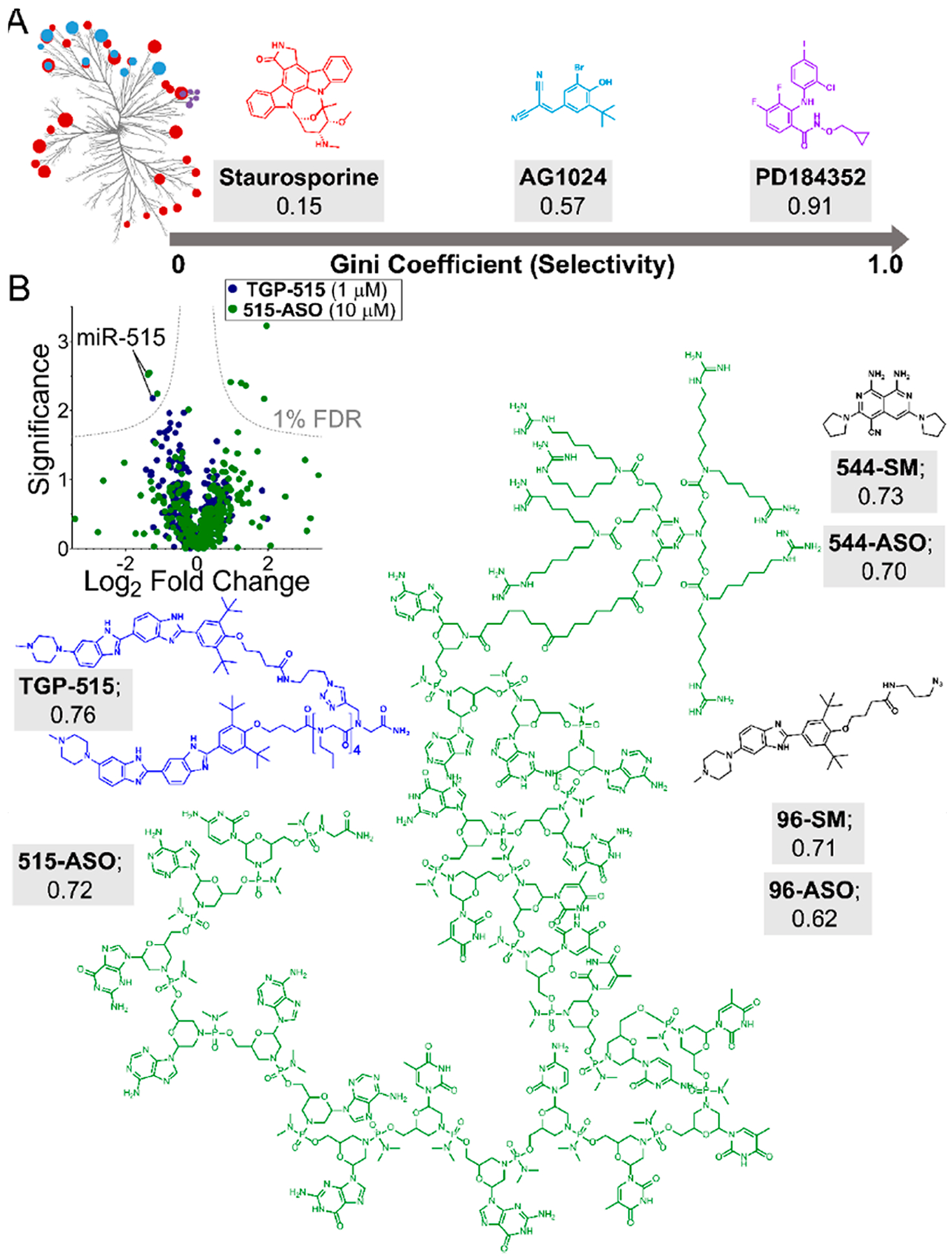
Quantitatively evaluating the selectivity of small molecules targeting RNA. (A) Data from profiling experiments can be used to quantify compound selectivity by calculating a Gini coefficient (GC). GC analysis of kinase inhibitors showed that promiscuous compounds (staurosporine) are characterized by values close to 0, while highly selective compounds exhibit Gini coefficient values close to 1 (PD184352; 0.91), with selective compounds being defined as >0.6. (B) GC analyses can be applied to profiling data (left), such as miRNA qPCR profiling data between small molecules (TGP-515; blue) and ASOs (515-ASO; green). Applying this analysis to various small molecule ligands targeting RNA structure indicates that they demonstrate high selectivity for their targets. Antisense oligonucleotides targeting RNA sequence are also selective for their targets. Shown are the structures and GC values of TGP-515 (blue) and Vivo-Morpholino ASO targeting miR-515 (green), in addition to other small molecule/ASO GC analyses. Overall, Gini coefficients provide a metric to quantitatively define compound selectivity. When applied to RNA targeting, GC analyses demonstrate that small molecules that recognize RNA structure can rival or exceed the selectivity of ASOs designed to bind via Watson–Crick base pairing.
Figure 7.
Figure 7.
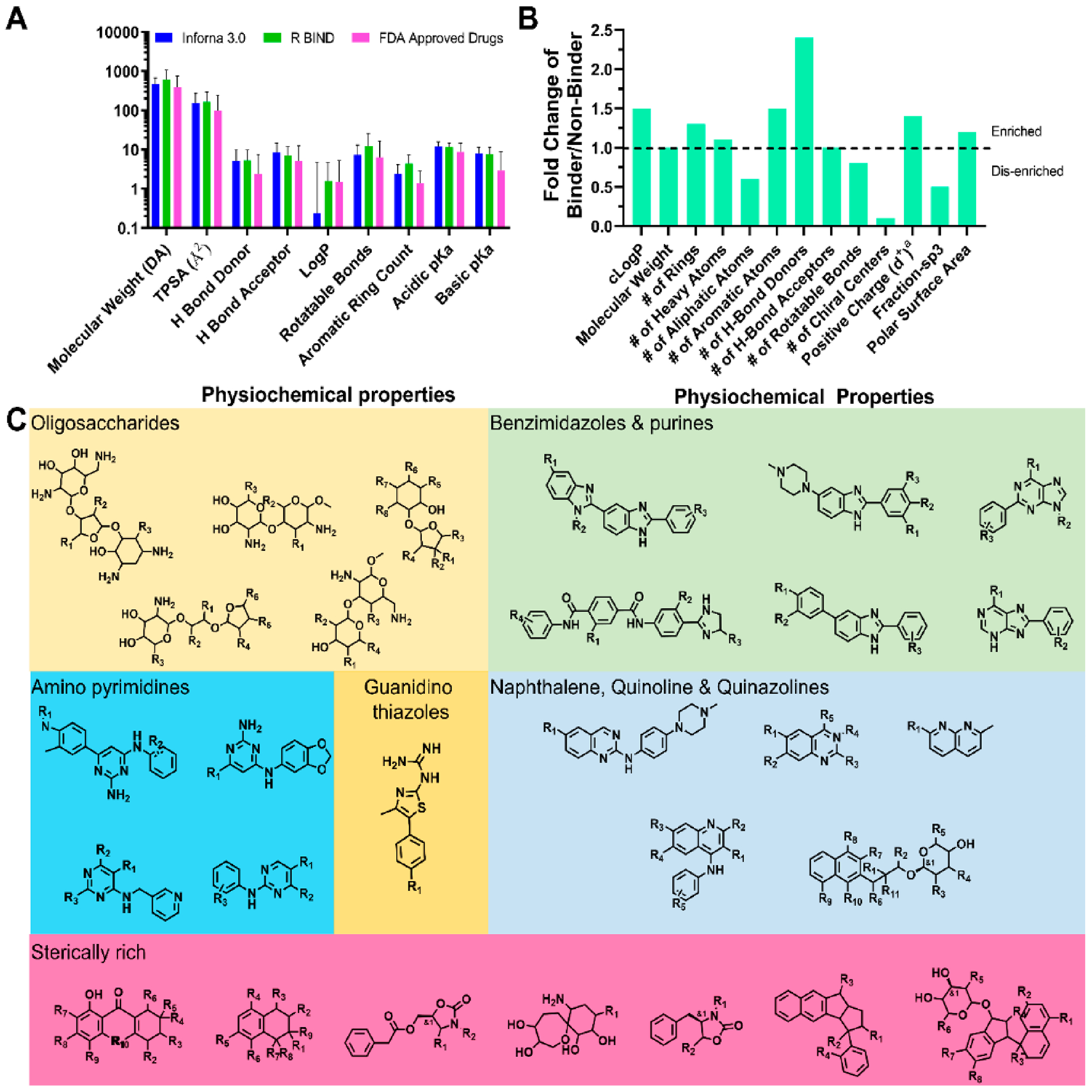
Physiochemical properties of RNA binders and common RNA-binding scaffolds. (A) Physiochemical properties of cataloged RNA binders contained within Inforna and R-BIND show convergence and correlate with properties of FDA approved drugs. FDA approved drugs were taken from DrugBank. (B) Properties that are enriched within RNA binders include greater positive charge at pH 7.4, number of H-bond donor and acceptor counts, and total polar surface area (TPSA). RNA binders also exhibit fewer chiral centers, aliphatic atoms, and rotational bonds compared to nonbinders. (C) Scaffolds contained within Inforna and R-BIND that exhibit RNA binding. These include oligosaccharides, benzimidazoles, purines, naphthalenes, quinolines, quinazolines, aminopyrimidines, and quinidine thiazoles. Interestingly, while most data generally point to planar molecules as RNA binders, some sterically rich compounds have been found to bind RNA.
Figure 8.
Figure 8.
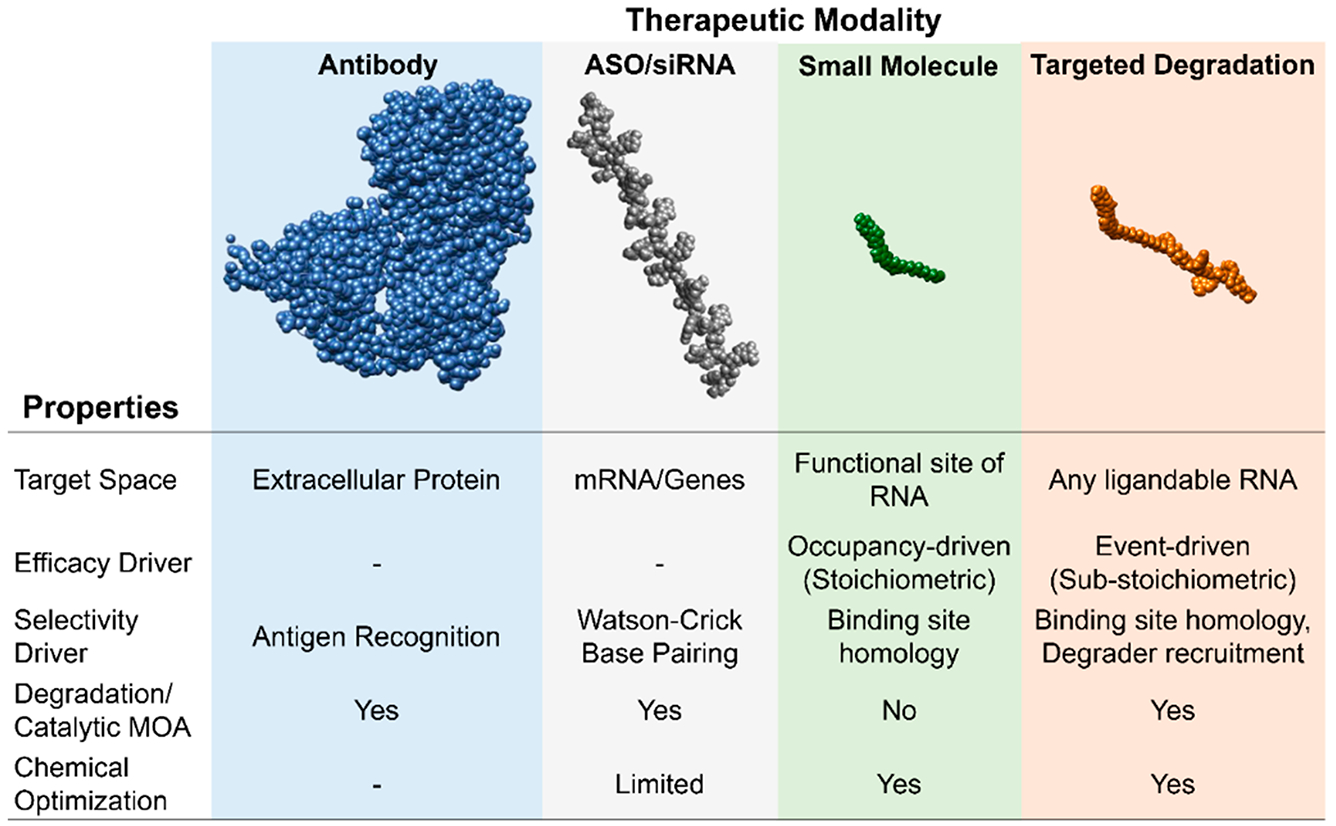
Properties of bioactive therapeutic modalities. Current and emerging strategies to affect downstream biology include antibodies (rituximab, PDB code 4KAQ), ASOs (Nusinersen), small molecules (TGP-210), and targeted degradation approaches (TGP-210 RIBOTAC). Each targets a unique space, but RIBOTACs can affect bioactivity of RNA without binding to a functional site. RIBOTACs also degrade their targets in a catalytic and substoichiometric fashion, thus allowing greater potency. Small-molecule-based modalities are advantageous as their physicochemical properties can be potentially medicinally optimized. ASO, small molecule, and targeted degradation models were made using the Online SMILES Generator (National Cancer Institute).
Figure 9.
Figure 9.
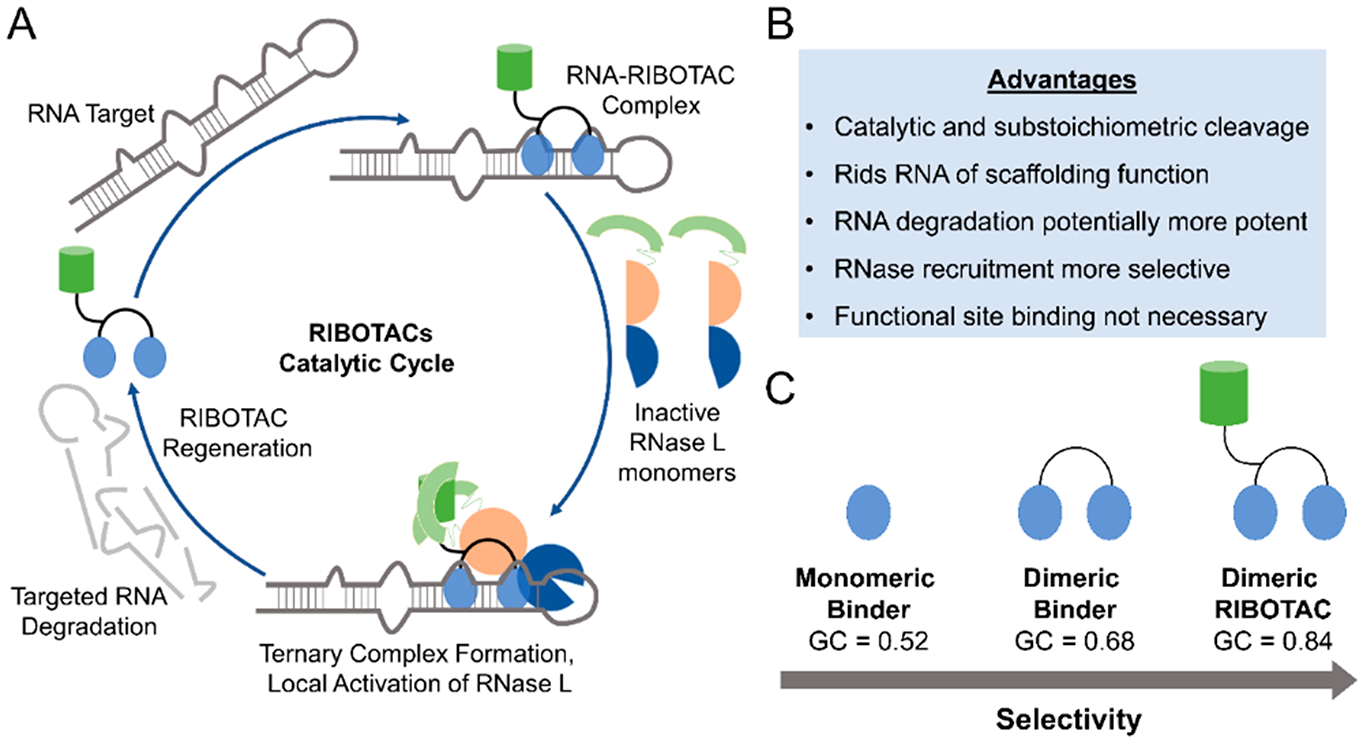
Ribonuclease targeting chimeras (RIBOTACs) as heterobifunctional degraders of RNA. (A) Taking cues from PROTACs and RNase H-based antisense oligonucleotide approaches, RIBOTACs are heterobifunctional compounds that recruit endogenous nucleases to degrade a targeted transcript. RIBOTACs can potentially increase potency of small molecules as they can catalytically and substoichiometrically degrade an RNA target. These RIBOTACs simply need to bind the target (not necessarily at a functional site) and use endogenous ribonuclease pathways to remove the RNA via targeted degradation, which also rids the RNA of any potential scaffolding functions with RBPs. Formation of the ternary complex may also increase selectivity as only meaningful interactions between the RNA:RIBOTAC:RNase L will result in cleavage. While this approach is potentially broadly applicable, development and optimization of both RNA binders and RNase-recruiting modules remain time-consuming, especially as there are a limited number of known RNase activators. Additionally, RIBOTACs that function through RNase L can have less pronounced effects on nuclear RNA, as RNase L is primarily cytoplasmic. (B) Advantages provided by the RIBOTAC approach. (C) Demonstration of increased selectivity of different RNA-binding modules, as indicated by GC analysis. The monomeric RNA-binding module that binds a single functional site on an RNA is less selective than the multivalent ligand targeting the same RNA. Adding an RNase L recruitment module to convert the dimeric compound into a RIBOTAC allows for increased selectivity, potentially due to the requirement of effective ternary complex formation between the RNA, RIBOTAC, and RNase L.

References

    1. Lander ES; Linton LM; Birren B; Nusbaum C; Zody MC; Baldwin J; Devon K; Dewar K; Doyle M; FitzHugh W; Funke R; Gage D; Harris K; Heaford A; Howland J; Kann L; Lehoczky J; LeVine R; McEwan P; McKernan K; Meldrim J; Mesirov JP; Miranda C; Morris W; Naylor J; Raymond C; Rosetti M; Santos R; Sheridan A; Sougnez C; Stange-Thomann Y; Stojanovic N; Subramanian A; Wyman D; Rogers J; Sulston J; Ainscough R; Beck S; Bentley D; Burton J; Clee C; Carter N; Coulson A; Deadman R; Deloukas P; Dunham A; Dunham I; Durbin R; French L; Grafham D; Gregory S; Hubbard T; Humphray S; Hunt A; Jones M; Lloyd C; McMurray A; Matthews L; Mercer S; Milne S; Mullikin JC; Mungall A; Plumb R; Ross M; Shownkeen R; Sims S; Waterston RH; Wilson RK; Hillier LW; McPherson JD; Marra MA; Mardis ER; Fulton LA; Chinwalla AT; Pepin KH; Gish WR; Chissoe SL; Wendl MC; Delehaunty KD; Miner TL; Delehaunty A; Kramer JB; Cook LL; Fulton RS; Johnson DL; Minx PJ; Clifton SW; Hawkins T; Branscomb E; Predki P; Richardson P; Wenning S; Slezak T; Doggett N; Cheng JF; Olsen A; Lucas S; Elkin C; Uberbacher E; Frazier M; Gibbs RA; Muzny DM; Scherer SE; Bouck JB; Sodergren EJ; Worley KC; Rives CM; Gorrell JH; Metzker ML; Naylor SL; Kucherlapati RS; Nelson DL; Weinstock GM; Sakaki Y; Fujiyama A; Hattori M; Yada T; Toyoda A; Itoh T; Kawagoe C; Watanabe H; Totoki Y; Taylor T; Weissenbach J; Heilig R; Saurin W; Artiguenave F; Brottier P; Bruls T; Pelletier E; Robert C; Wincker P; Smith DR; Doucette-Stamm L; Rubenfield M; Weinstock K; Lee HM; Dubois J; Rosenthal A; Platzer M; Nyakatura G; Taudien S; Rump A; Yang H; Yu J; Wang J; Huang G; Gu J; Hood L; Rowen L; Madan A; Qin S; Davis RW; Federspiel NA; Abola AP; Proctor MJ; Myers RM; Schmutz J; Dickson M; Grimwood J; Cox DR; Olson MV; Kaul R; Raymond C; Shimizu N; Kawasaki K; Minoshima S; Evans GA; Athanasiou M; Schultz R; Roe BA; Chen F; Pan H; Ramser J; Lehrach H; Reinhardt R; McCombie WR; de la Bastide M; Dedhia N; Blocker H; Hornischer K; Nordsiek G; Agarwala R; Aravind L; Bailey JA; Bateman A; Batzoglou S; Birney E; Bork P; Brown DG; Burge CB; Cerutti L; Chen HC; Church D; Clamp M; Copley RR; Doerks T; Eddy SR; Eichler EE; Furey TS; Galagan J; Gilbert JG; Harmon C; Hayashizaki Y; Haussler D; Hermjakob H; Hokamp K; Jang W; Johnson LS; Jones TA; Kasif S; Kaspryzk A; Kennedy S; Kent WJ; Kitts P; Koonin EV; Korf I; Kulp D; Lancet D; Lowe TM; McLysaght A; Mikkelsen T; Moran JV; Mulder N; Pollara VJ; Ponting CP; Schuler G; Schultz J; Slater G; Smit AF; Stupka E; Szustakowki J; Thierry-Mieg D; Thierry-Mieg J; Wagner L; Wallis J; Wheeler R; Williams A; Wolf YI; Wolfe KH; Yang SP; Yeh RF; Collins F; Guyer MS; Peterson J; Felsenfeld A; Wetterstrand KA; Patrinos A; Morgan MJ; de Jong P; Catanese JJ; Osoegawa K; Shizuya H; Choi S; Chen YJ; Szustakowki J Initial sequencing and analysis of the human genome. Nature 2001, 409, 860–921. - PubMed
    1. Anderson NL; Anderson NG Proteome and proteomics: new technologies, new concepts, and new words. Electrophoresis 1998, 19, 1853–1861. - PubMed
    1. Bertozzi CR; Sasisekharan R Glycomics In Essentials of Glycobiology, 2nd ed.; Varki A, Cummings RD, Esko JD, Freeze HH, Stanley P, Bertozzi CR, Hart GW, Etzler ME, Eds.; Cold Spring Harbor Laboratory Press: New York, 2009. - PubMed
    1. Ejsing CS; Sampaio JL; Surendranath V; Duchoslav E; Ekroos K; Klemm RW; Simons K; Shevchenko A Global analysis of the yeast lipidome by quantitative shotgun mass spectrometry. Proc. Natl. Acad. Sci. U. S. A 2009, 106, 2136–2141. - PMC - PubMed
    1. McGettigan PA Transcriptomics in the RNA-seq era. Curr. Opin. Chem. Biol 2013, 17, 4–11. - PubMed

Publication types