


Acute promyelocytic leukemia (APL): a review of the literature
- PMID: 32215187
- PMCID: PMC7082115
- DOI: 10.18632/oncotarget.27513
Acute promyelocytic leukemia (APL): a review of the literature
Abstract
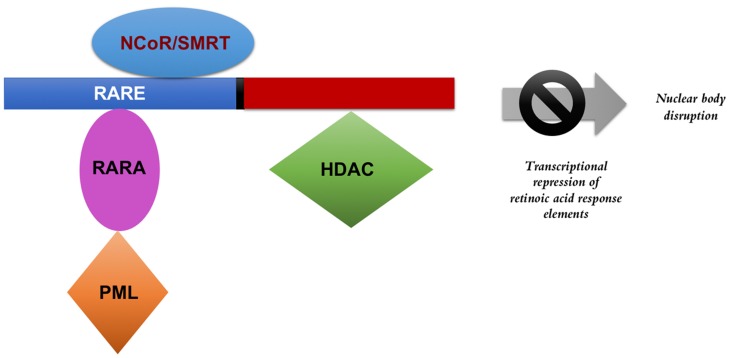
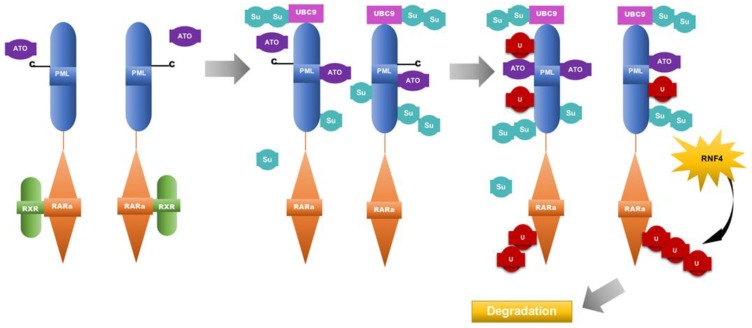
Acute Promyelocytic Leukemia (APL) is characterized by a block in differentiation where leukemic cells are halted at the promyelocyte stage. A characteristic balanced chromosomal translocation between chromosomes 15 and 17 t (15;17) (q24; q21) is seen in 95% of cases - the translocation results in the formation of the PML-RARA fusion protein. The introduction of retinoic acid (RA) and arsenic trioxide (ATO) has been responsible for initially remarkable cure rates. However, relapsed APL, particularly in the high-risk subset of patients, remains an important clinical problem. In addition, despite the success of ATRA & ATO, many clinicians still elect to use cytotoxic chemotherapy in the treatment of APL. Patients who become resistant to ATO have an increased risk of mortality. The probability of relapse is significantly higher in the high-risk subset of patients undergoing treatment for APL; overall approximately 10-20% of APL patients relapse regardless of their risk stratification. Furthermore, 20-25% of patients undergoing treatment will develop differentiation syndrome, a common side effect of differentiation agents. Recent evidence using in vitro models has shown that mutations in the B2 domain of the PML protein, mediate arsenic resistance. Alternative agents and approaches considering these clinical outcomes are needed to address ATO resistance as well as the relapse rate in high risk APL.
Keywords: arsenic trioxide; promyelocytic leukemia; resistance; retinoic acid.
Conflict of interest statement
CONFLICTS OF INTEREST The authors declare no conflicts of interest.
Figures
References
-
- Kakizuka A, Miller WH Jr, Umesono K, Warrell RP Jr, Frankel SR, Murty VV, Dmitrovsky E, Evans RM. Chromosomal translocation t(15;17) in human acute promyelocytic leukemia fuses RAR alpha with a novel putative transcription factor, PML. Cell. 1991; 66:663–674. 10.1016/0092-8674(91)90112-C. - DOI - PubMed
-
- Grignani F, Ferrucci PF, Testa U, Talamo G, Fagioli M, Alcalay M, Mencarelli A, Grignani F, Peschle C, Nicoletti I, Pelicci PG. The acute promyelocytic leukemia-specific PML-RAR alpha fusion protein inhibits differentiation and promotes survival of myeloid precursor cells. Cell. 1993; 74:423–431. 10.1016/0092-8674(93)80044-f. - DOI - PubMed
Publication types
LinkOut - more resources
Full Text Sources
Other Literature Sources
