


Molecular Mechanisms by Which Imeglimin Improves Glucose Homeostasis
- PMID: 32215274
- PMCID: PMC7079260
- DOI: 10.1155/2020/8768954
Molecular Mechanisms by Which Imeglimin Improves Glucose Homeostasis
Abstract
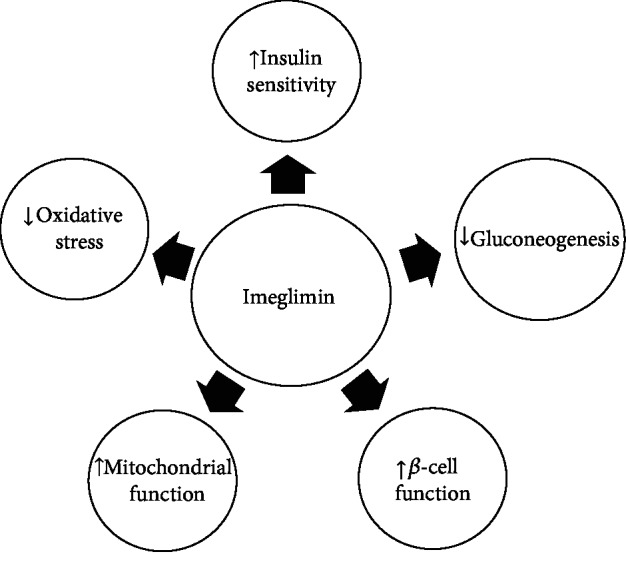
Despite different classes of antidiabetic medications available for the management of patients with diabetes, efforts are underway to identify novel and safer antihyperglycemic agents with higher potency and increased tolerability. Imeglimin is a promising antidiabetic agent that has shown to have significant antihyperglycemic effects in studies, although it has not been approved yet. There is growing evidence that imeglimin improves glucose homeostasis in the diabetic milieu; however, the precise molecular mechanisms are still not elucidated. In this review, we discuss various molecular pathways by which imeglimin exerts its antihyperglycemic effects and improves glucose homeostasis in the diabetic milieu.
Copyright © 2020 Habib Yaribeygi et al.
Conflict of interest statement
The authors declare that they have no conflict of interest in this study.
Figures
References
Publication types
MeSH terms
Substances
LinkOut - more resources
Full Text Sources
Medical
