Global, regional, and national burden of neck pain in the general population, 1990-2017: systematic analysis of the Global Burden of Disease Study 2017
- PMID: 32217608
- PMCID: PMC7249252
- DOI: 10.1136/bmj.m791
Global, regional, and national burden of neck pain in the general population, 1990-2017: systematic analysis of the Global Burden of Disease Study 2017
Abstract
Objective: To use data from the Global Burden of Disease Study between 1990 and 2017 to report the rates and trends of point prevalence, annual incidence, and years lived with disability for neck pain in the general population of 195 countries.
Design: Systematic analysis.
Data source: Global Burden of Diseases, Injuries, and Risk Factors Study 2017.
Main outcome measures: Numbers and age standardised rates per 100 000 population of neck pain point prevalence, annual incidence, and years lived with disability were compared across regions and countries by age, sex, and sociodemographic index. Estimates were reported with uncertainty intervals.
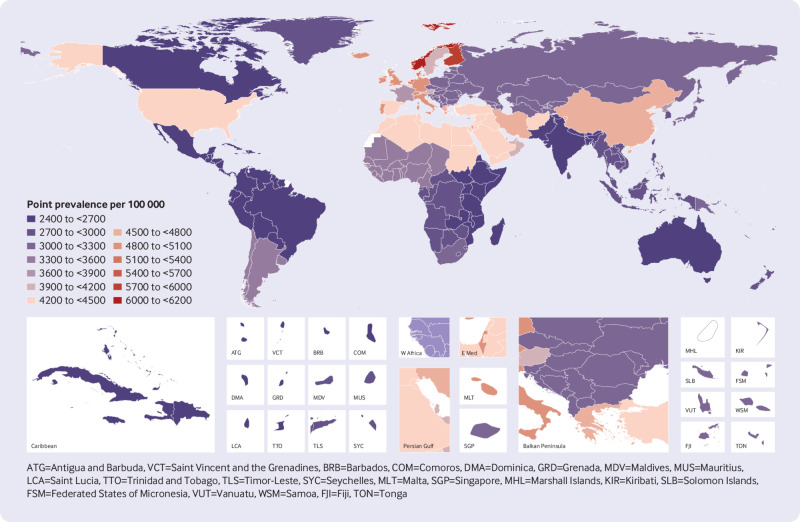
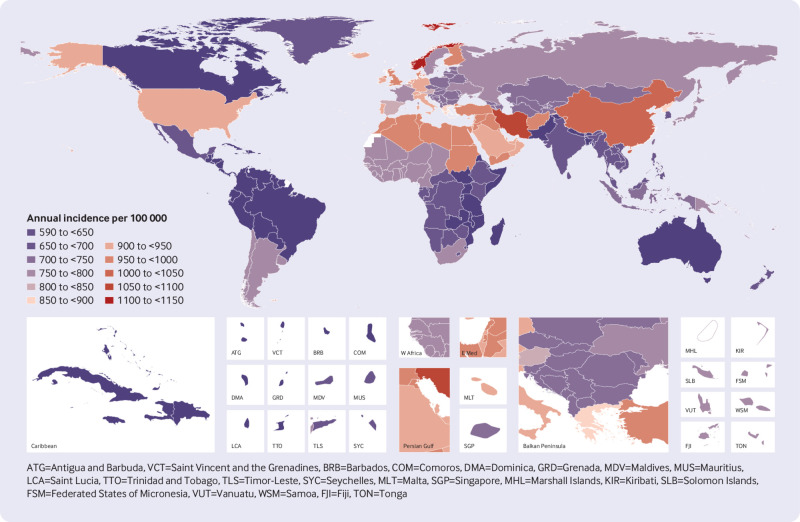
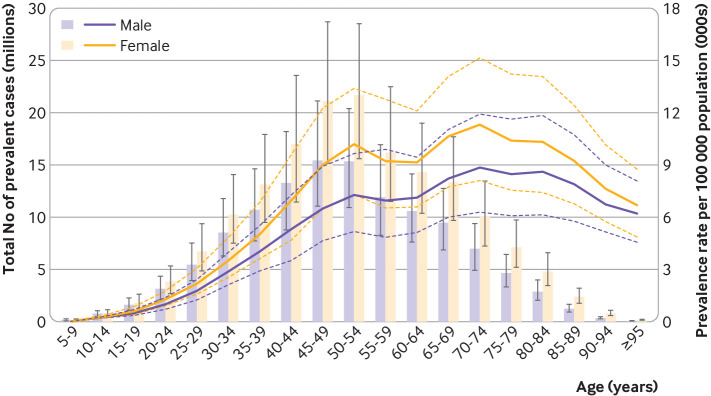
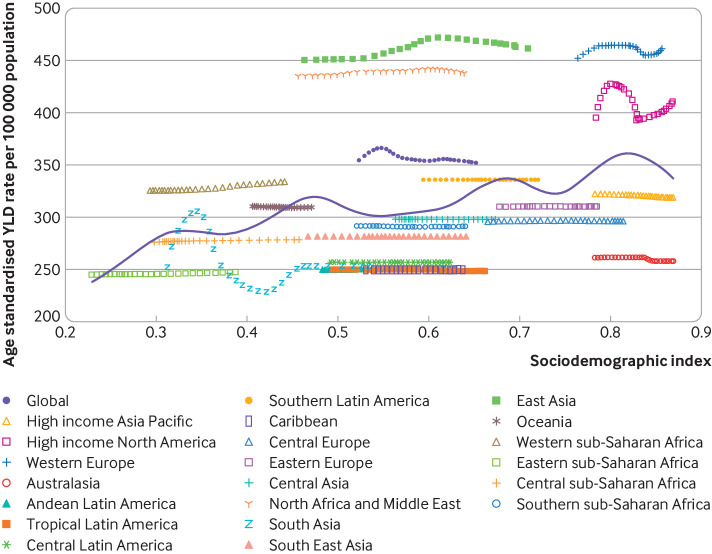
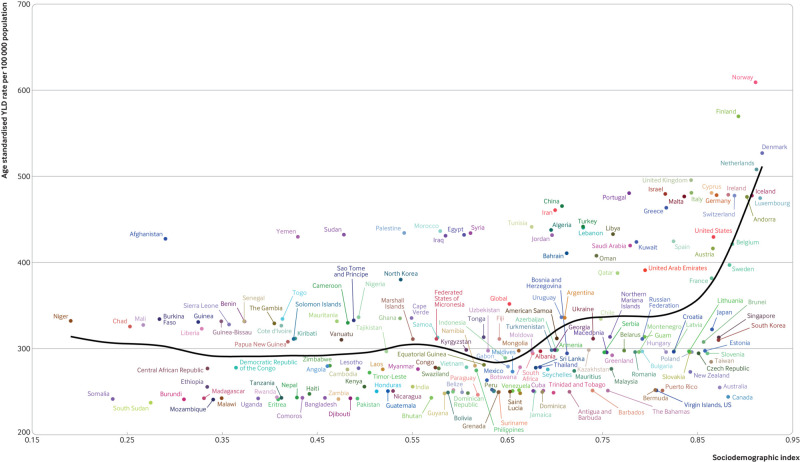
Results: Globally in 2017 the age standardised rates for point prevalence of neck pain per 100 000 population was 3551.1 (95% uncertainty interval 3139.5 to 3977.9), for incidence of neck pain per 100 000 population was 806.6 (713.7 to 912.5), and for years lived with disability from neck pain per 100 000 population was 352.0 (245.6 to 493.3). These estimates did not change significantly between 1990 and 2017. The global point prevalence of neck pain in 2017 was higher in females compared with males, although this was not significant at the 0.05 level. Prevalence increased with age up to 70-74 years and then decreased. Norway (6151.2 (95% uncertainty interval 5382.3 to 6959.8)), Finland (5750.3 (5058.4 to 6518.3)), and Denmark (5316 (4674 to 6030.1)) had the three highest age standardised point prevalence estimates in 2017. The largest increases in age standardised point prevalence estimates from 1990 to 2017 were in the United Kingdom (14.6% (10.6% to 18.8%)), Sweden (10.4% (6.0% to 15.4%)), and Kuwait (2.6% (2.0% to 3.2%)). In general, positive associations, but with fluctuations, were found between age standardised years lived with disability for neck pain and sociodemographic index at the global level and for all Global Burden of Disease regions, suggesting the burden is higher at higher sociodemographic indices.
Conclusions: Neck pain is a serious public health problem in the general population, with the highest burden in Norway, Finland, and Denmark. Increasing population awareness about risk factors and preventive strategies for neck pain is warranted to reduce the future burden of this condition.
© Author(s) (or their employer(s)) 2019. Re-use permitted under CC BY-NC. No commercial re-use. See rights and permissions. Published by BMJ.
Conflict of interest statement
Competing interests: All authors have completed the ICMJE uniform disclosure form at www.icmje.org/coi_disclosure.pdf and declare: Global Burden of Disease Study is funded by the Bill and Melinda Gates Foundation, and this study was supported by Shahid Beheshti University of Medical Sciences, Tehran, Iran (grant No 20732-4-7); no financial relationships with any organisations that might have an interest in the submitted work in the previous three years; no other relationships or activities that could appear to have influenced the submitted work.
Figures
References
-
- Manchikanti L, Singh V, Datta S, Cohen SP, Hirsch JA, American Society of Interventional Pain Physicians Comprehensive review of epidemiology, scope, and impact of spinal pain. Pain Physician 2009;12:E35-70. - PubMed
Publication types
MeSH terms
LinkOut - more resources
Full Text Sources
Medical