. 2020 Jul;45(8):1380-1389.
doi: 10.1038/s41386-020-0661-8. Epub 2020 Mar 28.

Neural correlates of conceptual-level fear generalization in posttraumatic stress disorder

Collaborators, Affiliations

Neural correlates of conceptual-level fear generalization in posttraumatic stress disorder

Rajendra A Morey et al. Neuropsychopharmacology. 2020 Jul.

Abstract

Posttraumatic stress disorder (PTSD) may develop when mechanisms for making accurate distinctions about threat relevance have gone awry. Generalization across conceptually related objects has been hypothesized based on clinical observation in PTSD, but the neural mechanisms remain unexplored. Recent trauma-exposed military veterans (n = 46) were grouped into PTSD (n = 23) and non-PTSD (n = 23). Participants learned to generalize fear across conceptual categories (animals or tools) of semantically related items that were partially reinforced by shock during functional magnetic resonance imaging. Conditioned fear learning was quantified by shock expectancy and skin conductance response (SCR). Relative to veteran controls, PTSD subjects exhibited a stronger neural response associated with fear generalization to the reinforced object category in the striatum, anterior cingulate cortex, amygdala, occipitotemporal cortex, and insula (Z > 2.3; p < 0.05; whole-brain corrected). Based on SCR, both groups generalized the shock contingency to the reinforced conceptual category, but learning was not significantly different between groups. We found that PTSD was associated with an enhanced neural response in fronto-limbic, midline, and occipitotemporal regions to a learned representation of threat that is based on previously established conceptual knowledge of the relationship between basic-level exemplars within a semantic category. Behaviorally, veterans with PTSD were somewhat slower to differentiate threat and safety categories as compared with trauma-exposed veteran controls owing in part to an initial overgeneralized behavioral response to the safe category. These results have implications for understanding how fear spreads across semantically related concepts in PTSD.


Figures

Fig. 1
Fig. 1. Subjects were presented with 80 unique exemplars of animals (40) and tools (40) for 6 s each.
Exemplars were never repeated during the fear acquisition session. Half the objects from one category (CS+) co-terminated with a 6-ms electrical shock unconditioned stimulus (US), whereas objects from the other category were never reinforced (CS−). Each trial was separated by a 6–8 s jittered inter-trial interval. Subjects were not instructed on the CS–US contingency and were not informed that images were presented only once. In this example, tools served as the CS+ and animals served as the CS− (category assignment was counterbalanced across subjects). Subjects learned through experience to generalize their conditioned fear response from the reinforced exemplars of the CS+ category (e.g., tools as shown here) to the other exemplars from the same object category, thus forming a broad threat response to the entire category.
Fig. 2
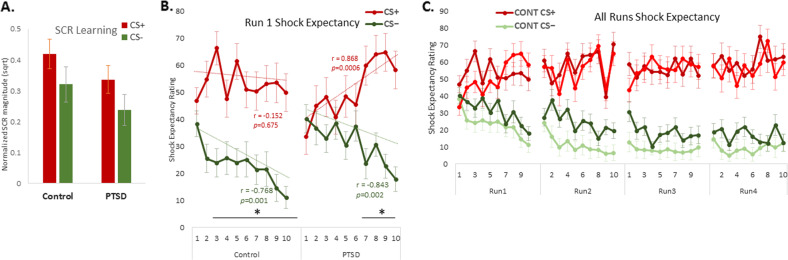
Fig. 2. Physiological and behavioral and indices of conceptual fear generalization.
a Mean skin conductance response (SCR) for CS+ and CS− in Control and PTSD groups averaged across all trials. b Compared with the trauma-exposed control group, the PTSD group demonstrated delayed contingency learning, as measured by shock expectancy ratings. On average, subjects’ differential shock expectancy ratings began to diverge from the 2nd trial of each category exemplar in the control group but only from the 7th trial onward in the PTSD group. Linear trend analysis confirmed a strong linear pattern of threat learning (CS+) only in the PTSD group, whereas both groups showed strong linear patterns for safety learning (CS−). c All four runs confirm that learning was achieved in the first run and was maintained for the duration of the experiment. Dark green represents PTSD CS− and that light-red indicates PTSD CS+. Error bars represent mean ± SEM. *P < 0.05, two-tailed t tests. CONT = control.
Fig. 3
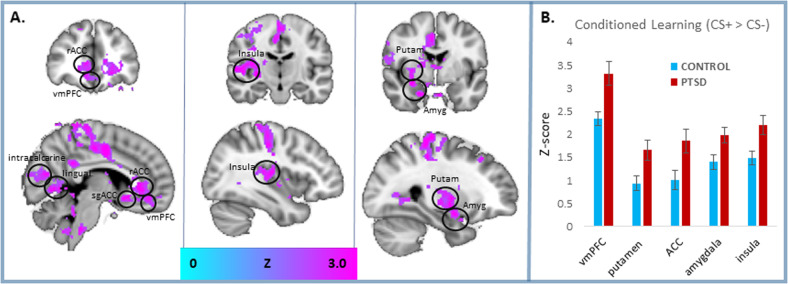
Fig. 3. FMRI correlates of conceptual fear generalization.
Data are averaged across all exemplars from the reinforced category compared with the unreinforced category (CS+ > CS−). a Relative to trauma-exposed veteran controls, PTSD patients exhibited enhanced activation in an extensive corticolimbic network, including the amygdala (amyg) [x y z] = 28, −2, −16, ventromedial prefrontal cortex (vmPFC) [x y z] = 6, 44, −14, striatum, particularly in the putamen (putam) [x y z] = 30, −8, −0, insula [x y z] = 38, −16, 12, rostral anterior cingulate cortex (rACC) [x y z] = 2, 36, −2, subgenual ACC (sgACC) [x y z] = −4, 18, −6, lingual gyrus (lingual) [x y z] = 16, −58, 0, and intracalcarine cortex (intracalcarine) [x y z] = 16, −82, 8. All results were significant with whole-brain correction (cluster threshold Z > 2.3; p < 0.05 corrected). b The bar graph offers a visualization of regional activation presented in the activation maps presented as Z scores. Error bars represent means ± SEMs.

References

    1. Dunsmoor JE, Paz R. Fear generalization and anxiety: Behavioral and neural mechanisms. Biol Psychiatry. 2015;78:336–43. - PubMed
    1. LeDoux J. Rethinking the emotional brain. Neuron. 2012;73:653–76. - PMC - PubMed
    1. Morey R, Dunsmoor J, Haswell C, Brown V, Vora A, Weiner J, et al. Fear learning circuitry is biased toward generalization of fear associations in posttraumatic stress disorder. Transl psychiatry. 2015;5:e700. - PMC - PubMed
    1. Kaczkurkin AN, Burton PC, Chazin SM, Manbeck AB, Espensen-Sturges T, Cooper SE, et al. Neural substrates of overgeneralized conditioned fear in ptsd. Am J psychiatry:appi ajp. 2016;174:2016.15121549. - PMC - PubMed
    1. Ehlers A. Understanding and treating unwanted trauma memories in posttraumatic stress disorder. J Psychol. 2015;218:141–5. - PMC - PubMed

Publication types