


CSF α-synuclein correlates with CSF neurogranin in late-life depression
- PMID: 32228205
- PMCID: PMC7529713
- DOI: 10.1080/00207454.2020.1744596
CSF α-synuclein correlates with CSF neurogranin in late-life depression
Abstract
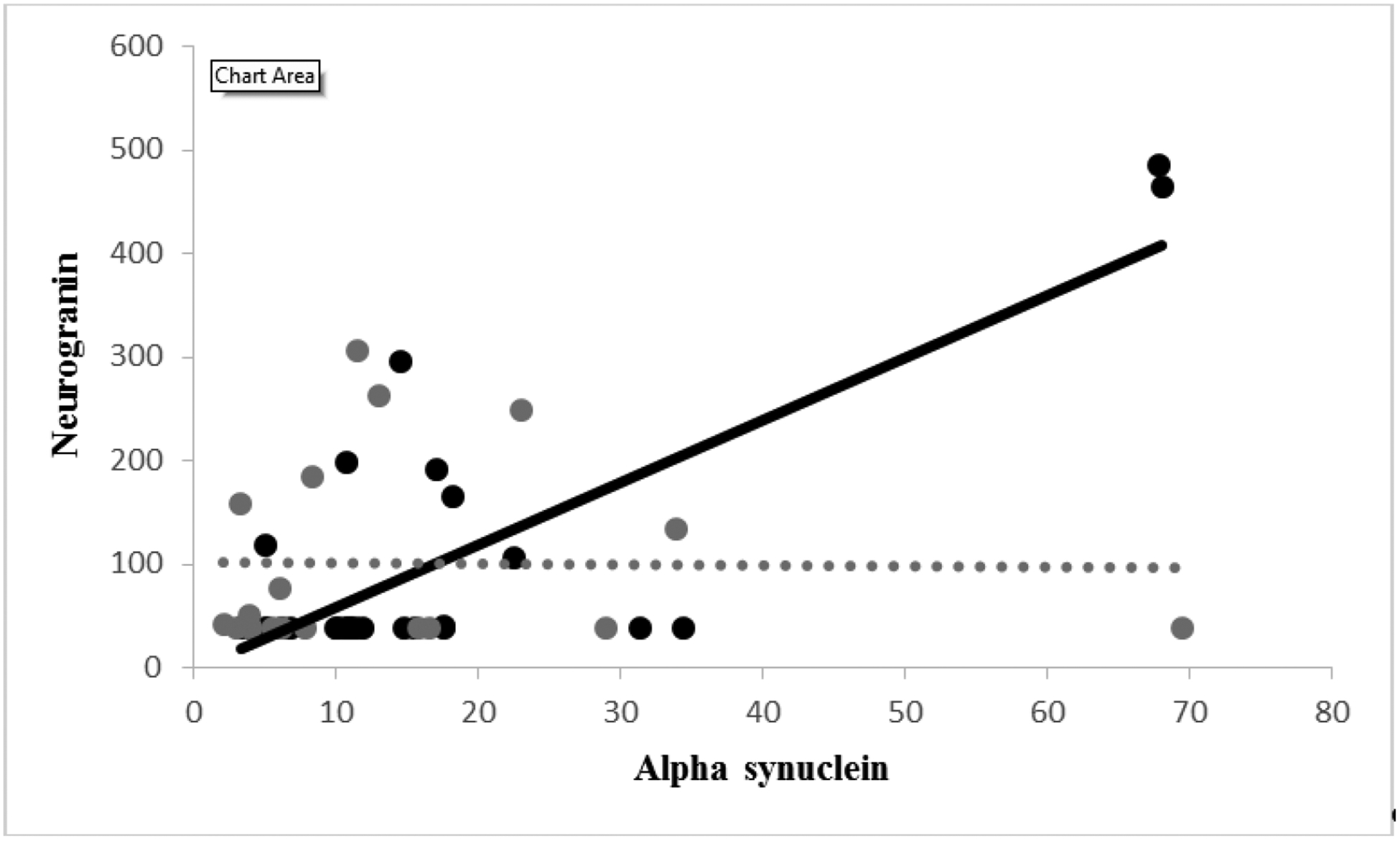
Purpose/aim of the study: Major depressive disorder (MDD) in late life is linked to increased risk of subsequent dementia, but it is still unclear exactly what pathophysiological mechanisms underpin this link. A potential mechanism related to elevated risk of dementia in MDD is increased levels of α-synuclein (α-Syn), a protein found in presynaptic neuronal terminals.Materials and methods: In this study, we examined cerebrospinal fluid (CSF) levels of α-Syn in conjunction with biomarkers of neurodegeneration (amyloid-β 42, total and phospho tau) and synaptic dysfunction (neurogranin), and measures of memory ability, in 27 cognitively intact older individuals with MDD and 19 controls.Results: Our results show that CSF α-Syn levels did not significantly differ across depressed and control participants, but α-Syn was directly associated with neurogranin levels, and indirectly linked to poorer memory ability.Conclusions: All in all, we found that α-Syn may be implicated in the association between late life MDD and synaptic dysfunction, although further research is needed to confirm these results.
Keywords: late-life major depressive disorder; memory; neurogranin; α-synuclein.
Conflict of interest statement
Conflicts of Interest
HZ and KB are co-founders of Brain Biomarker Solutions in Gothenburg AB, a GU Ventures-based platform company at the University of Gothenburg. KB has served as a consultant or at advisory boards for Alzheon, Axon Neuroscience, BioArctic, Biogen, Eli Lilly, Fujirebio Europe, IBL International, Pfizer, and Roche Diagnostics. HZ has served at scientific advisory boards for Samumed, Wave, CogRx and Roche Diagnostics, and has given lectures in symposia sponsored by Alzecure and Biogen.
No other conflicts of interests are disclosed.
Figures
References
-
- Green RC, Cupples LA, Kurz A, Auerbach S, Go R, Sadovnick D, Duara R, Kukull WA, Chui H, Edeki T, Griffith PA. Depression as a risk factor for Alzheimer disease: the MIRAGE Study. Archives of neurology. 2003. May 1;60(5):753–9. - PubMed
-
- Kokmen E, Beard CM, Chandra V, Offord KP, Schoenberg BS, Ballard DJ. Clinical risk factors for Alzheimer’s disease A population‐ based case‐ control study. Neurology. 1991. September 1;41(9):1393-. - PubMed
-
- Pomara N, Bruno D, Sarreal AS, Hernando RT, Nierenberg J, Petkova E, Sidtis JJ, Wisniewski TM, Mehta PD, Pratico D, Zetterberg H. Lower CSF amyloid beta peptides and higher F2-isoprostanes in cognitively intact elderly individuals with major depressive disorder. American Journal of Psychiatry. 2012. May;169(5):523–30. - PMC - PubMed
-
- Jorm AF. History of depression as a risk factor for dementia: an updated review. Australian & New Zealand Journal of Psychiatry. 2001. December;35(6):776–81. - PubMed
MeSH terms
Substances
Grants and funding
LinkOut - more resources
Full Text Sources
Miscellaneous
