


Ethnicity and survival in bladder cancer: a population-based study based on the SEER database
- PMID: 32228610
- PMCID: PMC7106682
- DOI: 10.1186/s12967-020-02308-w
Ethnicity and survival in bladder cancer: a population-based study based on the SEER database
Abstract
Background: Bladder cancer is the most common cancer in the urinary system and the fourth most common cancer in males. This study aimed to examine differences in the survival of bladder cancer patients of different ethnicities.
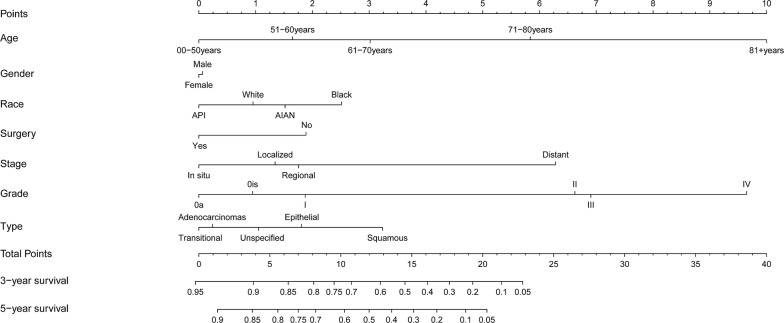
Method: We used the SEER database to obtain data pertaining to bladder cancer patients from 2010 to 2015. Univariate and multivariate Cox proportional hazards regression analyses were used to estimate hazard ratios (HRs) and 95% confidence intervals (CIs) for the association between ethnicity and death. Kaplan-Meier survival and nomogram analyses were used to compare survival differences among patients with different ethnicities.
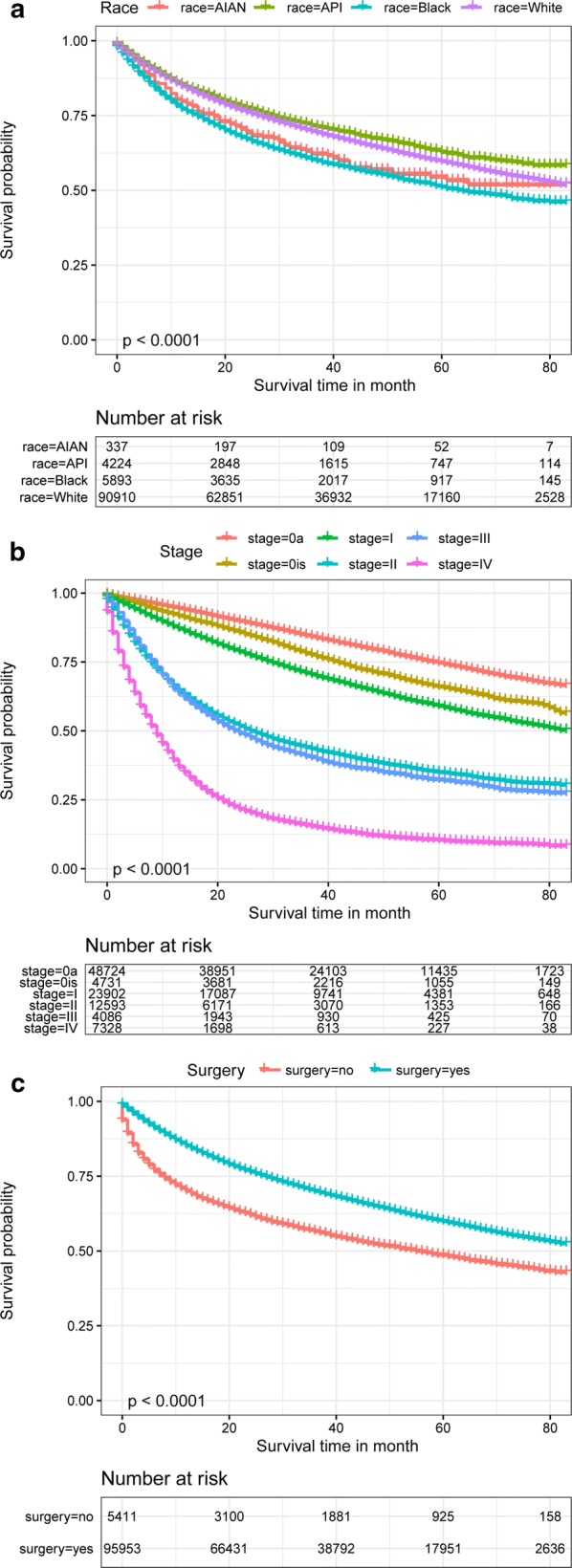
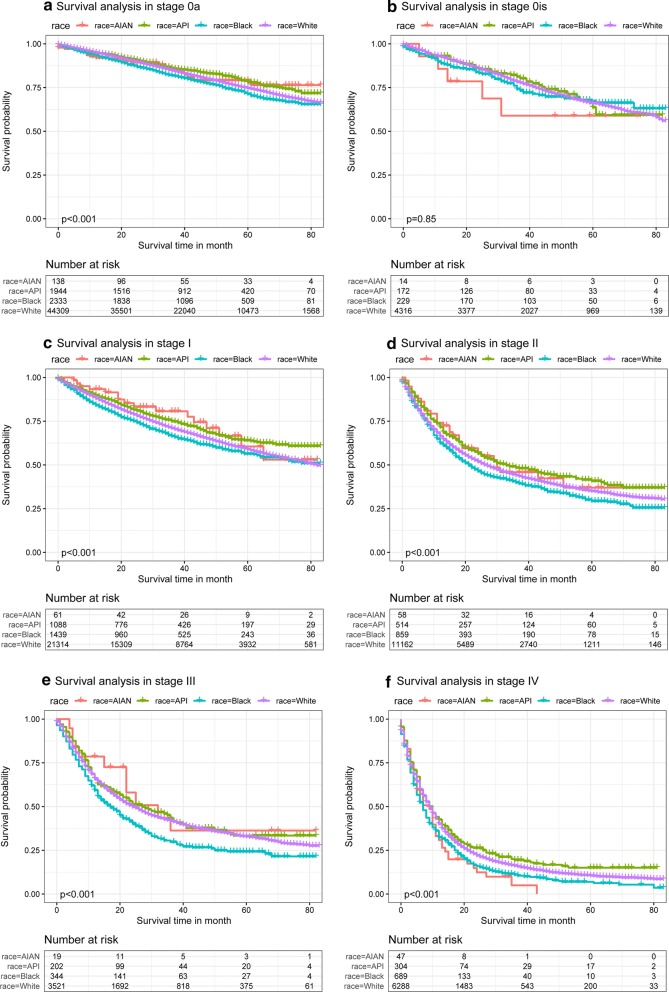
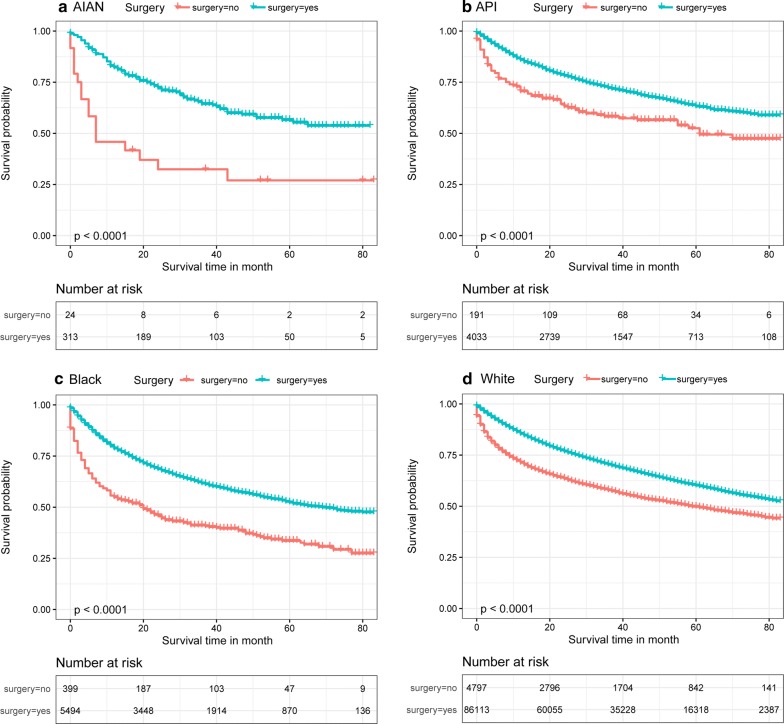
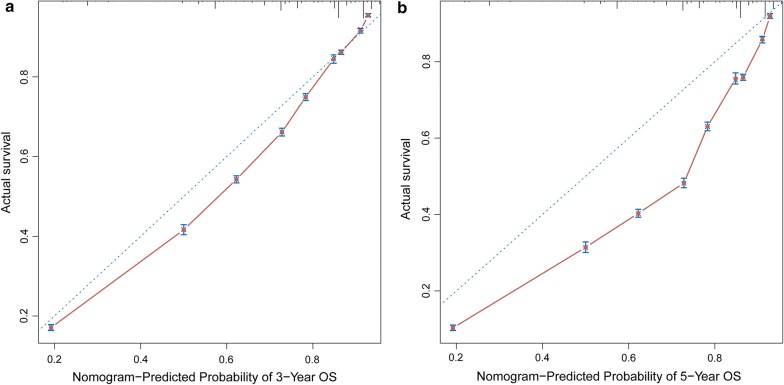
Results: Among 101,364 bladder cancer patients, 90,910 were white, 5893 were black, 337 were American Indian/Alaska Native (AIAN), and 4224 were Asian or Pacific Islander (API). Our multivariate analysis identified differences between different ethnicities. Compared to the API group, the AIAN (HR = 1.31, 95% CI = 1.09-1.57, P < 0.001), black (HR = 1.56, 95% CI = 1.46-1.67, P < 0.001), and white (HR = 1.18, 95% CI = 1.12-1.25, P < 0.001) groups showed lower survival probabilities. Based on data from all Kaplan-Meier survival curves, there was no significant difference in survival between the black and AIAN groups, but the survival of these two races was worse than that of the white and API groups. We also used a nomogram to estimate patient survival and validated its predictive value.
Conclusion: Our results suggest that ethnic differences exist in patients with bladder cancer, that the survival of black and AIAN bladder cancer patients is worse than that of other ethnicities and that the survival of API patients is the best. The significant prognostic factors of overall survival, which include age, sex, ethnicity, summary stage, American Joint Committee on Cancer stage, surgery type, and histologic type, should be applied to bladder cancer patient prognostication.
Keywords: Bladder cancer; Ethnic; Kaplan–Meier survival; SEER database; Survival rate.
Conflict of interest statement
The authors declare no potential conflicts of interest.
Figures
References
-
- Siegel RL, Miller KD. Cancer statistics. 2019;2019(69):7–34. - PubMed
MeSH terms
LinkOut - more resources
Full Text Sources
Medical
