COVID-19 and chronological aging: senolytics and other anti-aging drugs for the treatment or prevention of corona virus infection?
- PMID: 32229706
- PMCID: PMC7202514
- DOI: 10.18632/aging.103001
COVID-19 and chronological aging: senolytics and other anti-aging drugs for the treatment or prevention of corona virus infection?
Abstract
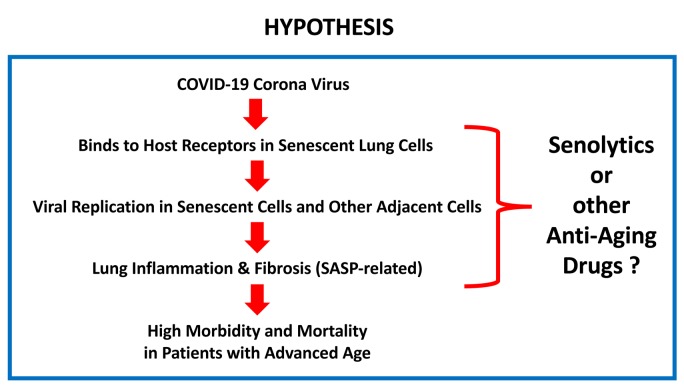
COVID-19, also known as SARS-CoV-2, is a new emerging zoonotic corona virus of the SARS (Severe Acute Respiratory Syndrome) and the MERS (Middle East Respiratory Syndrome) family. COVID-19 originated in China and spread world-wide, resulting in the pandemic of 2020. For some reason, COVID-19 shows a considerably higher mortality rate in patients with advanced chronological age. This begs the question as to whether there is a functional association between COVID-19 infection and the process of chronological aging. Two host receptors have been proposed for COVID-19. One is CD26 and the other is ACE-2 (angiotensin-converting enzyme 2). Interestingly, both CD26 and the angiotensin system show associations with senescence. Similarly, two proposed therapeutics for the treatment of COVID-19 infection are Azithromycin and Quercetin, both drugs with significant senolytic activity. Also, Chloroquine-related compounds inhibit the induction of the well-known senescence marker, Beta-galactosidase. Other anti-aging drugs should also be considered, such as Rapamycin and Doxycycline, as they behave as inhibitors of protein synthesis, blocking both SASP and viral replication. Therefore, we wish to speculate that the fight against COVID-19 disease should involve testing the hypothesis that senolytics and other anti-aging drugs may have a prominent role in preventing the transmission of the virus, as well as aid in its treatment. Thus, we propose that new clinical trials may be warranted, as several senolytic and anti-aging therapeutics are existing FDA-approved drugs, with excellent safety profiles, and would be readily available for drug repurposing efforts. As Azithromycin and Doxycycline are both commonly used antibiotics that inhibit viral replication and IL-6 production, we may want to consider this general class of antibiotics that functionally inhibits cellular protein synthesis as a side-effect, for the treatment and prevention of COVID-19 disease.
Keywords: Azithromycin; COVID-19; Doxycycline; Hydroxy-chloroquine; Quercetin; Rapamycin; aging; antibiotic; corona virus; drug repurposing; prevention; senescence; senolytic drug therapy; viral replication.
Conflict of interest statement
Figures
References
-
- Zhou F, Yu T, Du R, Fan G, Liu Y, Liu Z, Xiang J, Wang Y, Song B, Gu X, Guan L, Wei Y, Li H, et al. Clinical course and risk factors for mortality of adult inpatients with COVID-19 in Wuhan, China: a retrospective cohort study. Lancet. 2020; 395:1054–62. 10.1016/S0140-6736(20)30566-3 - DOI - PMC - PubMed
-
- Tai W, He L, Zhang X, Pu J, Voronin D, Jiang S, Zhou Y, Du L. Characterization of the receptor-binding domain (RBD) of 2019 novel coronavirus: implication for development of RBD protein as a viral attachment inhibitor and vaccine. Cell Mol Immunol. 2020. [Epub ahead of print]. 10.1038/s41423-020-0400-4 - DOI - PMC - PubMed
MeSH terms
Substances
LinkOut - more resources
Full Text Sources
Other Literature Sources
Medical
Research Materials
Miscellaneous