


Ultrasound-Guided Percutaneous Tenotomy for Gluteal Tendinopathy
- PMID: 32232066
- PMCID: PMC7082875
- DOI: 10.1177/2325967120907868
Ultrasound-Guided Percutaneous Tenotomy for Gluteal Tendinopathy
Abstract
Background: Gluteal tendinopathy is a common cause of lateral hip pain. Percutaneous ultrasonic tenotomy (PUT) has been used successfully for the treatment of tendinopathy of the elbow, knee, and ankle, but its use in the hip has not been described.
Purpose: To evaluate the efficacy of PUT in patients who did not respond to nonsurgical management of gluteal tendinopathy.
Study design: Case series; Level of evidence, 4.
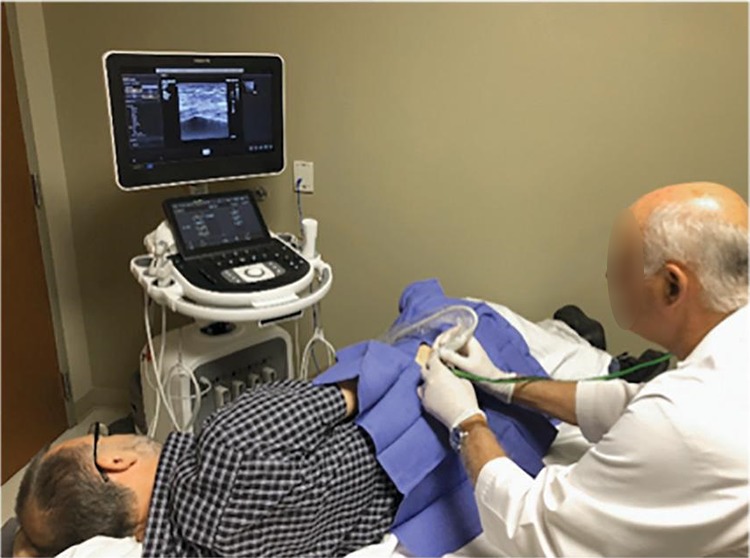
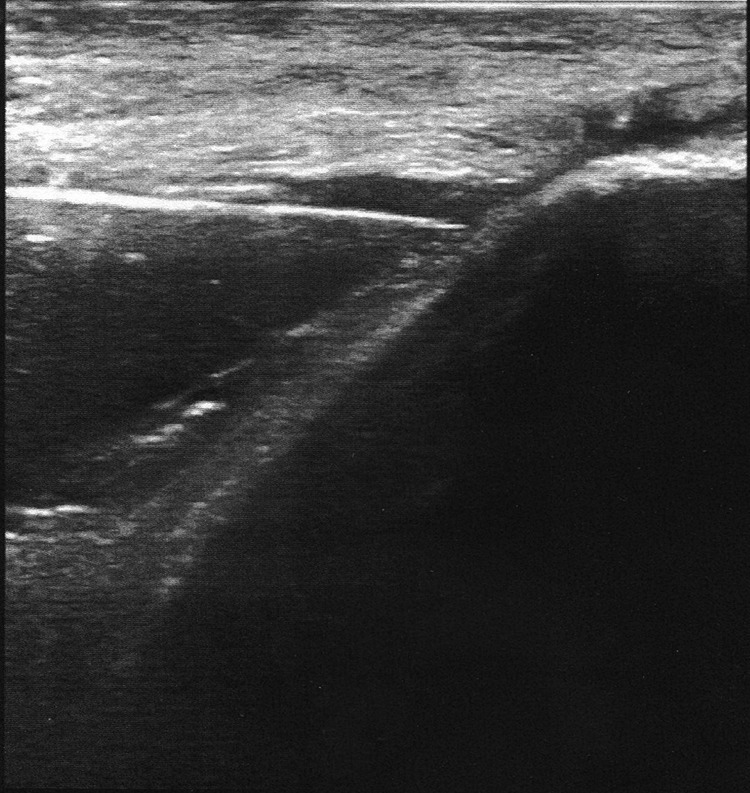
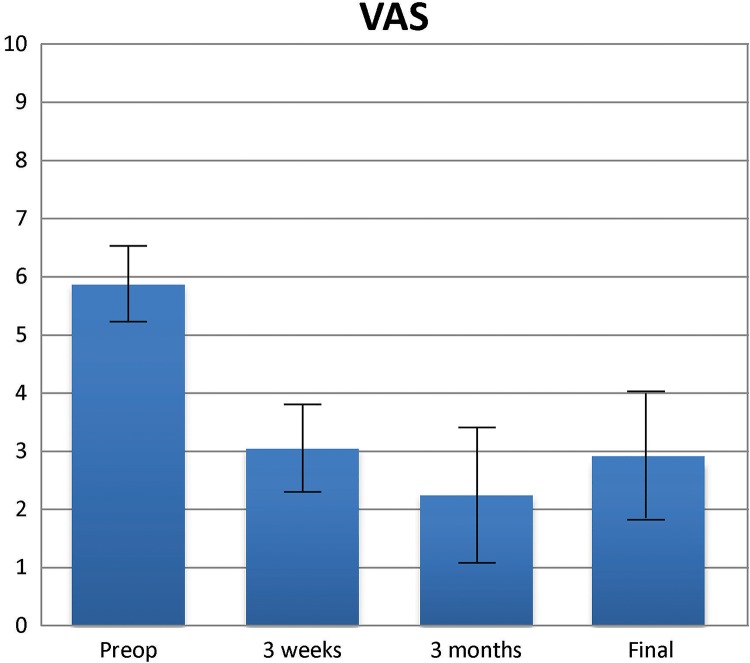
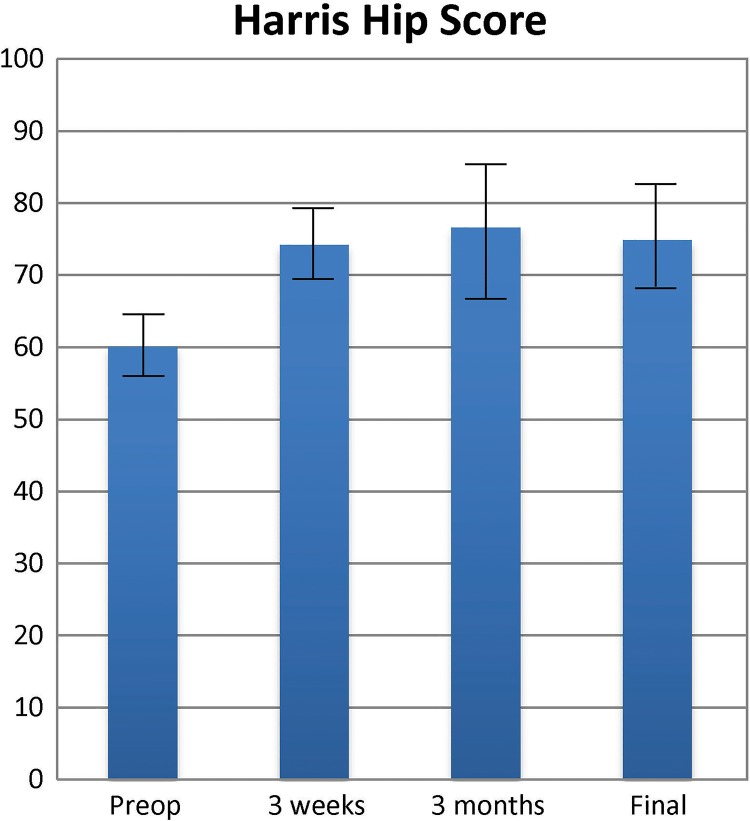
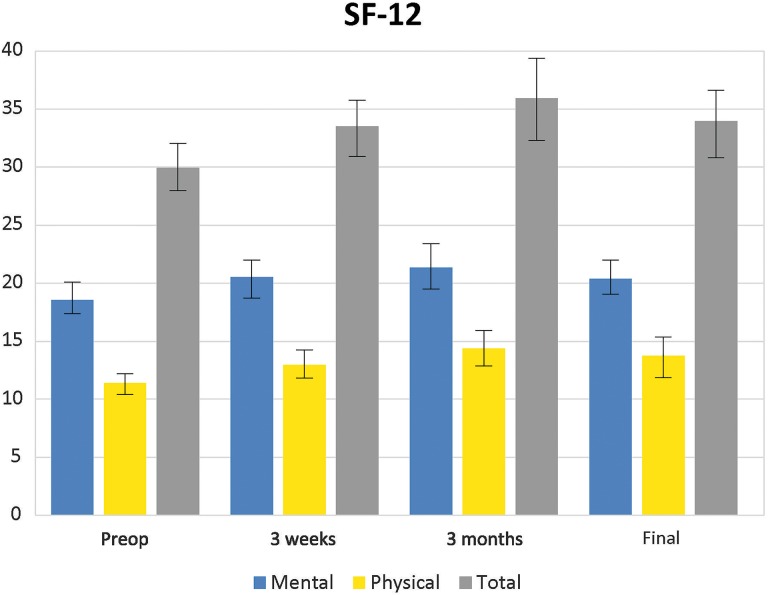
Methods: A total of 29 patients with gluteal tendinopathy (mean age, 62 years) who did not respond to nonsurgical treatment were enrolled in this prospective study and underwent ultrasound-guided PUT in an outpatient setting. Patients with a history of ipsilateral hip surgery were excluded. All patients initially underwent magnetic resonance imaging or a computed tomography arthrogram demonstrating tendinopathy and/or partial tearing of the gluteus minimus or medius tendon or both tendons. Outcomes were assessed with a visual analog scale (VAS) for pain, the Harris Hip Score evaluation, and the 12-Item Short Form Health Survey (SF-12) before the procedure and at subsequent follow-up visits or by telephone interviews at 3 weeks, 3 months, 6 months, and final follow-up (range, 18-30 months).
Results: The mean final follow-up was at 22 months postoperatively. At final follow-up, VAS scores had improved from a preprocedural mean ± SD of 5.86 ± 1.73 to 2.82 ± 2.22 (P < .01). Harris Hip Scores improved from a preprocedural mean of 60.03 ± 10.86 to 77.47 ± 14.34 (P < .01). Total SF-12 scores improved from a mean of 29.93 ± 5.39 (51% optimal) to 34.41 ± 4.88 (64% optimal) (P < .01). No complications were reported. At final follow-up, when asked whether they would have the procedure again, 15 patients replied "yes definitely," 3 replied "yes probably," 3 replied "maybe," 1 replied "likely not," and 2 replied "definitely not." There were 3 patients who eventually had hip abductor tendon repair, and their PUT procedures were considered failures.
Conclusion: PUT is an effective treatment, with good results for patients with gluteal tendinopathy.
Keywords: gluteal tendinopathy; greater trochanteric pain syndrome; minimally invasive; tendinitis; ultrasound-guided.
© The Author(s) 2020.
Conflict of interest statement
One or more of the authors has declared the following potential conflict of interest or source of funding: Partial research funding for the study was provided to the Hughston Foundation by Tenex Health. C.L.B. is on the Medical Advisory Board of Tenex. AOSSM checks author disclosures against the Open Payments Database (OPD). AOSSM has not conducted an independent investigation on the OPD and disclaims any liability or responsibility relating thereto.
Figures

References
-
- Baker CL, Massie RV, Hurt WG, Savory CG. Arthroscopic bursectomy for recalcitrant trochanteric bursitis. Arthroscopy. 2007;23(8):827–832. - PubMed
-
- Barnes DE, Beckley JM, Smith J. Percutaneous ultrasonic tenotomy for chronic elbow tendinosis: a prospective study. J Shoulder Elbow Surg. 2015;24(1):67–73. - PubMed
-
- Blankenbaker DG, Ullrick SR, Davis KW, De Smet AA, Haaland B, Fine JP. Correlation of MRI findings with clinical findings of trochanteric pain syndrome. Skeletal Radiol. 2008;37(10):903–909. - PubMed
-
- Brennan KL, Allen BC, Maldonado YM. Dry needling versus cortisone injection in the treatment of greater trochanteric pain syndrome: a noninferiority randomized clinical trial. J Orthop Sports Phys Ther. 2017;47(4):232–239. - PubMed
-
- Brooker AF. The surgical approach for refractory trochanteric bursitis. Johns Hopkins Med J. 1979;145(3):98–100. - PubMed
LinkOut - more resources
Full Text Sources
Medical
