. 2019 Apr 17:5:4.
doi: 10.1186/s42234-019-0020-4. eCollection 2019.

Investigational treatment of rheumatoid arthritis with a vibrotactile device applied to the external ear

Affiliations

Investigational treatment of rheumatoid arthritis with a vibrotactile device applied to the external ear

Meghan E Addorisio et al. Bioelectron Med. .

Abstract

Background: Rheumatoid arthritis (RA) is a chronic and debilitating inflammatory disease characterized by extensive joint tissue inflammation. Implantable bioelectronic devices targeting the inflammatory reflex reduce TNF production and inflammation in preclinical models of inflammatory disease, and in patients with RA and Crohn's disease. Here, we assessed the effect of applying a vibrotactile device to the cymba concha of the external ear on inflammatory responses in healthy subjects, as well as its effect on disease activity in RA patients.

Methods: Six healthy subjects received vibrotactile treatment at the cymba concha, and TNF production was analyzed at different time points post-stimulation. In a separate study, nineteen healthy subjects were enrolled in a randomized cross-over study, and effects of vibrotactile treatment at either the cymba concha or gastrocnemius on cytokine levels were assessed. In addition, the clinical efficacy of vibrotactile treatment on disease activity in RA was assessed in nine patients with RA in a prospective interventional study.

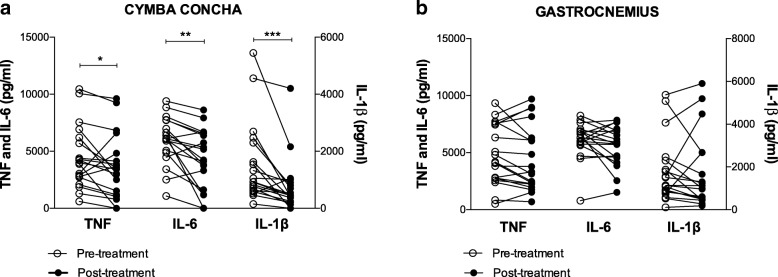
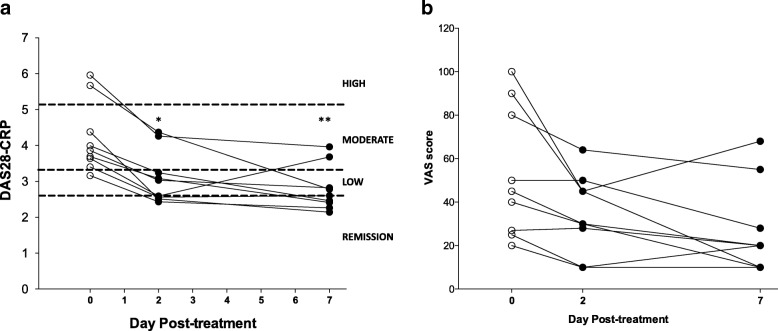
Results: Vibrotactile treatment at the cymba concha reduced TNF levels, and the suppressive effect persisted up to 24 h. In the cross-over study with 19 healthy subjects, vibrotactile treatment at the cymba concha but not at the gastrocnemius significantly reduced TNF, IL-1β, and IL-6 levels compared to pre-treatment baseline (TNF p < 0.05, IL-6 p < 0.01, IL-1β p < 0.001). In healthy subjects, vibrotactile treatment at the cymba concha inhibited TNF by 80%, IL-6 by 73%, and IL-1β by 50% as compared to pre-treatment baseline levels. In RA patients, a significant decrease in DAS28-CRP scores was observed two days post-vibrotactile stimulation at the cymba concha (DAS28-CRP score pre-treatment = 4.19 ± 0.33 vs post-treatment = 3.12 ± 0.25, p < 0.05). Disease activity remained significantly reduced 7 days following vibrotactile treatment (DAS28-CRP score 7 days post-treatment = 2.79 ± 0.21, p < 0.01). In addition, a persistent improvement in visual analogue scale scores, a patient derived measure of global health assessment, was observed in RA patients following vibrotactile treatment.

Conclusion: Application of a vibrotactile device to the cymba concha inhibits peripheral blood production of TNF, IL-1β, and IL-6 in healthy subjects, and attenuates systemic inflammatory responses in RA patients.

Trial registrations: ClinicalTrials.gov Identifier: NCT01569789 and NCT00859859. The AMC trial conducted in The Netherlands does not have a ClinicalTrials.gov Identifier.

Keywords: Auricular vagus nerve; TNF; rheumatoid arthritis; taVNS.


Conflict of interest statement

Competing interestsThe authors declare that they have no competing interests.

Figures
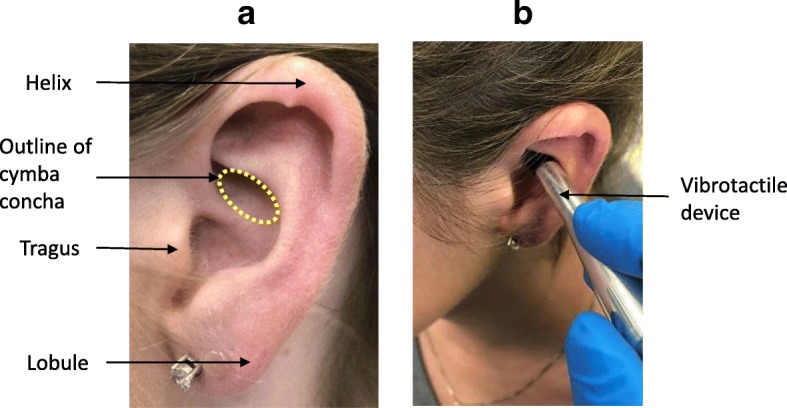
Fig. 1
Fig. 1
Site of application of vibrotactile device to the cymba concha of the ear. (a) Major anatomical landmarks of the external ear (pinna) with approximate outline of the cymba concha. The cymba concha is a highly-conserved anatomical feature of the external ear that was identified by the device operator. (b) Representative device placement of the vibrotactile device in contact with the cymba concha
Fig. 2
Fig. 2
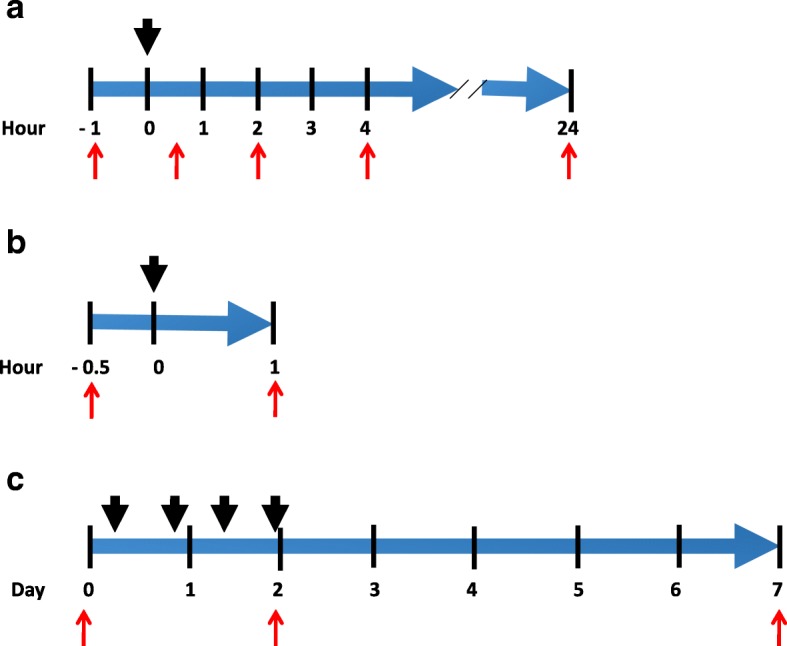
Timeline of investigational studies. (a) Study design for healthy subjects at AMC; (b) Study design for healthy subjects at FIMR; (c) Study design for RA patients at FIMR. Black arrows indicate application of vibrotactile treatment. Red arrows indicate time of blood draws for healthy subjects (a, b) and clinical assessments for RA patients (c)
Fig. 3
Fig. 3
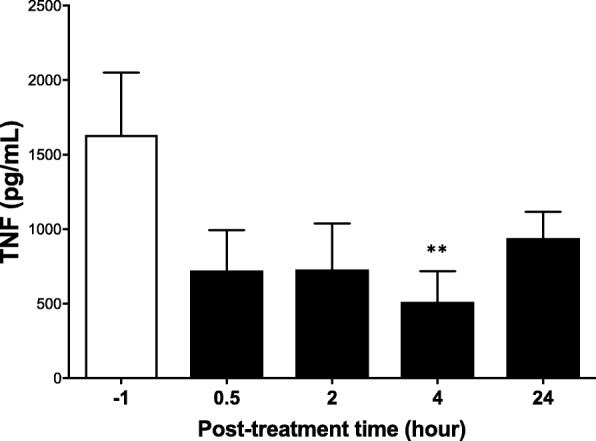
Vibrotactile stimulation at the cymba concha reduces whole-blood LPS-induced TNF production. In a pilot study, six healthy subjects were enrolled at the Academic Medical Center, the Netherlands, and subjected to vibrotactile stimulation at the cymba concha. Blood was obtained before stimulation (− 1) and at different time points after stimulation (0.5, 2, 4 and 24 h). Whole blood was incubated with LPS, and TNF levels in plasma were determined after 4 h in culture. Data are shown as mean ± SEM, **p < 0.01; RMANOVA with Friedman test
Fig. 4
Fig. 4
Vibrotactile stimulation at the cymba concha but not at the gastrocnemius, attenuates inflammatory responses in healthy subjects ex vivo. Nineteen healthy subjects enrolled in a cross-over study at the Feinstein Institute for Medical Research received stimulation at either the cymba concha or gastrocnemius on two different days. Blood was collected 30 min prior and 1 h post stimulation. Whole blood was incubated with LPS, and cytokine levels in plasma were determined 4 h after. (a) Effect of vibrotactile stimulation at the cymba concha on cytokine responses in healthy subjects. (TNF *p < 0.05, IL-6 ***p < 0.001, IL-1β **p < 0.01, Wilcoxon matched-pairs test) (b) Effect of vibrotactile stimulation at the gastrocnemius on cytokine responses in healthy subjects. Open circles represent the pre-treatment and close circles represent post-treatment cytokine levels with lines connecting data points for each individual study participant
Fig. 5
Fig. 5
The effect of vibrotactile treatment at the cymba concha in patients with rheumatoid arthritis. (a) The DAS28-CRP scores, (b) The visual analog scores in nine RA patients enrolled in the prospective interventional study. DAS28-CRP scores indicate a composite score of enumeration of swollen and tender joints, measurement of high-sensitivity CRP in serum, and scores on the visual analog scale, a validated patient-reported assessment of functional status and well-being. These data were obtained at day 0 (pre-treatment), day 2 and day 7 (post-treatment) following vibrotactile treatment at the cymba concha. Lines connect data points for the DAS28-CRP score of each individual study participant at these timepoints. Hashed lines indicate the cut-off points for categories of disease severity. A DAS score of less than 2.6 indicates remission; a score between 2.6 and 3.2 indicates low/minimal disease activity; a score between 3.2 and 5.1 indicates moderate activity; a score of more than 5.1 is considered high/severe disease activity (Fransen and van Riel ; Anderson et al. 2012). The significance of the change by RMANOVA using Friedman test between visits is shown: *p < 0.05 vs. day 0; **p < 0.01 vs. day 0)

References

    1. Amaya-Amaya J, Botello-Corzo D, Calixto O-J, Calderón-Rojas R, Domínguez A-M, Cruz-Tapias P, Montoya-Ortiz G, Mantilla R-D, Anaya J-M, Rojas-Villarraga A. Usefulness of Patients-Reported Outcomes in Rheumatoid Arthritis Focus Group. Arthritis. 2012;2012:1–13. doi: 10.1155/2012/935187. - DOI - PMC - PubMed
    1. Anderson J, Caplan L, Yazdany J, Robbins ML, Neogi T, Michaud K, Saag KG, O’Dell JR, Kazi S. Rheumatoid arthritis disease activity measures: American college of rheumatology recommendations for use in clinical practice. Arthritis Care Res. 2012;64(5):640–647 - PMC - PubMed
    1. Andersson U, Tracey KJ. Neural reflexes in inflammation and immunity. J Exp Med. 2012;209:1057–1068. doi: 10.1084/jem.20120571. - DOI - PMC - PubMed
    1. Andersson U, Tracey KJ. Reflex principles of immunological homeostasis. Annu Rev Immunol. 2012;30:313–335. doi: 10.1146/annurev-immunol-020711-075015. - DOI - PMC - PubMed
    1. Ay I, Napadow V, Ay H. Electrical stimulation of the vagus nerve dermatome in the external ear is protective in rat cerebral ischemia. Brain Stimul. 2015;8:7–12. - PMC - PubMed

Associated data