


Proteomic and genomic biomarkers for Non-Small Cell Lung Cancer: Peroxiredoxin, Haptoglobin, and Alpha-1 antitrypsin
- PMID: 32232956
- PMCID: PMC7286458
- DOI: 10.1002/cam4.3019
Proteomic and genomic biomarkers for Non-Small Cell Lung Cancer: Peroxiredoxin, Haptoglobin, and Alpha-1 antitrypsin
Abstract
Background: The development of lung cancer is a multifactorial process that involves the environmental and genetic factors. The mortality rate of this cancer is higher than breast, colorectal, and prostate cancers. In this study, we try to analyze the proteome of patients with Non-Small Cell Lung Cancer (NSCLC) and compare it with the healthy samples.
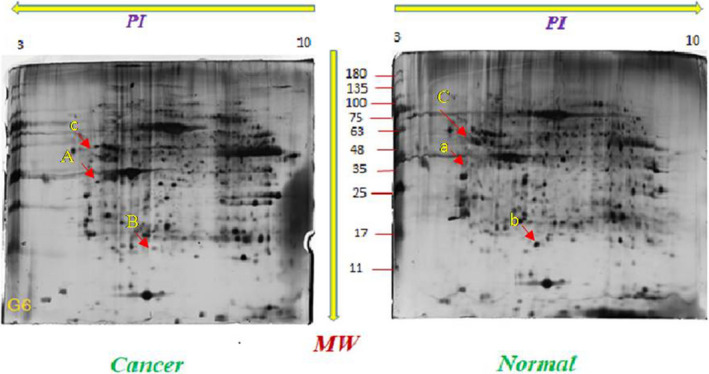
Methods: This study has compared 30 lung tissue samples from patients with NSCLC and 30 healthy samples using proteomics and RT-PCR. Hence, tissue samples were obtained from the surgical ward in sterile conditions, and then, protein extraction applied to them. At the next stage, two-dimensional electrophoresis and mass spectrometry LCMS/MS were performed for protein isolation and sequencing, respectively.
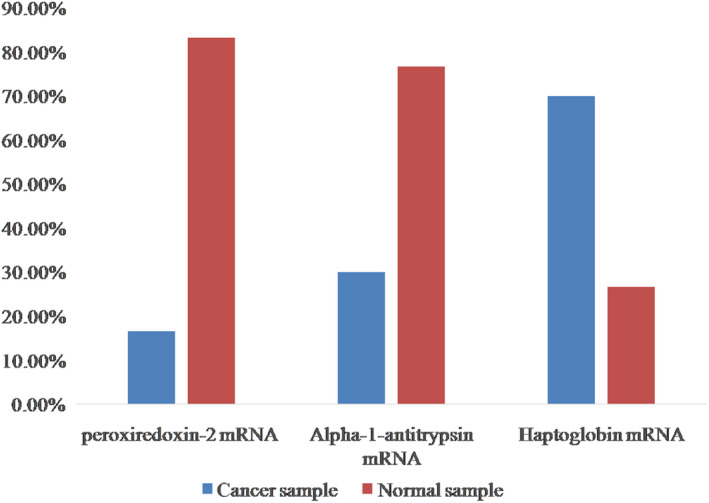
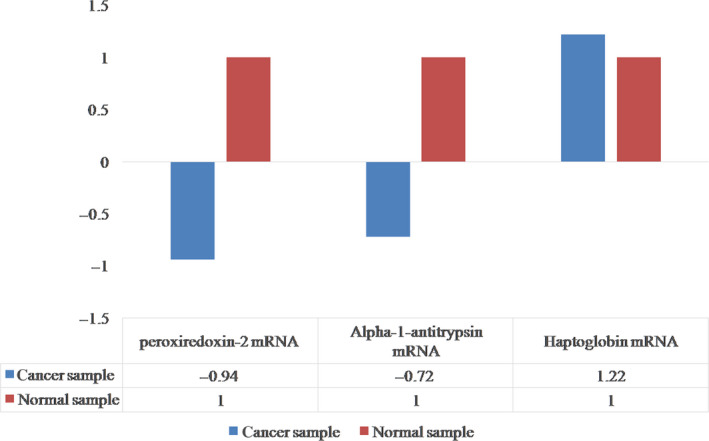
Results: The proteome analysis identified more than 40 differences in proteomic pattern of normal lung tissues compared to lung tissues with NSCLC. Peroxiredoxin, Haptoglobin, and Alpha-1 antitrypsin proteins were identified. Molecularly, it has also been shown that the two main proteins of Peroxiredoxin-2 and Alpha-1 antitrypsin were upregulated, and the expression of Haptoglobin protein was downregulated in cancer tissue.
Conclusion: The results of this study showed that there are some differences in term of protein content between the normal and cancerous lung tissues. Further studies are needed to evaluate these proteins that investigate whether these proteins can candidate as biomarkers to use in the early diagnosis of patients with NSCLC.
Keywords: Alpha-1 antitrypsin; Antioxidant; Haptoglobin; NSCLC; Peroxiredoxin-2; lung cancer; proteomics; tumor markers.
© 2020 The Authors. Cancer Medicine published by John Wiley & Sons Ltd.
Conflict of interest statement
It is not declared by the authors.
Figures
References
-
- Zaghloul M. Cytokeratin 19 (CK19) as a tumor marker in pleural effusion. Trop Med Surg. 2015;3:e122 10.4172/2329-9088.1000e122 - DOI
-
- Prindull G. Apoptosis in the embryo and tumorigenesis. Eur J Cancer. 1995;31(1):116‐123. - PubMed
-
- Kerr JF, Winterford CM, Harmon BV. Apoptosis. Its significance in cancer and cancer therapy. Cancer. 1994;73(8):2013‐2026. - PubMed
-
- Pecorino L. Molecular biology of cancer: mechanisms, targets, and therapeutics. Oxford University Press; 2012.
MeSH terms
Substances
LinkOut - more resources
Full Text Sources
Medical
Research Materials
