


Enteral lactoferrin supplementation for prevention of sepsis and necrotizing enterocolitis in preterm infants
- PMID: 32232984
- PMCID: PMC7106972
- DOI: 10.1002/14651858.CD007137.pub6
Enteral lactoferrin supplementation for prevention of sepsis and necrotizing enterocolitis in preterm infants
Abstract
Background: Lactoferrin, a normal component of human colostrum and milk, can enhance host defenses and may be effective for prevention of sepsis and necrotizing enterocolitis (NEC) in preterm neonates.
Objectives: To assess the safety and effectiveness of lactoferrin supplementation to enteral feeds for prevention of sepsis and NEC in preterm neonates. Secondarily, we assessed the effects of lactoferrin supplementation to enteral feeds on the duration of positive-pressure ventilation, development of chronic lung disease (CLD) or periventricular leukomalacia (PVL), length of hospital stay to discharge among survivors, and adverse neurological outcomes at two years of age or later.
Search methods: We used the standard search strategy of Cochrane Neonatal to update our search. We searched the Cochrane Central Register of Controlled Trials (CENTRAL 2019, Issue 9), MEDLINE via PubMed (1966 to 20 January 2020), PREMEDLINE (1996 to 20 January 2020), Embase (1980 to 20 January 2020), and CINAHL (1982 to 20 January 2020). We also searched clinical trials databases, conference proceedings, and the reference lists of retrieved articles for randomized controlled trials and quasi-randomized trials.
Selection criteria: In our search, we included randomized controlled trials (RCTs) evaluating enteral lactoferrin supplementation at any dose or duration to prevent sepsis or NEC in preterm neonates.
Data collection and analysis: We used the standard methods of Cochrane Neonatal and the GRADE approach to assess the certainty of evidence.
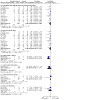
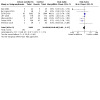
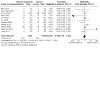
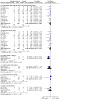
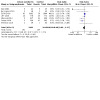
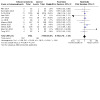
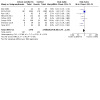
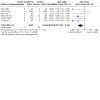
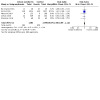
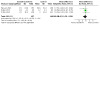
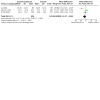
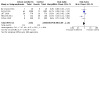
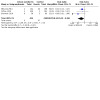
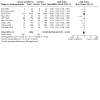
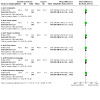
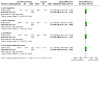
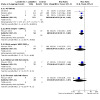
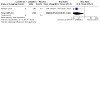
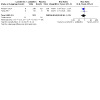
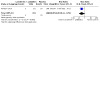
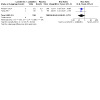
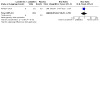
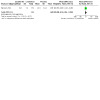
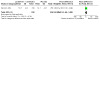
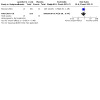
Main results: Meta-analysis of data from twelve randomized controlled trials showed that lactoferrin supplementation to enteral feeds decreased late-onset sepsis (typical RR 0.82, 95% CI 0.74 to 0.91; typical RD -0.04, 95% CI, -0.06, -0.02; NNTB 25, 95% CI 17 to 50; 12 studies, 5425 participants, low-certainty evidence) and decreased length of hospital stay (MD -2.38, 95% CI, -4.67, -0.09; 3 studies, 1079 participants, low-certainty evidence). Sensitivity analysis including only good methodological certainty studies suggested a decrease in late-onset sepsis with enteral lactoferrin supplementation (typical RR 0.87, 95% CI, 0.78, 0.97; typical RD -0.03, 95% CI, -0.05, -0.0; 9 studies, 4702 participants, low-certainty evidence). There were no differences in NEC stage II or III (typical RR 1.10, 95% CI, 0.86, 1.41; typical RD -0.00, 95% CI, -0.02, 0.01; 7 studies, 4874 participants; low-certainty evidence) or 'all-cause mortality' (typical RR 0.90, 95% CI 0.69, 1.17; typical RD -0.00, 95% CI, -0.01, 0.01; 11 studies, 5510 participants; moderate-certainty evidence). One study reported no differences in neurodevelopmental testing by Mullen's or Bayley III at 24 months of age after enteral lactoferrin supplementation (one study, 292 participants, low-certainty evidence). Lactoferrin supplementation to enteral feeds with probiotics decreased late-onset sepsis (RR 0.25, 95% CI 0.14 to 0.46; RD -0.13, 95% CI -0.18 to -0.08; NNTB 8, 95% CI 6 to 13; 3 studies, 564 participants; low-certainty evidence) and NEC stage II or III (RR 0.04, 95% CI 0.00 to 0.62; RD -0.05, 95% CI -0.08 to -0.03; NNTB 20, 95% CI 12.5 to 33.3; 1 study, 496 participants; very low-certainty evidence), but not 'all-cause mortality' (very low-certainty evidence). Lactoferrin supplementation to enteral feeds with or without probiotics had no effect on CLD, duration of mechanical ventilation or threshold retinopathy of prematurity (low-certainty evidence). Investigators reported no adverse effects in the included studies.
Authors' conclusions: We found low-certainty evidence from studies of good methodological quality that lactoferrin supplementation of enteral feeds decreases late-onset sepsis but not NEC ≥ stage II or 'all cause mortality' or neurodevelopmental outcomes at 24 months of age in preterm infants without adverse effects. Low- to very low-certainty evidence suggests that lactoferrin supplementation of enteral feeds in combination with probiotics decreases late-onset sepsis and NEC ≥ stage II in preterm infants without adverse effects, however, there were few included studies of poor methodological quality. The presence of publication bias and small studies of poor methodology that may inflate the effect size make recommendations for clinical practice difficult.
Copyright © 2020 The Cochrane Collaboration. Published by John Wiley & Sons, Ltd.
Conflict of interest statement
Agennix, Inc. donated human recombinant lactoferrin for Dr Pammi's laboratory research from 2006 through 2009.
Figures


Update of
-
Enteral lactoferrin supplementation for prevention of sepsis and necrotizing enterocolitis in preterm infants.Cochrane Database Syst Rev. 2017 Jun 28;6(6):CD007137. doi: 10.1002/14651858.CD007137.pub5. Cochrane Database Syst Rev. 2017. Update in: Cochrane Database Syst Rev. 2020 Mar 31;3:CD007137. doi: 10.1002/14651858.CD007137.pub6. PMID: 28658720 Free PMC article. Updated.
Comment in
-
Commentary on "Enteral Lactoferrin Supplementation for Prevention of Sepsis and Necrotizing Enterocolitis in Preterm Infants".Neonatology. 2021;118(2):139-142. doi: 10.1159/000512988. Epub 2021 Feb 9. Neonatology. 2021. PMID: 33561861 No abstract available.
References
References to studies included in this review
Akin 2014 {published data only}
-
- Akin IM, Atasay B, Dogu F, Okulu E, Arsan S, Karatas HD, et al. Oral lactoferrin to prevent nosocomial sepsis and necrotizing enterocolitis of premature neonates and effect on T-regulatory cells. American Journal of Perinatology 2014;31(12):1111-20. [DOI: 10.1055/s-0034-1371704] [PMID: ] - DOI - PubMed
Barrington 2016 {published data only}
Dai 2015 {published data only}
-
- Dai JZ, Xie C. The effect of lactoferrin supplementation combining Lactobacillus rhamnosus for prevention of late onset sepsis in premature neonates. China Practical Medicine 2015;10:98-100.
ELFIN 2018 {unpublished data only}88261002
-
- ISRCTN88261002. Enteral lactoferrin supplementation for very preterm infants: a randomised controlled trial. isrctn.com/ISRCTN88261002 (first received 5 June 2013). [DOI: 10.1186/ISRCTN88261002] - DOI
Kaur 2015 {published data only}
LIFT 2020 {published data only}
-
- Tarnow-Mordi WO, Abdel-Latif ME, Martin A, Pammi M, Robledo K, Manzoni P, et al, LIFT collaborators. The Lactoferrin Infant Feeding Trial (LIFT): a pragmatic, randomised, multicentre study in very low birth weight infants. Lancet. Child and Adolescent Health. 2020;4(6):444-54 (with online Supplementary Appendix pp S1-44). [DOI: 10.1016/S2352-4642(20)30093-6] - DOI - PubMed
Liu 2016 {published data only}
-
- Liu YH, Guan HS, Liang GJ, Li YZ, Zuo A. The effect of lactoferrin on low birth weight neonates during hospitalization. Maternal and Child Health Care of China 2016;31(21):4464-5.
Manzoni 2014 {published data only}
-
- Manzoni P, Meyer M, Stolfi I, Rinaldi M, Cattani S, Pugni L, et al. Bovine lactoferrin supplementation for prevention of necrotizing enterocolitis in very-low-birth-weight neonates: a randomized clinical trial. Early Human Development 2014;90 Suppl 1:S60-5. [DOI: 10.1016/S0378-3782(14)70020-9] [PMID: ] - DOI - PubMed
-
- Manzoni P, Rinaldi M, Cattani S, Pugni L, Romeo MG, Messner H, et al. Bovine lactoferrin supplementation for prevention of late-onset sepsis in very low-birth-weight neonates: a randomized trial. JAMA 2009;302(13):1421-8. [DOI: 10.1001/jama.2009.1403] [PMID: DOI: 10.1001/jama.2009.1403; PubMed: 19809023]] - DOI - PubMed
-
- Manzoni P, Stolfi I, Messner H, Cattani S, Laforgia N, Romeo MG, et al. Bovine lactoferrin prevents invasive fungal infections in very low birth weight infants: a randomized controlled trial. Pediatrics 2012;129(1):116-23. [PMID: 10.1542/peds.2011-0279; PubMed: 22184648]] - PubMed
Ochoa 2015 {published and unpublished data}
Ochoa 2020 {unpublished data only}
Sherman 2016 {published data only}
Tang 2017 {published data only}
-
- Tang JP, Sun HQ, Zheng YH, Lu GH. Randomized control trial of lactoferrin for the prevention of late onset sepsis in premature neonates. Maternal and Child Health Care of China 2017;32(6):1223-5.
References to studies excluded from this review
King 2007 {published data only}
-
- King JC Jr, Cummings GE, Guo N, Trivedi L, Readmond BX, Keane V, et al. A double-blind, placebo-controlled, pilot study of bovine lactoferrin supplementation in bottle-fed infants. Journal of Pediatric Gastroenterology and Nutrition 2007;44(2):245-51. [DOI: 10.1097/01.mpg.0000243435.54958.68] [PMID: ] - DOI - PubMed
Meyer 2016 {published data only}
-
- Meyer MP, Alexander T. Reduction in necrotizing enterocolitis and improved outcomes in preterm infants following routine supplementation with lactobacillus GG in combination with bovine lactoferrin. Journal of Neonatal-Perinatal Medicine 2016;10(3):249-55. [DOI: 10.3233/NPM-16130] [PMID: ] - DOI - PubMed
Ochoa 2013 {published data only}
References to studies awaiting assessment
ISRCTN71737811 {published data only}
-
- ISRCTN71737811. Effect of prebiotic or lactoferrin supplementation in formula on the gut flora of preterm infants. isrctn.com/ISRCTN71737811 (first received 5 September 2008).
NCT01172236 {published data only}
-
- NCT01172236. Supplementation with lactoferrin in preterm newborns (lactoprenew). clinicaltrials.gov/show/NCT01172236 (first received 29 July 2010).
NCT02959229 {published data only}
-
- NCT02959229. Early versus late lactoferrin in prevention of neonatal sepsis [Systematic randomized, single blinded, placebo-controlled trial of early versus late lactoferrin in prevention of neonatal sepsis]. clinicaltrials.gov/show/NCT02959229 (first received 27 October 2016).
References to ongoing studies
NCT01821989 {published data only}
-
- NCT01821989. Oral lactoferrin supplementation for prevention of sepsis in preterm neonate. clinicaltrials.gov/show/NCT01821989 (first received 27 March 2013).
Additional references
Adams‐Chapman 2006
Alfaleh 2014
Barboza 2012
-
- Barboza M, Pinzon J, Wickramasinghe S, Froehlich J, Moeller I, Smilowitz J, et al. Glycosylation of human milk lactoferrin exhibits dynamic changes during early lactation enhancing its role in pathogenic bacteria-host interactions. Molecular Cell Proteomics 2012;11(6):M111.015248. [DOI: 10.1074/mcp.M111.015248] [PMID: ] - DOI - PMC - PubMed
Bell 1978
Bellamy 1992
-
- Bellamy W, Takase M, Wakabayashi H, Kawase K, Tomita M. Antibacterial spectrum of lactoferricin B, a potent bactericidal peptide derived from the N-terminal region of bovine lactoferrin. Journal of Applied Bacteriology 1992;73(6):472-9. [PMID: ] - PubMed
Blackwell 1997
Buccigrossi 2007
Chen 2017
Dermyshi 2017
Edde 2001
Gifford 2005
GRADEpro GDT [Computer program]
-
- GRADEpro GDT. Version accessed 9 March 2017. Hamilton (ON): McMaster University (developed by Evidence Prime), 2015. Available at gradepro.org.
Guyatt 2008
-
- Guyatt GH, Oxman AD, Vist GE, Kunz R, Falck-Ytter Y, Alonso-Coello P, et al. GRADE: an emerging consensus on rating quality of evidence and strength of recommendations. BMJ 2008;336(7650):924-6. [DOI: 10.1136/bmj.39489.470347.AD] [PMID: ] - DOI - PMC - PubMed
Hayes 2006
He 2018
Higgins 2011
-
- Higgins JP, Green S, editor(s). Cochrane Handbook for Systematic Reviews of Interventions Version 5.1.0 (updated March 2011). The Cochrane Collaboration, 2011. Available from handbook.cochrane.org.
Iwasa 2002
-
- Iwasa M, Kaito M, Ikoma J, Takeo M, Imoto I, Yamauchi K, et al. Lactoferrin inhibits hepatitis C virus viremia in chronic hepatitis C patients with high viral loads and HCV genotype 1b. American Journal of Gastroenterology 2002;97(3):766-7. [DOI: 10.1111/j.1572-0241.2002.05573.x] [PMID: ] - DOI - PubMed
Kuipers 1999
Lawn 2006
Lee 1998
Legrand 2016
Leitch 1999
-
- Leitch EC, Willcox MD. Lactoferrin increases the susceptibility of S. epidermidis biofilms to lysozyme and vancomycin. Current Eye Research 1999;19(1):12-9. [PMID: ] - PubMed
Levy 1998
Lin 2006
Lingappan 2013
Manzoni 2016
-
- Manzoni P. Clinical benefits of lactoferrin for infants and children. Journal of Pediatrics 2016;173 Suppl:S43-52. [DOI: 10.1016/j.jpeds.2016.02.075] [PMID: ] - PubMed
Neish 2004
-
- Neish AS. Molecular aspects of intestinal epithelial cell-bacterial interactions that determine the development of intestinal inflammation. Inflammatory Bowel Diseases 2004;10(2):159-68. [PMID: ] - PubMed
Nibbering 2001
-
- Nibbering PH, Ravensbergen E, Welling MM, Van Berkel LA, Van Berkel PH, Pauwels EK, et al. Human lactoferrin and peptides derived from its N terminus are highly effective against infections with antibiotic-resistant bacteria. Infection and Immunity 2001;69(3):1469-76. [DOI: 10.1128/IAI.69.3.1469-1476.2001] [PMID: ] - DOI - PMC - PubMed
Ochoa 2017
Pierce 1991
-
- Pierce A, Colavizza D, Benaissa M, Maes P, Tartar A, Montreuil J, et al. Molecular cloning and sequence analysis of bovine lactotransferrin. European Journal of Biochemistry 1991;196(1):177-84. [PMID: ] - PubMed
RevMan 2014 [Computer program]
-
- Review Manager 5 (RevMan 5). Version 5.3. Copenhagen: Nordic Cochrane Centre, The Cochrane Collaboration, 2014.
Schünemann 2013
-
- Schünemann H, Brożek J, Guyatt G, Oxman A, editor(s), GRADE Working Group. Handbook for grading the quality of evidence and the strength of recommendations using the GRADE approach (updated October 2013). gdt.gradepro.org/app/handbook/handbook.html (accessed prior to 16 March 2020).
Speer 1999
-
- Speer CP. Inflammatory mechanisms in neonatal chronic lung disease. European Journal of Pediatrics 1999;158 Suppl 1:S18-22. [PMID: ] - PubMed
Stoll 2002
-
- Stoll BJ, Hansen N, Fanaroff AA, Wright LL, Carlo WA, Ehrenkranz RA, et al. Late-onset sepsis in very low birth weight neonates: the experience of the NICHD Neonatal Research Network. Pediatrics 2002;110(2 Pt 1):285-91. [PMID: ] - PubMed
Stoll 2004a
Stoll 2004b
-
- Stoll BJ. Infections of the neonatal infant. In: Behrman RE, Kliegman R, Jenson HB, editors(s). Nelson's Textbook of Pediatrics. 17th edition. Philadelphia (PA): Saunders, 2004:623-40.
Stoll 2005
-
- Stoll BJ, Hansen NI, Higgins RD, Fanaroff AA, Duara S, Goldberg R, et al. Very low birth weight preterm infants with early onset neonatal sepsis: the predominance of gram-negative infections continues in the National Institute of Child Health and Human Development Neonatal Research Network, 2002-2003. Pediatric Infectious Disease Journal 2005;24(7):635-9. [PMID: ] - PubMed
Tanaka 1999
Tian 2010
Togawa 2002
-
- Togawa J, Nagase H, Tanaka K, Inamori M, Umezawa T, Nakajima A, et al. Lactoferrin reduces colitis in rats via modulation of the immune system and correction of cytokine imbalance. American Journal of Physiology. Gastrointestinal and Liver Physiology 2002;283(1):G187-95. [DOI: 10.1152/ajpgi.00331.2001] [PMID: ] - DOI - PubMed
Tomita 2002
-
- Tomita M, Wakabayashi H, Yamauchi K, Teraguchi S, Hayasawa H. Bovine lactoferrin and lactoferricin derived from milk: production and applications. Biochemistry and Cell Biology 2002;80(1):109-12. [PMID: ] - PubMed
Trumpler 1989
-
- Trumpler U, Straub PW, Rosenmund A. Antibacterial prophylaxis with lactoferrin in neutropenic patients. European Journal of Clinical Microbiology and Infectious Diseases 1989;8(4):310-3. [PMID: ] - PubMed
Turin 2014
Valenti 2005
Venkatesh 2007
-
- Venkatesh M, Pham D, Kong L, Weisman L. Prophylaxis with lactoferrin, a novel antimicrobial agent, enhances survival in a neonatal rat model of co-infection. Advances in Therapy 2007;24(5):941-54. [PMID: ] - PubMed
Volpe 1995
-
- Volpe JJ. Neurology of the Newborn. 3rd edition. Philadelphia: WB Saunders, 1995.
Zagulski 1989
References to other published versions of this review
Pammi 2010
Pammi 2011
Publication types
MeSH terms
Substances
Grants and funding
LinkOut - more resources
Full Text Sources
Medical
Miscellaneous
