. 2020 Mar 31;11(1):1612.
doi: 10.1038/s41467-020-15457-9.

Metagenome-wide association of gut microbiome features for schizophrenia

Affiliations

Metagenome-wide association of gut microbiome features for schizophrenia

Feng Zhu et al. Nat Commun. .

Abstract

Evidence is mounting that the gut-brain axis plays an important role in mental diseases fueling mechanistic investigations to provide a basis for future targeted interventions. However, shotgun metagenomic data from treatment-naïve patients are scarce hampering comprehensive analyses of the complex interaction between the gut microbiota and the brain. Here we explore the fecal microbiome based on 90 medication-free schizophrenia patients and 81 controls and identify a microbial species classifier distinguishing patients from controls with an area under the receiver operating characteristic curve (AUC) of 0.896, and replicate the microbiome-based disease classifier in 45 patients and 45 controls (AUC = 0.765). Functional potentials associated with schizophrenia include differences in short-chain fatty acids synthesis, tryptophan metabolism, and synthesis/degradation of neurotransmitters. Transplantation of a schizophrenia-enriched bacterium, Streptococcus vestibularis, appear to induces deficits in social behaviors, and alters neurotransmitter levels in peripheral tissues in recipient mice. Our findings provide new leads for further investigations in cohort studies and animal models.


Conflict of interest statement

The authors declare no competing interests.

Figures
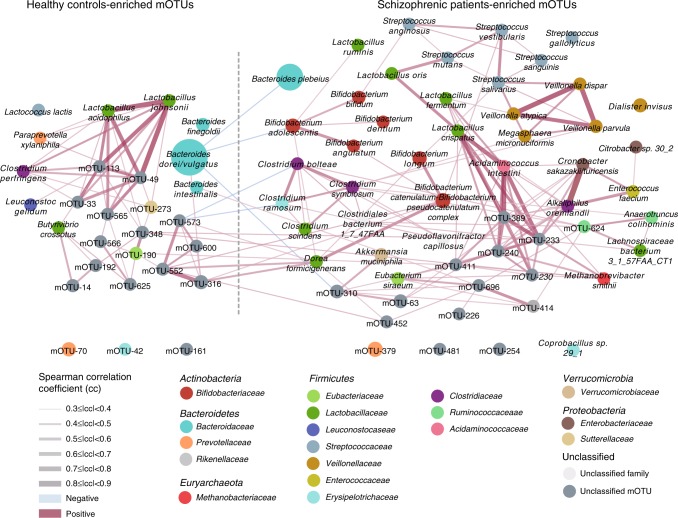
Fig. 1
Fig. 1. Network of mOTUs differentially enriched in healthy controls and schizophrenic patients.
Node sizes reflect the mean abundance of significant mOTUs. mOTUs annotated to species are colored according to family (Red edges, Spearman’s rank correlation coefficient > 0.3, P < 0.05; blue edges, Spearman’s rank correlation coefficient <−0.3, P < 0.05;). See detailed statistical data in supplementary Source Data file.
Fig. 2
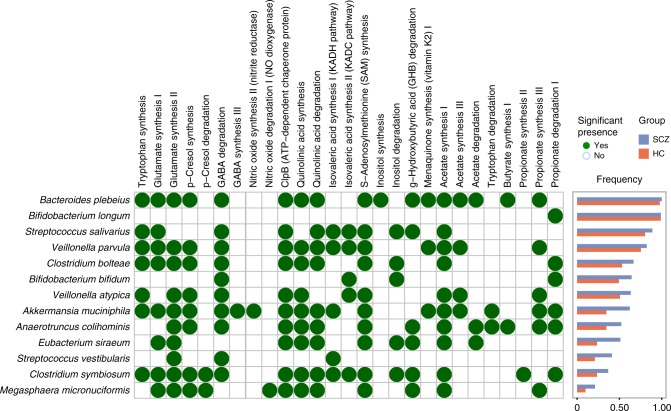
Fig. 2. The gut-brain modules present in schizophrenia-associated bacterial species.
A green dot indicates a statistically significant association between a gut-brain modules present in schizophrenia-associated bacterial species and a metabolite. No dot represents a non-significant association or a non-existent association. The difference in relation to presence between schizophrenic patients and heathy controls was calculated (Chi-square test, P < 0.05). The bar plot shows the frequency of each bacterial species present in schizophrenic patients (SCZ, blue bar) and healthy controls (HC, red bar), respectively. See detailed statistical data in supplementary Source Data file.
Fig. 3
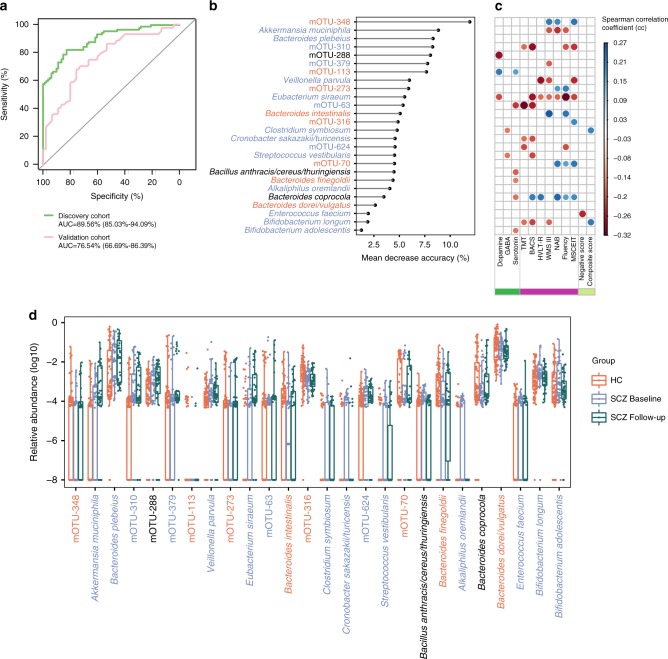
Fig. 3. Gut microbiome-based discrimination between schizophrenic patients and healthy controls.
a Receiver operating characteristic curve (ROC) according to 171 samples of the discovery set (green line) and 90 independent validation samples (pink line) calculated by cross-validated random forest models. Area under ROC (AUC) and the 95% confidence intervals are also shown. b The 26 mOTUs with most weight to discriminate schizophrenic (SCZ) patients and healthy controls (HC) were selected by the cross-validated random forest models. The length of line indicates the contribution of the mOTU to the discriminative model. The color of each mOTU indicates its enrichment in schizophrenic patients (blue) or healthy controls (red) or no significant direction (black), respectively. c Spearman’s correlation of 26 mOTUs classifiers with three types of neurotransmitter in serum (green), seven types of cognitive function evaluated using the MATRICS Consensus Cognitive Battery (purple), and with the positive score and the negative score of the Positive and Negative Syndrome Scale (light green). Only significant associations are displayed with correlation coefficient (P-value < 0.05). d The relative abundance (log10) of 26 mOTUs classifiers in 90 HCs and 38 SCZ patients at baseline and on a follow-up (3 months later). The dot represents one value from individual participants and boxes represent the median and interquartile ranges (IQRs) between the first and third quartiles; whiskers represent the lowest or highest values within 1.5 times IQR from the first or third quartiles. Outliers are not shown. GABA: 4-aminobutyric acid; TMT: Trail Making Test; BACS: Brief Assessment of Cognition in Schizophrenia; Fluency: Category Fluency in Animal Naming; WMS-III: Wechsler Memory Scale-Third Edition for working memory; HVLT-R: Hopkins Verbal Learning Test-Revised for visual learning; NAB: Neuropsychological Assessment Battery for reasoning and problem solving; MSCEIT: Mayer-Salovey-Caruso Emotional Intelligence Test for social cognition. See detailed statistical data in supplementary Source Data file.
Fig. 4
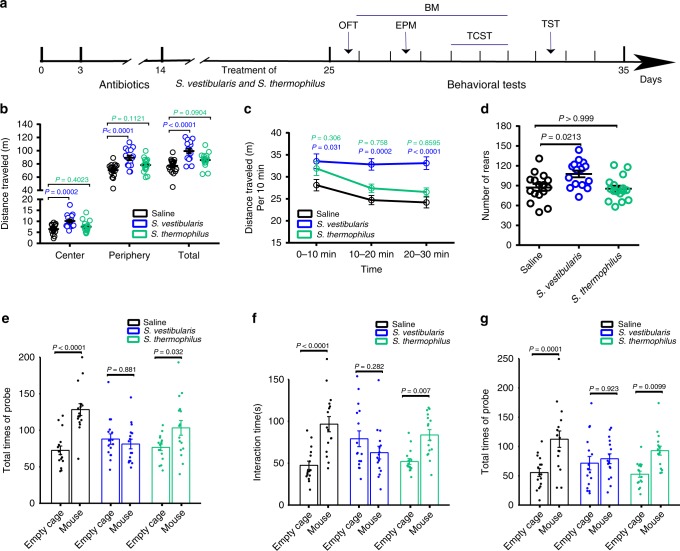
Fig. 4. Streptococcus vestibularis induces hyperkinetic behavior and impaired social interaction in mice.
a Schematic diagram of bacterial transplantation and behavioral tests. b The cumulative distance (meters) in different zones in 30-min Open field test (OFT) in the three groups of mice with oral gavage of Streptococcus vestibularis, S. thermophilus, and saline, respectively. c the cumulative distance (meters) in every 10-minutes time interval of OFT traveled and d the number of rearing by S. vestibularis-gavaged mice compared to mice gavaged with S. thermophilus and control mice. eg three-chamber social test (TCST) comparing sociability of S. vestibularis-gavaged mice to that of S. thermophilus-gavaged mice and control mice. The results show that S. thermophilus-gavaged mice and saline-gavaged mice display obvious sociability, i.e., demonstrate an increase in the number of times probing a mouse (e, P < 0.0001) and spending longer time interacting with a mouse (f, P = 0.002) compared to an empty cage, and obvious social novelty, i.e., spending longer time interacting with an unacquainted mouse (new mouse; g, P = 0.005) in comparison with an acquainted mouse. However, these types of social behaviors were not observed in S. vestibularis-gavaged mice (for sociability: e, P = 0.881; f, P = 0.282; for social novelty, g, P = 0.923). The data are representative of two independent experiments and are presented as means ± SEM (n = 16 S. vestibularis-gavaged mice or S. thermophiles-gavaged mice, 17 saline-gavaged mice per independent experiment in OFT; n = 16 mice/group/independent experiment in TCST). The circle represents one value from individual mice (b, d, eg). P-values were determined by one-way analysis of variance (ANOVA) (b), repeated measure two-way ANOVA followed by Sidak’s multiple comparisons test (c; Blue P: S. vestibularis-gavaged versus saline-gavaged mice; green P: S. thermophilus-gavaged versus saline-gavaged mice), two-sided Kruskal-Wallis test followed by Dunn’s multiple comparisons test (d), or two-way (ANOVA) followed by Sidak’s multiple comparisons test (eg). See detailed statistical data in supplementary Source Data file.

References

    1. van Os J, Kapur S. Schizophrenia. Lancet. 2009;374:635–645. doi: 10.1016/S0140-6736(09)60995-8. - DOI - PubMed
    1. Kesby JP, Eyles DW, McGrath JJ, Scott JG. Dopamine, psychosis and schizophrenia: the widening gap between basic and clinical neuroscience. Transl. Psychiatry. 2018;8:30. doi: 10.1038/s41398-017-0071-9. - DOI - PMC - PubMed
    1. Hoftman GD, et al. Altered gradients of glutamate and gamma-aminobutyric acid transcripts in the cortical visuospatial working memory network in schizophrenia. Biol. Psychiatry. 2018;83:670–679. doi: 10.1016/j.biopsych.2017.11.029. - DOI - PMC - PubMed
    1. Rowland LM, et al. Frontal glutamate and gamma-aminobutyric acid levels and their associations with mismatch negativity and digit sequencing task performance in schizophrenia. JAMA Psychiatry. 2016;73:166–174. doi: 10.1001/jamapsychiatry.2015.2680. - DOI - PMC - PubMed
    1. Kirkpatrick B, Miller B, Garcia-Rizo C, Fernandez-Egea E. Schizophrenia: a systemic disorder. Clin. Schizophr. Relat. Psychoses. 2014;8:73–79. doi: 10.3371/CSRP.KIMI.031513. - DOI - PMC - PubMed

Publication types

MeSH terms

Substances

Supplementary concepts

LinkOut - more resources