. 2020 Jun;43(6):2004-2016.
doi: 10.3892/or.2020.7560. Epub 2020 Mar 23.

Transcriptome analysis of tongue cancer based on high‑throughput sequencing

Affiliations

Transcriptome analysis of tongue cancer based on high‑throughput sequencing

Mingming Tang et al. Oncol Rep. 2020 Jun.

Abstract

Tongue cancer is one of the most common types of cancer, but its molecular etiology and pathogenesis remain unclear. The aim of the present study was to elucidate the pathogenesis of tongue cancer and investigate novel potential diagnostic and therapeutic targets. Four matched pairs of tongue cancer and paracancerous tissues were collected for RNA sequencing (RNA‑Seq), and the differentially expressed genes were analyzed. The RNA‑Seq data of tongue cancer tissues were further analyzed using bioinformatics and reverse transcription‑quantitative PCR analysis. The sequenced reads were quantified and qualified in accordance with the analysis demands. The transcriptomes of the tongue cancer tissues and paired paracancerous tissues were analyzed, and 1,700 upregulated and 2,249 downregulated genes were identified. Gene Ontology analysis uncovered a significant enrichment in the terms associated with extracellular matrix (ECM) organization, cell adhesion and collagen catabolic processes. Kyoto Encyclopedia of Genes and Genomes analysis demonstrated that these differentially expressed genes were mainly enriched in the focal adhesion pathway, ECM‑receptor interaction pathway, phosphoinositide 3‑kinase (PI3K)‑Akt pathway, and cell adhesion molecules. Comprehensive analyses of the gene tree and pathway network revealed that the majority of cell cycle genes were upregulated, while the majority of the genes associated with intracellular response, cell adhesion and cell differentiation were downregulated. The ECM‑receptor interaction, focal adhesion kinase (FAK) and PI3K‑Akt pathways were closely associated with one another and held key positions in differential signaling pathways. The ECM‑receptor, FAK and PI3K‑Akt signaling pathways were found to synergistically promote tongue cancer occurrence and progression, and may serve as potential diagnostic and therapeutic targets for this type of cancer.

Keywords: tongue cancer; RNA sequencing; Gene Ontology analysis; Kyoto Encyclopedia of Genes and Genomes analysis; phosphoinositide 3-kinase-Akt.


Figures
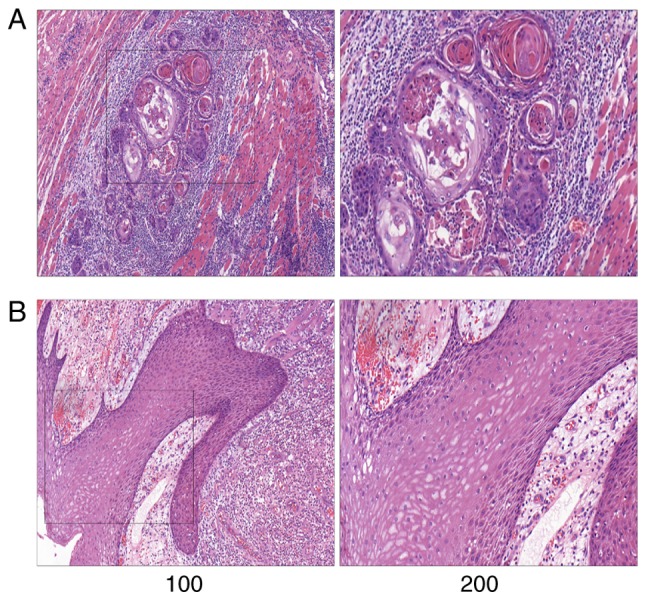
Figure 1.
Figure 1.
Representative pathological images of tongue cancer cases. (A) Tongue carcinoma tissue; (B) normal tissue. Hematoxylin and eosin staining; magnification in the left and right panels, ×100 and ×200, respectively.
Figure 2.
Figure 2.
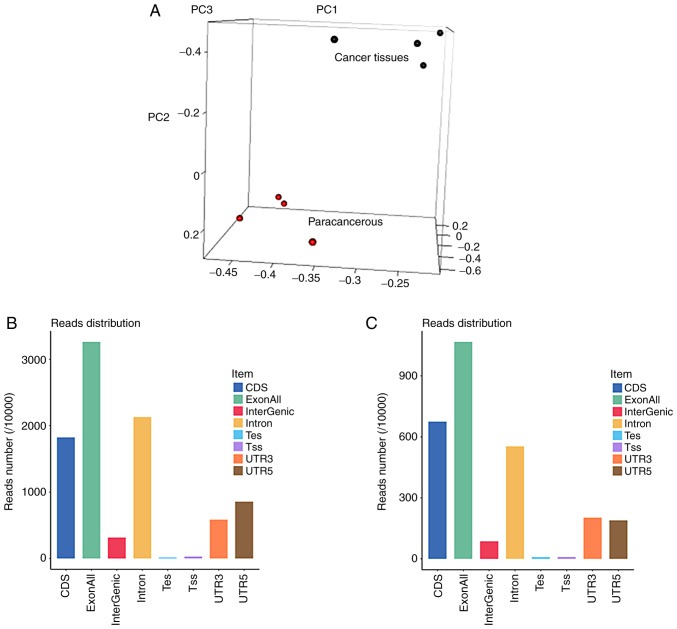
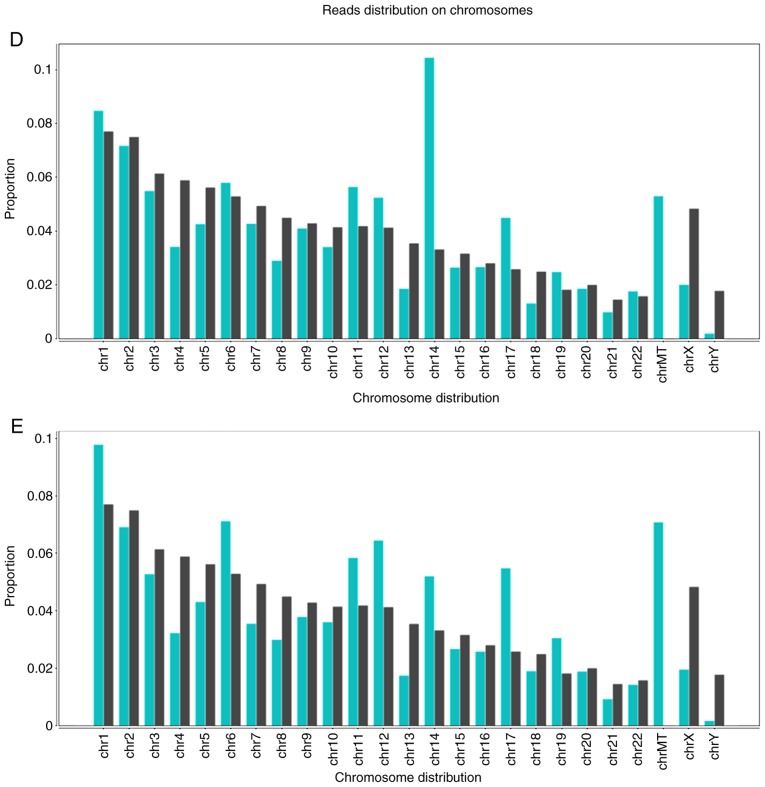
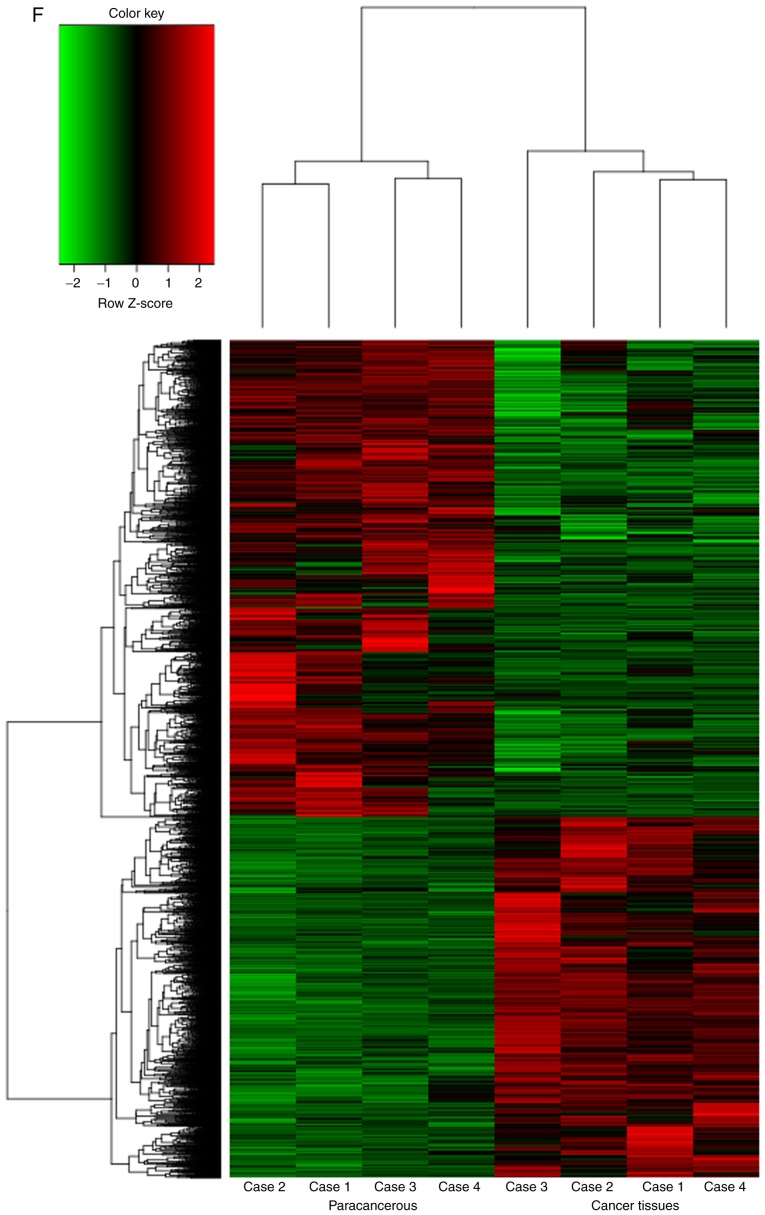
Gene expression. (A) 3D Principal component analysis. (B) Gene reads distribution of tumor tissues. (C) Gene reads distribution of paracancerous tissues. (D) Gene distribution on chromosomes of tumor tissues. (E) Gene distribution on chromosomes of paracancerous tissues. Gene expression. (F) Heatmap of each patient's gene expression.
Figure 2.
Figure 2.
Gene expression. (A) 3D Principal component analysis. (B) Gene reads distribution of tumor tissues. (C) Gene reads distribution of paracancerous tissues. (D) Gene distribution on chromosomes of tumor tissues. (E) Gene distribution on chromosomes of paracancerous tissues. Gene expression. (F) Heatmap of each patient's gene expression.
Figure 2.
Figure 2.
Gene expression. (A) 3D Principal component analysis. (B) Gene reads distribution of tumor tissues. (C) Gene reads distribution of paracancerous tissues. (D) Gene distribution on chromosomes of tumor tissues. (E) Gene distribution on chromosomes of paracancerous tissues. Gene expression. (F) Heatmap of each patient's gene expression.
Figure 3.
Figure 3.
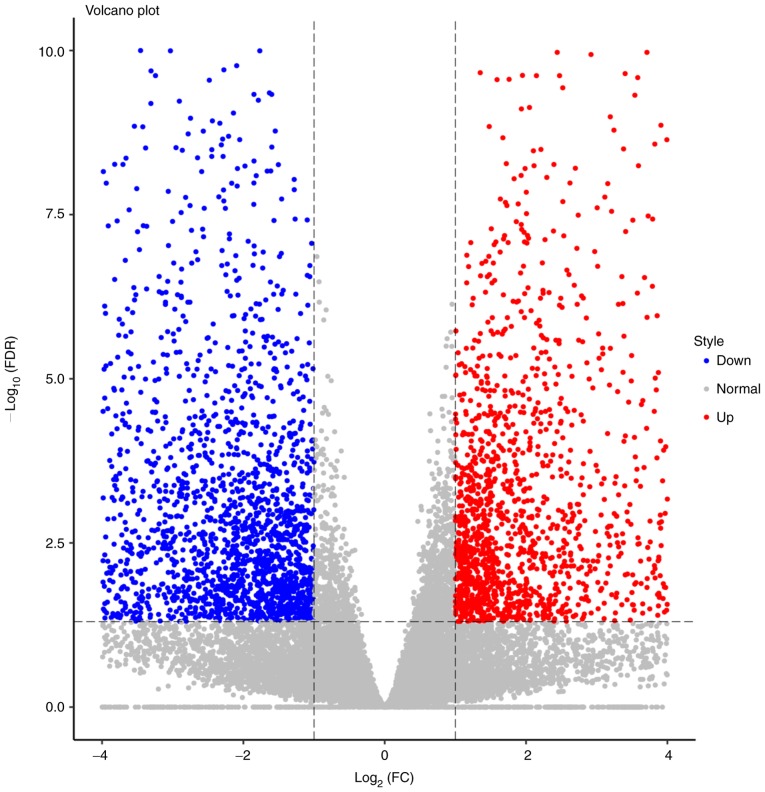
Volcano plot of differential gene expression.
Figure 4.
Figure 4.
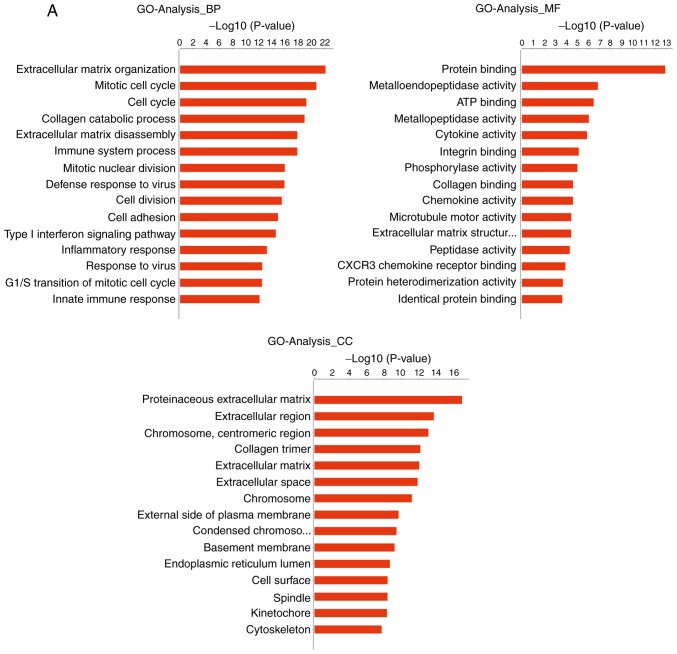
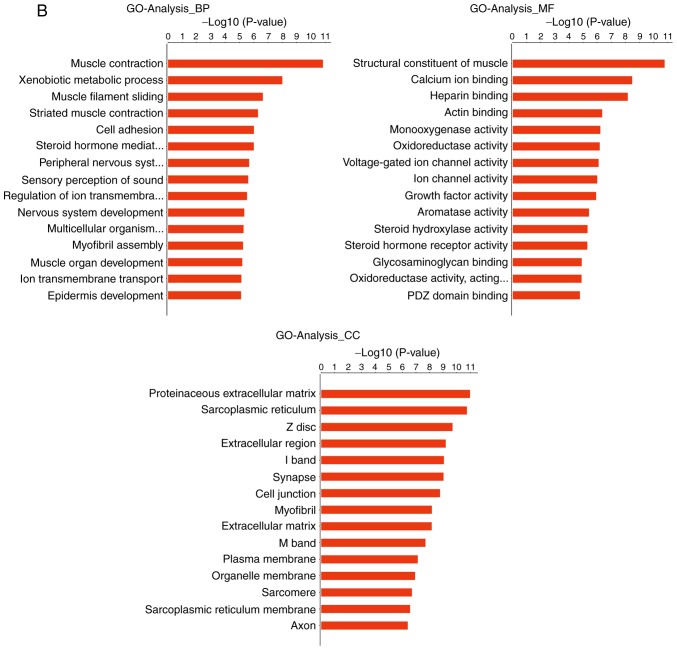
GO terms of differential genes in cancer and normal tissues. (A) Upregulated; (B) downregulated. GO, Gene Ontology; BP, biological process; MF, molecular function; CC, cellular component.
Figure 4.
Figure 4.
GO terms of differential genes in cancer and normal tissues. (A) Upregulated; (B) downregulated. GO, Gene Ontology; BP, biological process; MF, molecular function; CC, cellular component.
Figure 5.
Figure 5.
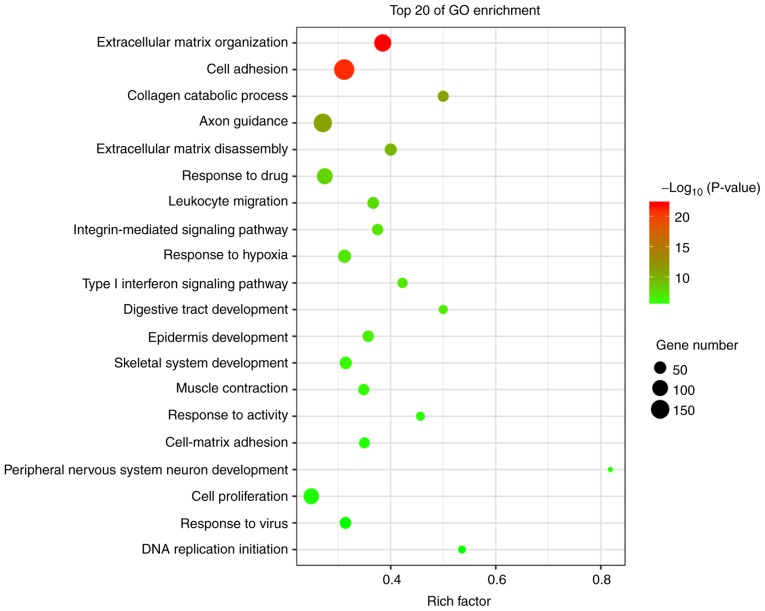
Top 20 GO enrichment terms of differential genes. The point size indicates the number of differentially expressed genes in that gene class, and the color indicates the enrichment effect. The abscissa is the enrichment factor, and the larger the number, the greater the enrichment degree. GO, Gene Ontology.
Figure 6.
Figure 6.
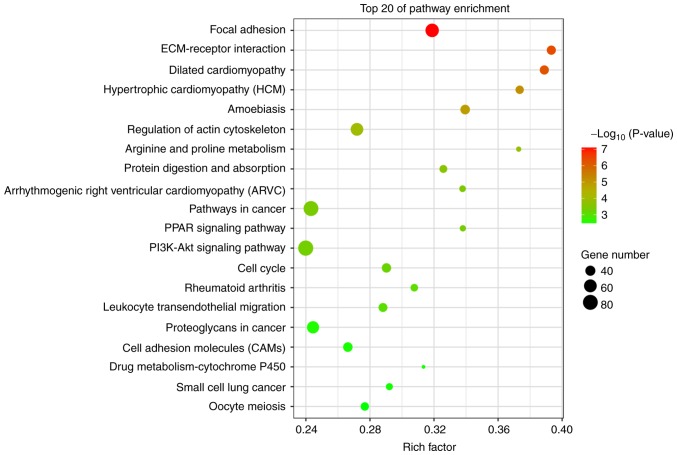
Kyoto Encyclopedia of Genes and Genomes enrichment for differentially expressed genes.
Figure 7.
Figure 7.
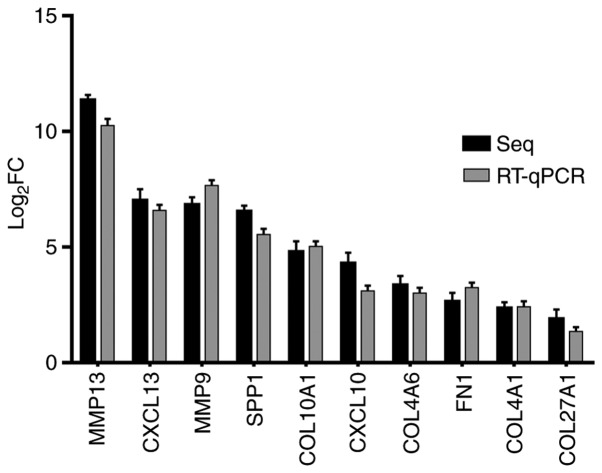
Gene expression changes by RT-qPCR. Changes of genes expression were shown in multiples. There were no significant differences in the trend of gene expression changes between RT-qPCR and RNA-seq. RT-qPCR, reverse transcription-quantitative PCR.
Figure 8.
Figure 8.
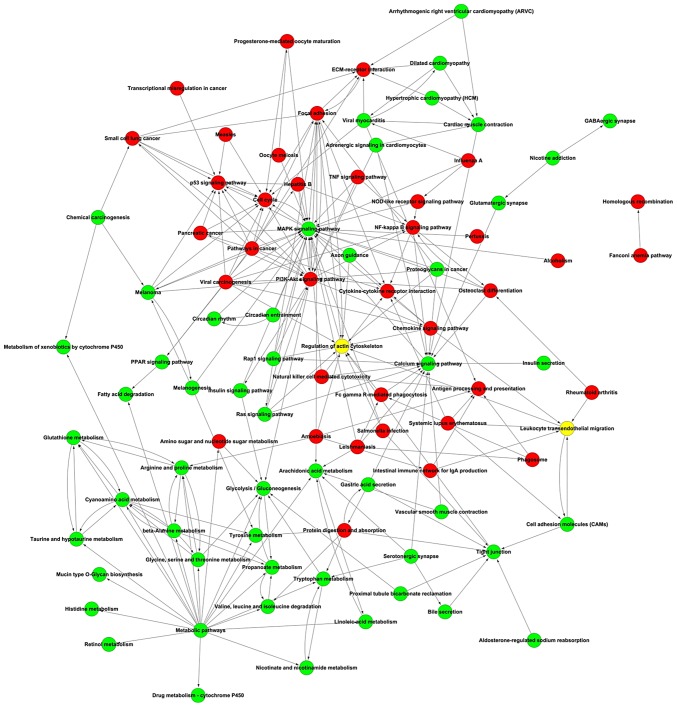
Kyoto Encyclopedia of Genes and Genomes network. Red circles, upregulation; green circles, downregulation; and yellow circles, both upregulation and downregulation in these signaling pathways.

References

    1. Wade J, Smith H, Hankins M, Llewellyn C. Conducting oral examinations for cancer in general practice: What are the barriers? Fam Pract. 2010;27:77–84. doi: 10.1093/fampra/cmp064. - DOI - PubMed
    1. Nemeth Z, Somogyi A, Takacsi-Nagy Z, Barabas J, Nemeth G, Szabo G. Possibilities of preventing osteoradionecrosis during complex therapy of tumors of the oral cavity. Pathol Oncol Res. 2000;6:53–58. doi: 10.1007/BF03032659. - DOI - PubMed
    1. Mann J, Julie D, Mahase SS, D'Angelo D, Potters L, Wernicke AG, Parashar B. Elective neck dissection, but not adjuvant radiation therapy, improves survival in stage I and II oral tongue cancer with depth of invasion >4 mm. Cureus. 2019;11:e6288. - PMC - PubMed
    1. Warnakulasuriya S. Global epidemiology of oral and oropharyngeal cancer. Oral Oncol. 2009;45:309–316. doi: 10.1016/j.oraloncology.2008.06.002. - DOI - PubMed
    1. Hao SP, Tsang NM. The role of supraomohyoid neck dissection in patients of oral cavity carcinoma. Oral Οncol. 2002;38:309–312. doi: 10.1016/S1368-8375(01)00061-6. - DOI - PubMed