


Preventability of unplanned readmissions within 30 days of discharge. A cross-sectional, single-center study
- PMID: 32240185
- PMCID: PMC7117704
- DOI: 10.1371/journal.pone.0229940
Preventability of unplanned readmissions within 30 days of discharge. A cross-sectional, single-center study
Abstract
Objectives: To identify the preventability, determinants and causes of unplanned hospital readmissions within 30 days of discharge using a multidisciplinary approach and including patients' perspectives.
Design: A prospective cross-sectional single-center study.
Setting: Urban teaching hospital in Amsterdam, the Netherlands.
Participants: 430 patients were included. Inclusion criteria were: age ≥ 18 years, discharged from one of seven participating clinical departments and an unplanned readmission within 30 days.
Methods: Residents from the participating departments individually assessed whether the readmission was caused by healthcare, the preventability and possible causes of readmissions using a tool. Thereafter, the preventability of the cases was discussed in a multidisciplinary meeting with residents of all participating departments and clinical pharmacists. The primary outcome was the proportion of readmissions that were potentially preventable. Secondary outcomes were the determinants for a readmission, causes for preventable readmissions, the change in the final decision on preventability after the multidisciplinary meeting and the value of patient interviews in assessing preventability. Differences in characteristics of potentially preventable readmissions (PPRs) and non-PPRs were analyzed using multivariable logistic regression.
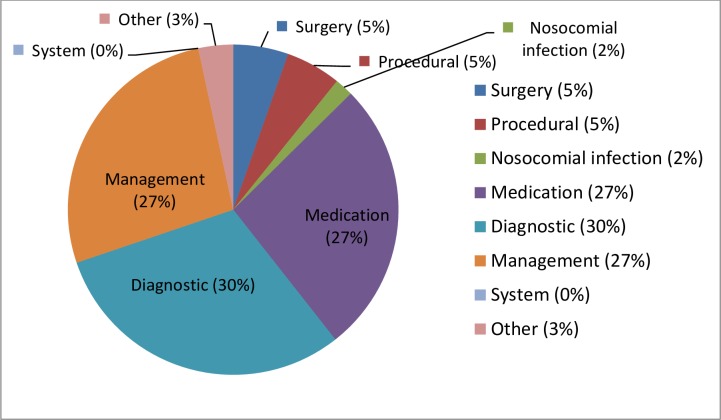
Results: Of 430 readmissions, 56 (13%) were assessed as PPRs. Age was significantly associated with a PPR (adjusted OR: 2.42; 95%, CI 1.23-4.74; p = 0.01). The main causes for PPRs were diagnostic (30%), medication (27%) and management problems (27%). During the multidisciplinary meeting, the final decision on preventability changed in 11% of the cases. When a patient interview was available, it was used as a source of information to assess preventability in 26% of readmissions. In 7% of cases, the patient interview was mentioned as the most important source.
Conclusion and implications: 13% of readmissions were potentially preventable with diagnostic, medication or management problems being main causes. A multidisciplinary review approach and including the patient's perspective could contribute to a better understanding of the complexity of readmissions and possible improvements.
Conflict of interest statement
The authors have declared that no competing interests exist.
Figures
References
-
- Ashton CM, Del Junco DJ, Souchek J, Wray NP, Mansyur CL. The Association Between the Quality of Inpatient Care and Early Readmission: A Meta-Analysis of the Evidence. Medical Care. 1997. Oct;35(10):1044–59. - PubMed
-
- Inspectie Gezondheidszorg en Jeugd. Basisset Medisch Specialistische zorg Kwaliteitsindicatoren 2019. Available on: https://www.igj.nl/documenten/indicatorensets/2017/01/01/basisset-medisc... (accessed on 13th February 2019)
Publication types
MeSH terms
LinkOut - more resources
Full Text Sources
Medical
