


The use of a patch to augment rotator cuff surgery - A survey of UK shoulder and elbow surgeons
- PMID: 32240199
- PMCID: PMC7117708
- DOI: 10.1371/journal.pone.0230235
The use of a patch to augment rotator cuff surgery - A survey of UK shoulder and elbow surgeons
Abstract
Background: Rotator cuff tears are a common cause of shoulder pain and can result in prolonged periods of pain, disability and absence from work. Rotator cuff repair surgery is increasingly used in an attempt to resolve symptoms but has failure rates of around 40%. There is a pressing need to improve the outcome of rotator cuff repairs. Patch augmentation increasingly being used within the NHS in an attempt to reduce repair failures. The aim of this survey was to determine current UK practice and opinion relating to the factors that influence choice of patch, current patient selection and willingness to assist with generation of improved evidence.
Methods: An online survey was sent to the surgeon members of the British Elbow and Shoulder Society (BESS). Questions covered respondent demographics, experience with patches, indications for patch augmentation and willingness to be involved in a randomised trial of patch augmented rotator cuff surgery.
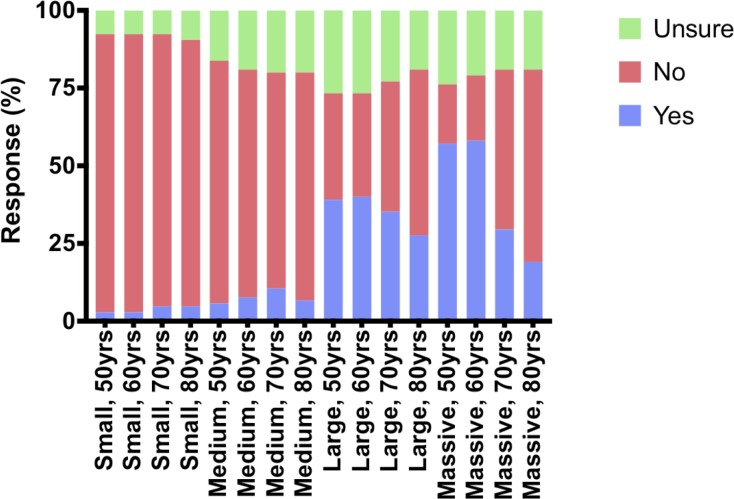
Results: The response rate was 105/550 (19%). 58% of respondents had used a patch to augment rotator cuff surgery. 70% of patch users had undertaken an augmented repair within the last 6 months. A wide surgical experience in augmentation was reported (ranging 1 to 200 implants used). However, most surgeons reported low volume usage, with a median of 5 rotator cuff augmentation procedures performed. At least 10 different products had been used. Most of the patches used were constructed from human decellularised dermis tissue, although porcine derived and synthetic based patches had also been used. Only 3-5% stated they would undertake an augmented repair for small tears across ages, whereas 28-40% and 19-59% would do so for large or massive tears respectively. When assessing patient suitability, patient age seemed relevant only for those with large and massive tears. Half of the surgeons reported an interest in taking part in a randomised controlled trial (RCT) evaluating the role of patch augmentation for rotator cuff surgery, with a further 22% of respondent's undecided.
Conclusions: A variety of patches have been used by surgeons to augment rotator cuff repair with a wide range of operator experience. There was substantial uncertainty about which patch to use and differing views on which patients were most suitable. There is a clear need for robust clinical evaluation and further research in this area.
Conflict of interest statement
Author AC has been developing a patch for potential use to rotator cuff surgery. None of the other authors have any COIs to declare.
Figures
References
-
- Sher JS, Uribe JW, Posada A, Murphy BJ, Zlatkin MB. Abnormal findings on magnetic resonance images of asymptomatic shoulders. J Bone Jt Surg Am. 1995;77(1):10–5. - PubMed
-
- Yamamoto A, Takagishi K, Osawa T, Yanagawa T, Nakajima D, Shitara H,et al. Prevalence and risk factors of a rotator cuff tear in the general population. J Shoulder Elb Surg. 2010;19(1):116–20. - PubMed
-
- Judge A, Murphy RJ, Maxwell R, Arden NK, Carr AJ. Temporal trends and geographical variation in the use of subacromial decompression and rotator cuff repair of the shoulder in England. Bone Jt J. 2014;96 B(1):70–4. - PubMed
Publication types
MeSH terms
Grants and funding
LinkOut - more resources
Full Text Sources
Medical
