. 2020 Apr 2;15(4):e0227172.
doi: 10.1371/journal.pone.0227172. eCollection 2020.

A long noncoding RNA acts as a post-transcriptional regulator of heat shock protein (HSP70) synthesis in the cold hardy Diamesa tonsa under heat shock

Affiliations

A long noncoding RNA acts as a post-transcriptional regulator of heat shock protein (HSP70) synthesis in the cold hardy Diamesa tonsa under heat shock

Paola Bernabò et al. PLoS One. .

Abstract

Cold stenothermal insects living in glacier-fed streams are stressed by temperature variations resulting from glacial retreat during global warming. The molecular aspects of insect response to environmental stresses remain largely unexplored. The aim of this study was to expand our knowledge of how a cold stenothermal organism controls gene expression at the transcriptional, translational, and protein level under warming conditions. Using the chironomid Diamesa tonsa as target species and a combination of RACE, qPCR, polysomal profiling, western blotting, and bioinformatics techniques, we discovered a new molecular pathway leading to previously overlooked adaptive strategies to stress. We obtained and characterized the complete cDNA sequences of three heat shock inducible 70 (hsp70) and two members of heat-shock cognate 70 (hsc70). Strikingly, we showed that a novel pseudo-hsp70 gene encoding a putative long noncoding RNA (lncRNA) which is transcribed during thermal stress, acting as a ribosome sponge to provide post-transcriptional control of HSP70 protein levels. The expression of the pseudo-hsp70 gene and its function suggest the existence of a new and unexpected mechanism to cope with thermal stress: lowering the pace of protein production to save energy and optimize resources for recovery.


Conflict of interest statement

The authors have declared that no competing interests exist.

Figures
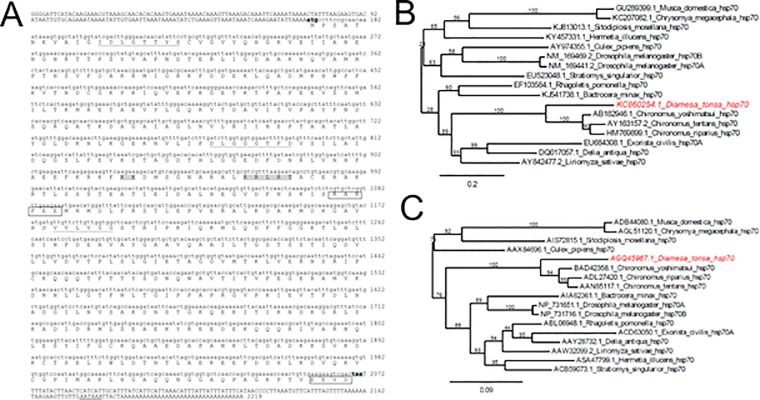
Fig 1
Fig 1. Characterization of hsp70 gene in Diamesa tonsa.
(A) Nucleotide sequence of the hsp70 gene in D. tonsa with deduced amino acid sequence. In the nucleotide sequence, upper case indicates the 5ʹUTR and the 3ʹUTRs, whilst lower case indicates the coding region. The start codon (ATG) and stop codon (TAA) are shadowed and in bold, and the consensus polyA signal in the 3ʹUTR is in italic and double-underlined. The three characteristic signatures of the HSP70 family are underlined: the non-organelle consensus-motif (RARFEEL) and the cytoplasmic C-terminal region EEVD are shown. The putative bipartite nuclear localization signal (KK and RRLRT) is shadowed in grey. (B) Phylogenetic tree inferred from nucleotide sequences of hsp70 in different dipteran species. The tree was constructed using Phylogeny.fr tool at ExPASy Proteomics server (http://www.phylogeny.fr) using the “One Click” mode with default settings. The numbers above the branches are tree supported values generated by PhyML using the approximate Likelihood Ratio (aLRT) statistical test. (C) Phylogenetic tree inferred from the inferred amino-acid sequence of HSP70 in different dipteran species. The tree was constructed using Phylogeny.fr tool at ExPASy Proteomics server (http://www.phylogeny.fr) using the “One Click” mode with default settings. The numbers above the branches are tree supported values generated by PhyML using the approximate Likelihood-Ratio (aLRT) statistical test.
Fig 2
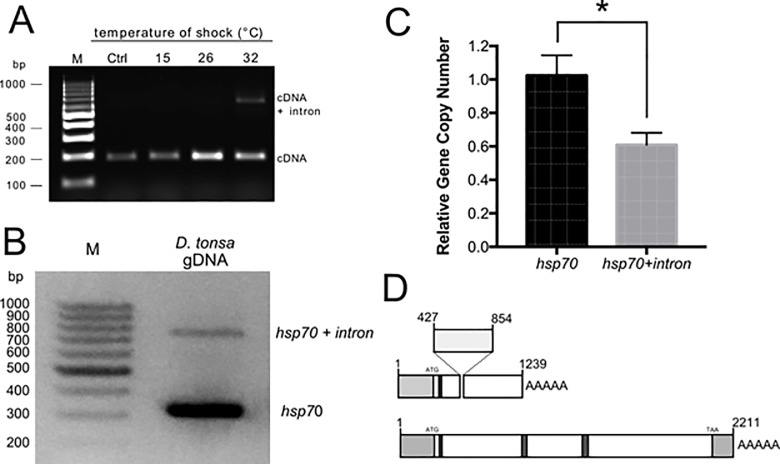
Fig 2. Identification of an Hsp70 pseudogene in Diamesa tonsa.
(A) Agarose gel of hsp70 PCR products from D. tonsa larvae control (Ctrl, 4°C) or maintained for 1 h at 15, 26, and 32°C. All PCR products are amplified from cDNA with primers for hsp70 (Table 1). (B) Agarose gel electrophoresis of the PCR products amplified from D. tonsa genomic DNA with hsp70 sequence specific primers hsp70 F and hsp70 R (Table 2). (C) Relative gene copy number of hsp70 and hsp70 + intron assessed by Real-PCR analysis (n  =  4) (Student t-test, * p ≤ 0.05). (D) Schematic representation of the two hsp70 transcripts: light grey boxes are the 5ʹ and 3ʹ UTR, dark grey boxes indicated the position of the three characteristic HSP70 family domains.
Fig 3
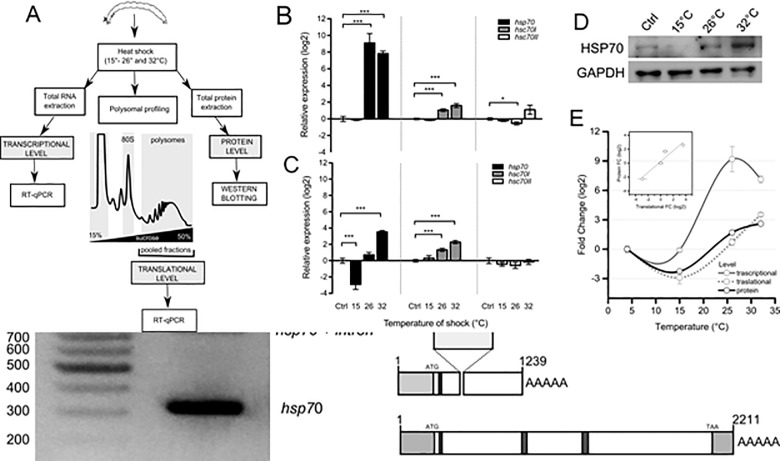
Fig 3. Multi-level analysis of gene expression of Dc-hsp70, hsc70-I and hsc70-II during thermal stress.
(A) Experimental design for comparing changes in gene expression at multiple levels. Insects were exposed to thermal stress. Total RNA was extracted to analyse the changes at transcriptional level. In parallel, changes associated with mRNA recruitment to polysomes was obtained by RNA extraction from polysomal fractions. These were collected after polysomal profiling to assess the translational changes in gene expression. Finally, whole proteins were extracted to assess protein level. In the first two cases, all three transcripts were studied. For the protein level, only Hsp70 was monitored. (B) Transcriptional expression level for hsp70, hsc70-I and hsc70-II. Total RNA was extracted from Diamesa tonsa larvae control (Ctrl, 4°C) or maintained for 1 h at 15, 26, and 32°C. hsp70, hsc70-I and hsc70-II relative expression levels were measured by real-time PCR. Actin was used as housekeeping gene and the level of control (Ctrl, 4°C) was set at 0. Error bars represent SE; n = 3 biological replicates and each assay was performed in triplicate. (C) Translational expression level for hsp70, hsc70-I and hsc70-II. Polysomal RNA was extracted from sucrose fractions corresponding to the polysomal peaks of larvae control (4°C) or maintained for 1 h at 15, 26, and 32°C. hsp70, hsc70-I and hsc70-II relative expression levels were measured by real-time PCR. Actin was used as housekeeping gene and the level of control (4°C) was set at 0. (D) Western blot analysis of HSP70 protein level in larvae control (Ctrl, 4°C) or maintained for 1 h at 15, 26, and 32°C. GAPDH was used as a loading control. (E) Comparison of the log2 Fold Change with respect to Ctrl of Transcriptional, Translational and Protein level after exposure to 15, 26 and 32°C. Asterisks indicate statistically significant differences with respect to control (Student t-test, * p ≤ 0.05, ** p ≤ 0.01, *** p ≤ 0.001). In the inset, the correlation between fold changes occurring at the translational and protein level was calculated (R2 = 0.922). In the case of transcriptional and translational comparison, the correlation was (R2 = 0.389), see S3A Fig.
Fig 4
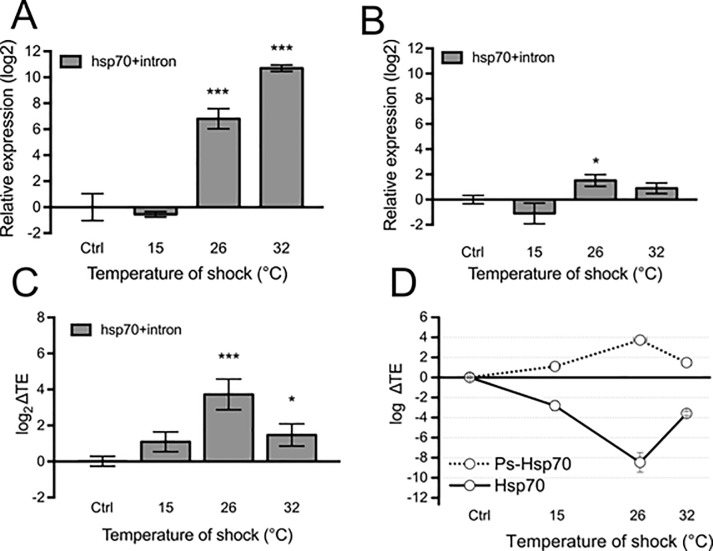
Fig 4. Ps-Hsp70 is loaded on polysomes and acts as a putative ribosome sponge for Hsp70.
(A) Transcriptional expression level for hsp70 + intron mRNA. Total RNA was extracted from Diamesa tonsa larvae control (K, 4°C) or maintained for 1 h at 15, 26, and 32°C. Relative expression level was measured by real-time PCR. Actin was used as housekeeping gene and the level of control (Ctrl, 4°C) was set at 0. Error bars represent SE; n = 3 biological replicates and each assay performed in triplicate. (B) Translational expression level of hsp70 + intron. Polysomal RNA was extracted from sucrose fractions corresponding to the polysomal peaks of larvae control (4°C) or maintained for 1 h at 15, 26, and 32°C. Relative expression level was measured by real-time PCR. Actin was used as housekeeping gene and the level of control (4°C) was set at 0. (C) Translation Efficiency (log2 ΔTE), calculated as the difference between the fold change at the polysomal level and the fold change at the sub-polysomal level, of hsp70 + intron in larvae control (Ctrl, 4°C) or maintained for 1 h at 15, 26, and 32°C. Asterisks indicate statistically significant differences in respect to the control (Student t-test, * p ≤ 0.05, ** p ≤ 0.01, *** p ≤ 0.001). (D) Comparison between the Translation Efficiency (log2 ΔTE) of Ps-Hsp70 and Hsp70. The ΔTE values for Hsp70 were obtained from data shown in Fig 3B and 3C.
Fig 5
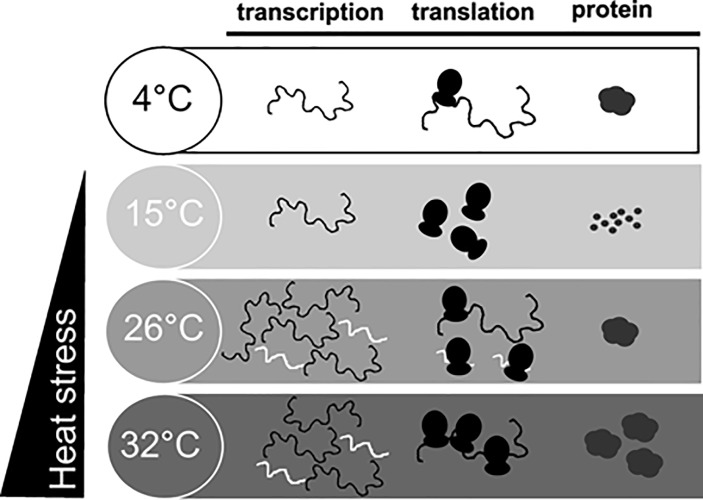
Fig 5. Scheme summarizing the multi-level changes occurring during heat shock in Diamesa tonsa.

References

    1. Jeremias G, Barbosa J, Marques SM, Asselman J, Gonçalves FJM, Pereira JL. Synthesizing the role of epigenetics in the response and adaptation of species to climate change in freshwater ecosystems. Mol Ecol. 2018;27(13):2790–2806. 10.1111/mec.14727 - DOI - PubMed
    1. Woodward G, Perkins DM, Brown LE. Climate change and freshwater ecosystems: Impacts across multiple levels of organization. Philos Trans R Soc Lond B Biol Sci. 2010;365(1549):2093–2106. 10.1098/rstb.2010.0055 - DOI - PMC - PubMed
    1. Lencioni V, Spitale D. Diversity and distribution of benthic and hyporheic fauna in different stream types on an alpine glacial floodplain. Hydrobiologia. 2015;751:73–87. 10.1007/s10750-014-2172-2 - DOI
    1. Hotaling S, Finn DS, Joseph Giersch J, Weisrock DW, Jacobsen D. Climate change and alpine stream biology: progress, challenges, and opportunities for the future. Biol Rev Camb Philos Soc. 2017;92:2024–2045. 10.1111/brv.12319 - DOI - PubMed
    1. Milner AM, Khamis K, Battin TJ, Brittain JE, Barrand NE, Fuereder L et al. Glacier shrinkage driving global changes in downstream systems. Proc Natl Acad Sci U S A. 2017;114(37):9770–9778. 10.1073/pnas.1619807114 - DOI - PMC - PubMed

Publication types

MeSH terms

Substances