


Multi-scale characterizations of colon polyps via computed tomographic colonography
- PMID: 32240410
- PMCID: PMC7099560
- DOI: 10.1186/s42492-019-0032-7
Multi-scale characterizations of colon polyps via computed tomographic colonography
Abstract
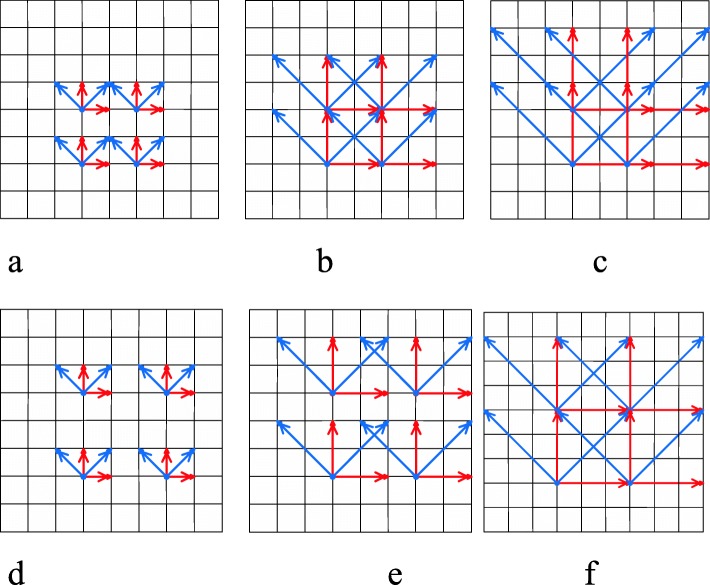
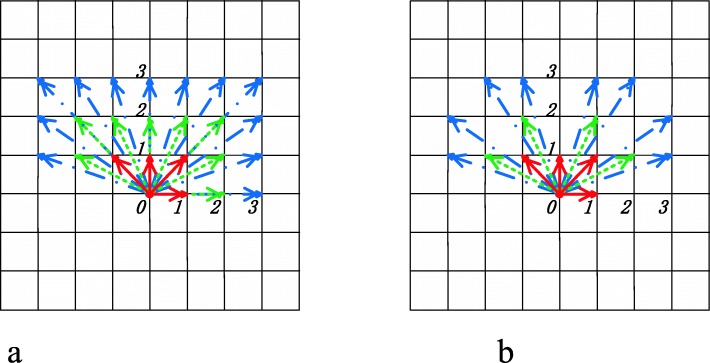
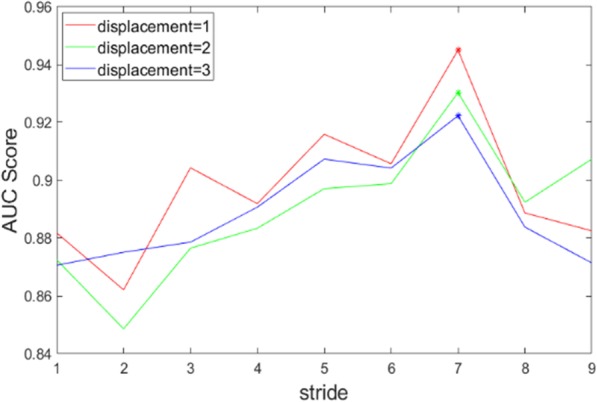
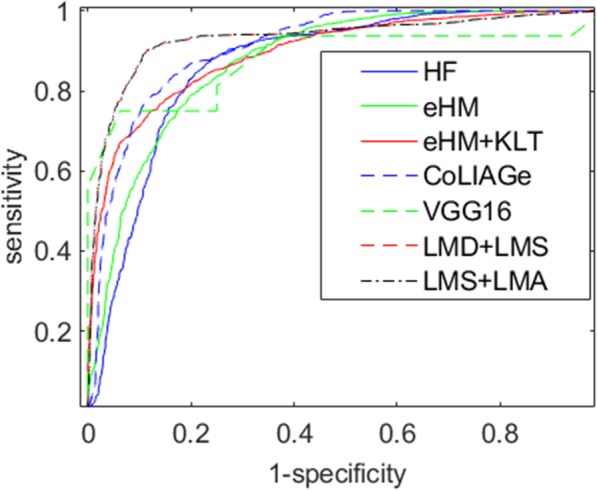
Texture features have played an essential role in the field of medical imaging for computer-aided diagnosis. The gray-level co-occurrence matrix (GLCM)-based texture descriptor has emerged to become one of the most successful feature sets for these applications. This study aims to increase the potential of these features by introducing multi-scale analysis into the construction of GLCM texture descriptor. In this study, we first introduce a new parameter - stride, to explore the definition of GLCM. Then we propose three multi-scaling GLCM models according to its three parameters, (1) learning model by multiple displacements, (2) learning model by multiple strides (LMS), and (3) learning model by multiple angles. These models increase the texture information by introducing more texture patterns and mitigate direction sparsity and dense sampling problems presented in the traditional Haralick model. To further analyze the three parameters, we test the three models by performing classification on a dataset of 63 large polyp masses obtained from computed tomography colonoscopy consisting of 32 adenocarcinomas and 31 benign adenomas. Finally, the proposed methods are compared to several typical GLCM-texture descriptors and one deep learning model. LMS obtains the highest performance and enhances the prediction power to 0.9450 with standard deviation 0.0285 by area under the curve of receiver operating characteristics score which is a significant improvement.
Keywords: Colon cancer; Computed tomographic colonography; Polyp characterization; Texture feature.
Conflict of interest statement
The authors declare that they have no competing interests.
Figures
References
-
- American Cancer Society (2018) Cancer facts & figures 2018. American Cancer Society, Atlanta, GA, USA
-
- Byers T, Levin B, Rothenberger D, Dodd GD, Smith RA. American Cancer Society guidelines for screening and surveillance for early detection of colorectal polyps and cancer: update 1997. CA: A Cancer J Clin. 1997;47(3):154–160. - PubMed
-
- Levin B, Lieberman DA, McFarland B, Smith RA, Brooks D, Andrews KS, et al. Screening and surveillance for the early detection of colorectal cancer and adenomatous polyps, 2008: a joint guideline from the American Cancer Society, the US multi-society task force on colorectal cancer, and the American college of radiology. CA: A Cancer J Clin. 2008;58(3):130–160. - PubMed
-
- Center MM, Jemal A, Smith RA, Ward E. Worldwide variations in colorectal cancer. CA: A Cancer J Clin. 2009;59(6):366–378. - PubMed
Publication types
Grants and funding
LinkOut - more resources
Full Text Sources