


Continuous chromosome-scale haplotypes assembled from a single interspecies F1 hybrid of yak and cattle
- PMID: 32242610
- PMCID: PMC7118895
- DOI: 10.1093/gigascience/giaa029
Continuous chromosome-scale haplotypes assembled from a single interspecies F1 hybrid of yak and cattle
Abstract
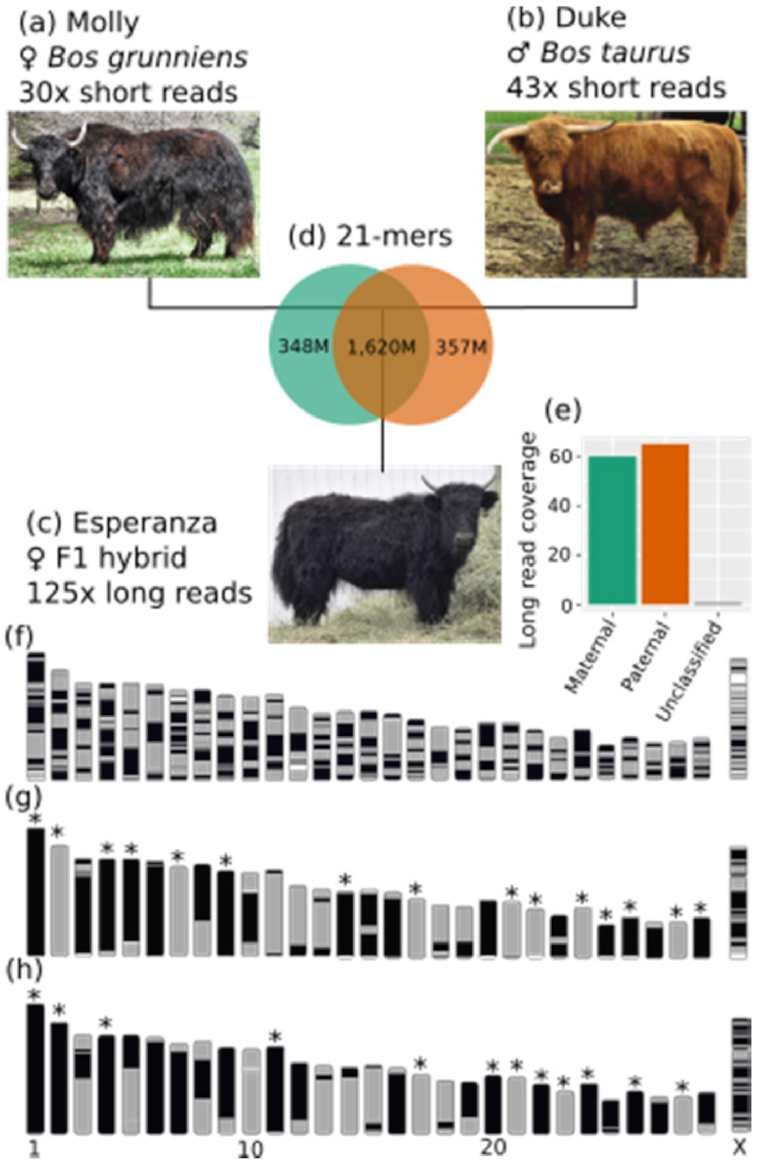
Background: The development of trio binning as an approach for assembling diploid genomes has enabled the creation of fully haplotype-resolved reference genomes. Unlike other methods of assembly for diploid genomes, this approach is enhanced, rather than hindered, by the heterozygosity of the individual sequenced. To maximize heterozygosity and simultaneously assemble reference genomes for 2 species, we applied trio binning to an interspecies F1 hybrid of yak (Bos grunniens) and cattle (Bos taurus), 2 species that diverged nearly 5 million years ago. The genomes of both of these species are composed of acrocentric autosomes.
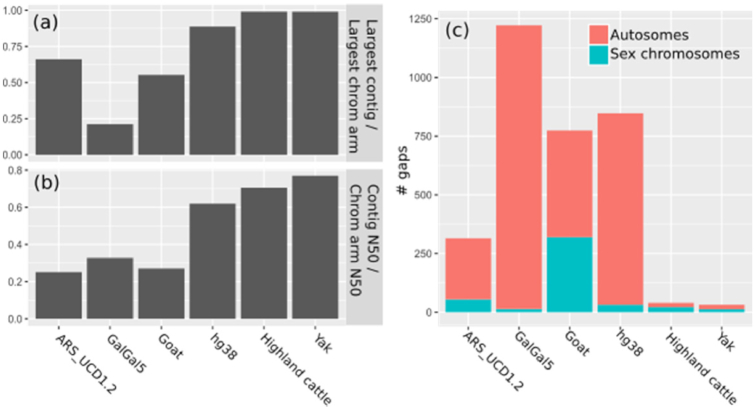
Results: We produced the most continuous haplotype-resolved assemblies for a diploid animal yet reported. Both the maternal (yak) and paternal (cattle) assemblies have the largest 2 chromosomes in single haplotigs, and more than one-third of the autosomes similarly lack gaps. The maximum length haplotig produced was 153 Mb without any scaffolding or gap-filling steps and represents the longest haplotig reported for any species. The assemblies are also more complete and accurate than those reported for most other vertebrates, with 97% of mammalian universal single-copy orthologs present.
Conclusions: The high heterozygosity inherent to interspecies crosses maximizes the effectiveness of the trio binning method. The interspecies trio binning approach we describe is likely to provide the highest-quality assemblies for any pair of species that can interbreed to produce hybrid offspring that develop to sufficient cell numbers for DNA extraction.
Keywords: Bos grunniens; Bos taurus; Highland cattle; genome assembly; phasing.
© The Author(s) 2020. Published by Oxford University Press.
Figures
References
-
- Rice ES, Green RE. New approaches for genome assembly and scaffolding. Annu Rev Anim Biosci. 2019;7:17–40. - PubMed
Publication types
MeSH terms
LinkOut - more resources
Full Text Sources
Miscellaneous
