


Characterization of a Novel Ginsenoside MT1 Produced by an Enzymatic Transrhamnosylation of Protopanaxatriol-Type Ginsenosides Re
- PMID: 32244263
- PMCID: PMC7226242
- DOI: 10.3390/biom10040525
Characterization of a Novel Ginsenoside MT1 Produced by an Enzymatic Transrhamnosylation of Protopanaxatriol-Type Ginsenosides Re
Abstract
Background: Ginsenosides, triterpene saponins of Panax species, are considered the main active ingredients responsible for various pharmacological activities. Herein, a new protopanaxatriol-type ginsenoside called "ginsenoside MT1" is described; it was accidentally found among the enzymatic conversion products of ginsenoside Re.
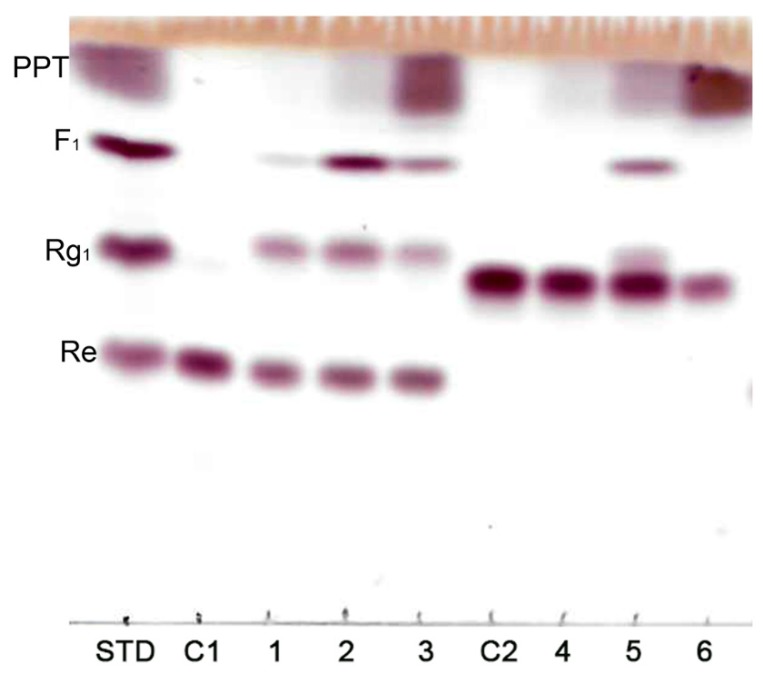
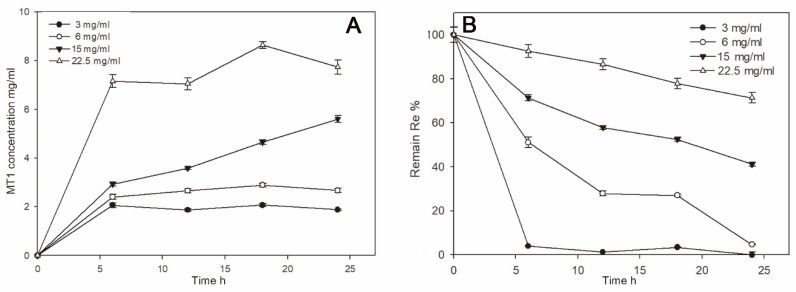
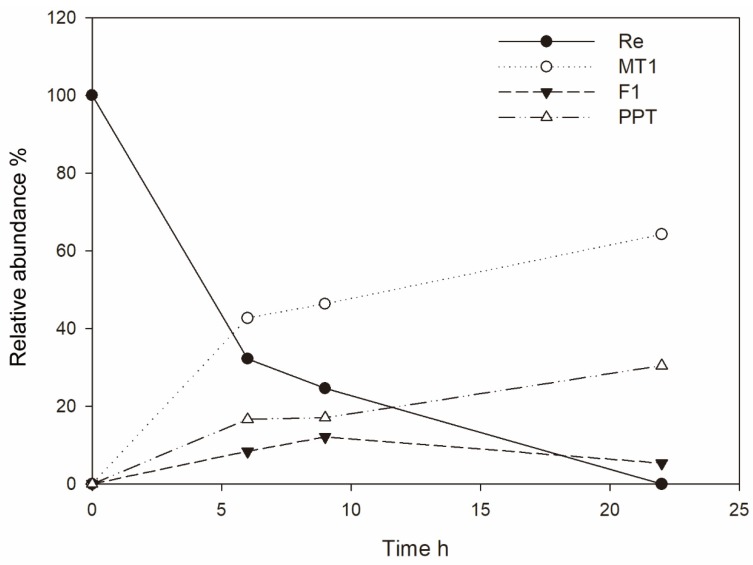
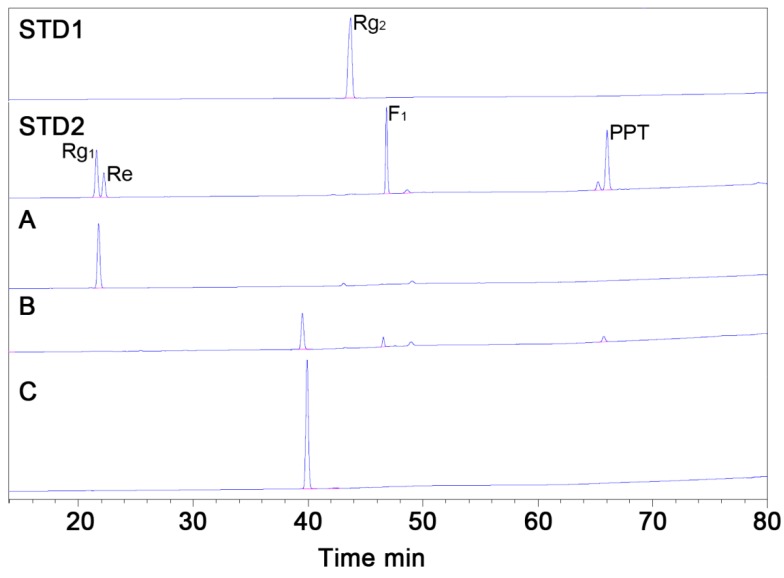
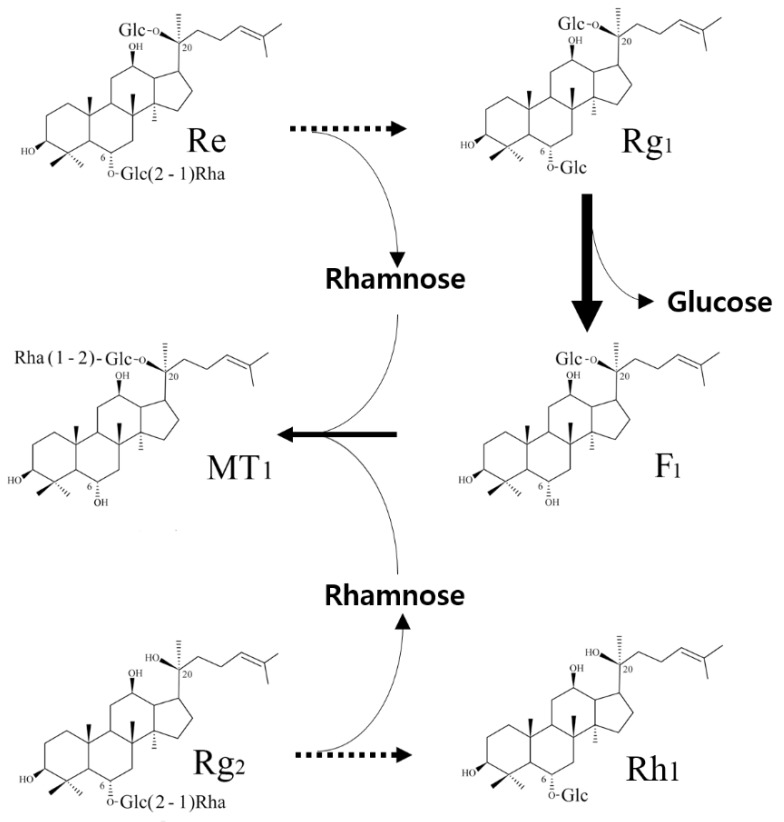
Method: We analyzed the conversion mechanism and found that recombinant β-glucosidase (MT619) transglycosylated the outer rhamnopyranoside of Re at the C-6 position to glucopyranoside at C-20. The production of MT1 by trans-rhamnosylation was optimized and pure MT1 was obtained through various chromatographic processes.
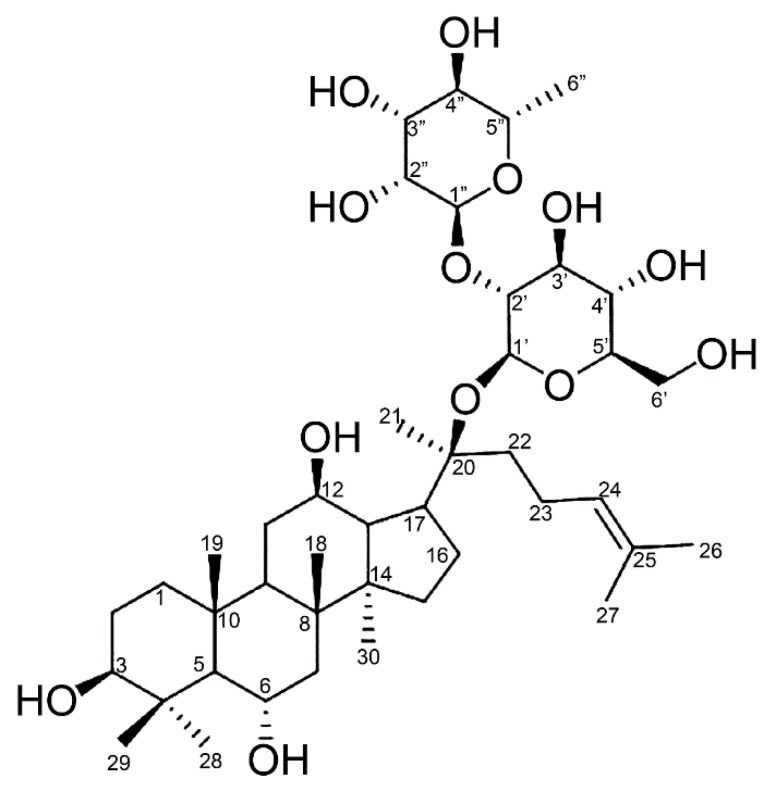
Results: The structure of MT1 was elucidated based on spectral data: (20S)-3β,6α,12β,20-tetrahydroxydammarene-20-O-[α-L-rhamnopyranosyl(1→2)-β-D-glucopyranoside]. This dammarane-type triterpene saponin was confirmed as a novel compound.
Conclusion: Based on the functions of ginsenosides with similar structures, we believe that this ginsenoside MT1 may have great potential in the development of nutraceutical, pharmaceutical or cosmeceutical products.
Keywords: biotechnology; biotransformation; dammarane-type triterpene saponin; ginsenoside MT1; ginsenosides; transglycosylation.
Conflict of interest statement
The authors declare no conflict of interest.
Figures
References
-
- Shi Y., Sun C.J., Zheng B., Gao B., Sun A.M. Simultaneous Determination of Ten Ginsenosides in American Ginseng Functional Foods and Ginseng Raw Plant Materials by Liquid Chromatography Tandem Mass Spectrometry. Food Anal. Methods. 2013;6:112–122. doi: 10.1007/s12161-012-9406-6. - DOI
Publication types
MeSH terms
Substances
Grants and funding
LinkOut - more resources
Full Text Sources
