


Effect of Molybdenum on Plant Physiology and Cadmium Uptake and Translocation in Rape (Brassica napus L.) under Different Levels of Cadmium Stress
- PMID: 32244320
- PMCID: PMC7177489
- DOI: 10.3390/ijerph17072355
Effect of Molybdenum on Plant Physiology and Cadmium Uptake and Translocation in Rape (Brassica napus L.) under Different Levels of Cadmium Stress
Abstract
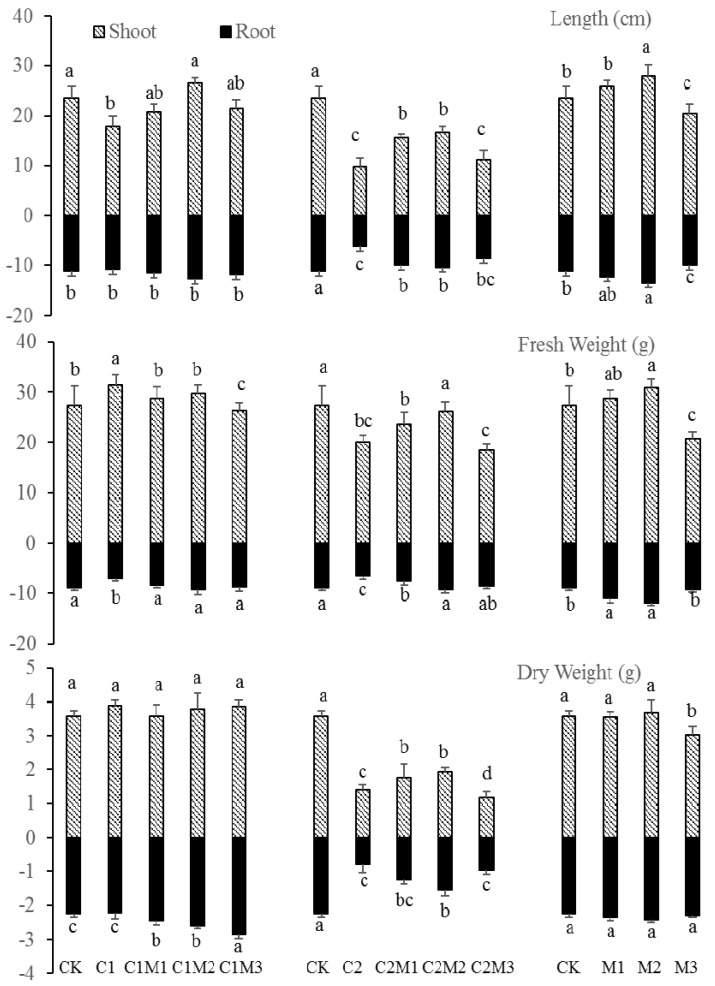
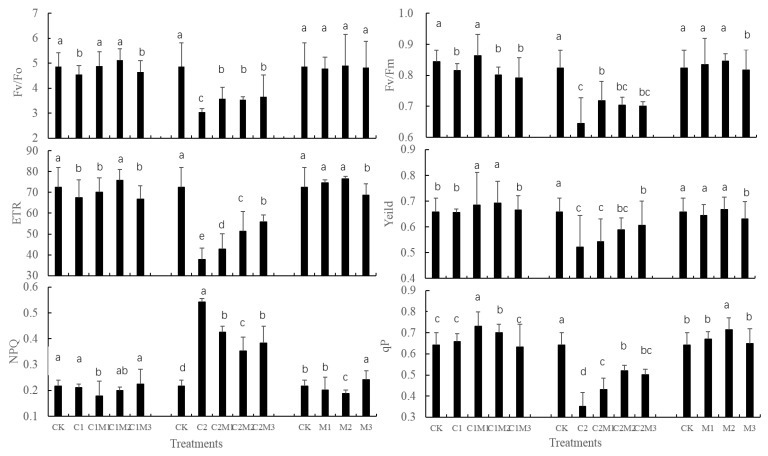
This study investigated the beneficial effect of molybdenum (Mo) application on rape plants (Brassica napus L.) grown in a soil polluted by cadmium (Cd). A pot experiment was conducted to determine how different concentrations of exogenous Mo (0, 50, 100, and 200 mg/kg) affect plant physiology, biomass, photosynthesis, cation uptake, and Cd translocation and enrichment in rape plants under Cd stress (0.5 and 6.0 mg/kg). Under single Cd treatment, plant physiological and biochemical parameters, biomass parameters, leaf chlorophyll fluorescence parameters, and macroelement uptake of rape plants decreased, while their malonaldehyde content, proline content, non-photochemical quenching coefficient, and Cd uptake significantly increased, compared to those of the control group (p-values < 0.05). High-Cd treatment resulted in much larger changes in these parameters than low-Cd treatment. Following Mo application, the accumulation of malondialdehyde and proline decreased in the leaves of Cd-stressed plants; reversely, the contents of soluble protein, soluble sugar, and chlorophyll, and the activities of superoxide dismutase and glutathione peroxidase, all increased compared to those of single Cd treatment (p-values < 0.05). Exogenous Mo application promoted shoot and root growth of Cd-stressed plants in terms of their length, fresh weight, and dry weight. The negative effect of Cd stress on leaf chlorophyll fluorescence was substantially mitigated by applying Mo. Exogenous Mo also improved the uptake of inorganic cations, especially potassium (K+), in Cd-stressed plants. After Mo application, Cd uptake and accumulation were inhibited and Cd tolerance was enhanced, but Cd translocation was less affected in Cd-stressed plants. The mitigation effect of Mo on Cd stress in rape was achieved through the immobilization of soil Cd to reduce plant uptake, and improvement of plant physiological properties to enhance Cd tolerance. In conclusion, exogenous Mo can effectively reduce Cd toxicity to rape and the optimal Mo concentration was 100 mg/kg under the experimental conditions.
Keywords: cadmium uptake; chlorophyll fluorescence; exogenous molybdenum; physiological parameters; plant biomass.
Conflict of interest statement
The authors declare no conflict of interest. The funders had no role in the design of the study; in the collection, analyses, or interpretation of data; in the writing of the manuscript, or in the decision to publish the results.
Figures
References
-
- Guo Y., Yang J., Guo J.M., Yang J.X., Zheng G.D., Li Z.T., Chen T.B., Yu B., Ni L., Wen Q., et al. Mechanism of nitrogen, phosphrous and potassium combined application promote absorption, transportation and accumulation of Pb in sunflower (Helianthns annuus L.) J. Plant Nutri. Ferti. 2019;25:1998–2008. doi: 10.11674/zwyf.1847. - DOI
-
- Camara Y.A., Wan Y.N., Yu Y., Wang Q., Li H.F. Effect of selenium on uptake and translocation of arsenic in rice seedlings (Oryza sativa L.) Ecotoxicol. Environ. Saf. 2018;148:869–875. doi: 10.1016/j.ecoenv.2017.11.064. - DOI
-
- Huang Y.Z., Hu Y., Liu Y.X. Heavy metal accumulation in iron plaque and growth of rice plants upon exposure to single and combined contamination by copper, cadmium and lead. Acta Ecolo. Sin. 2009;29:320–326. doi: 10.1016/j.chnaes.2009.09.011. - DOI
Publication types
MeSH terms
Substances
LinkOut - more resources
Full Text Sources
