


Insights into the Synthesis, Secretion and Curing of Barnacle Cyprid Adhesive via Transcriptomic and Proteomic Analyses of the Cement Gland
- PMID: 32244485
- PMCID: PMC7230167
- DOI: 10.3390/md18040186
Insights into the Synthesis, Secretion and Curing of Barnacle Cyprid Adhesive via Transcriptomic and Proteomic Analyses of the Cement Gland
Abstract
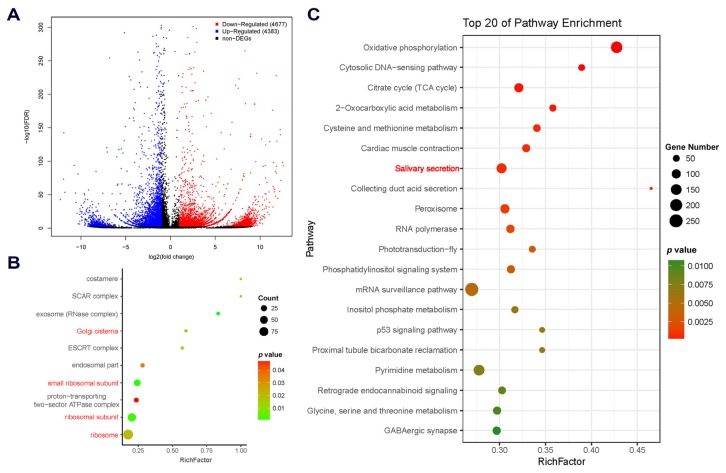
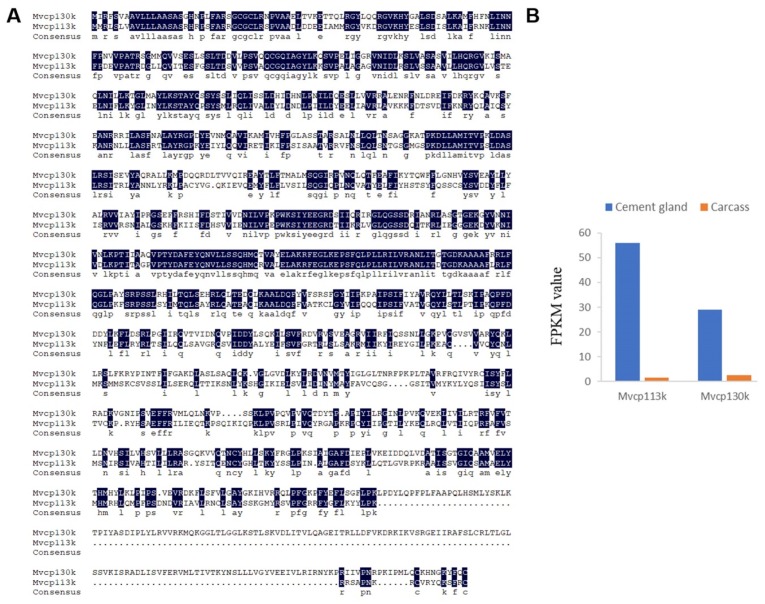
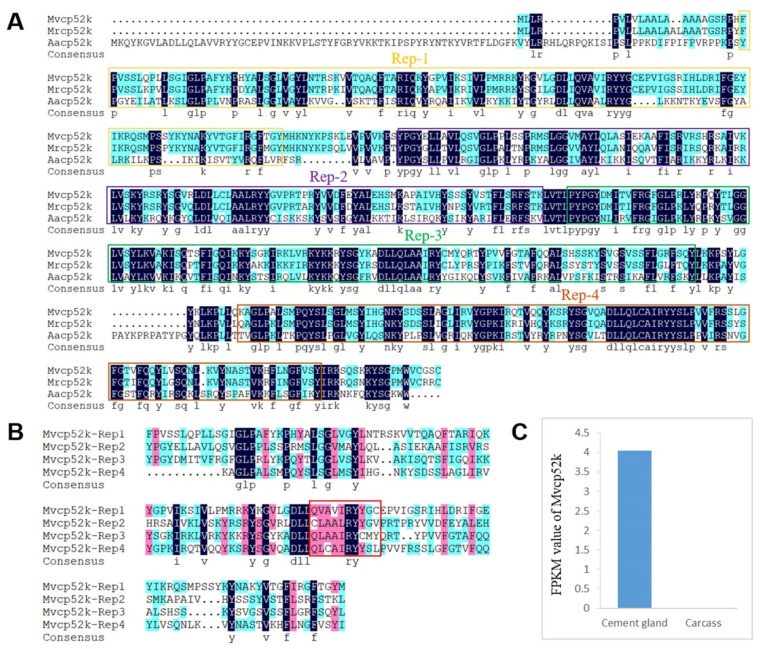
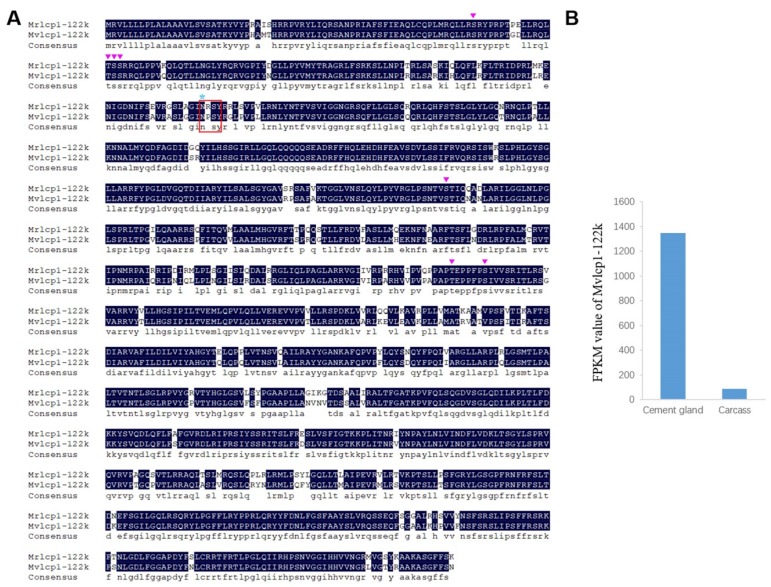
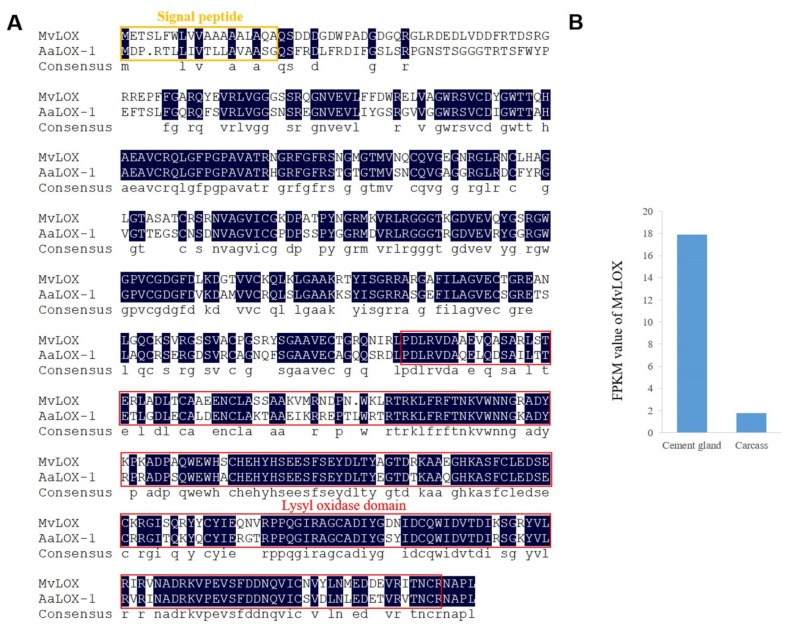
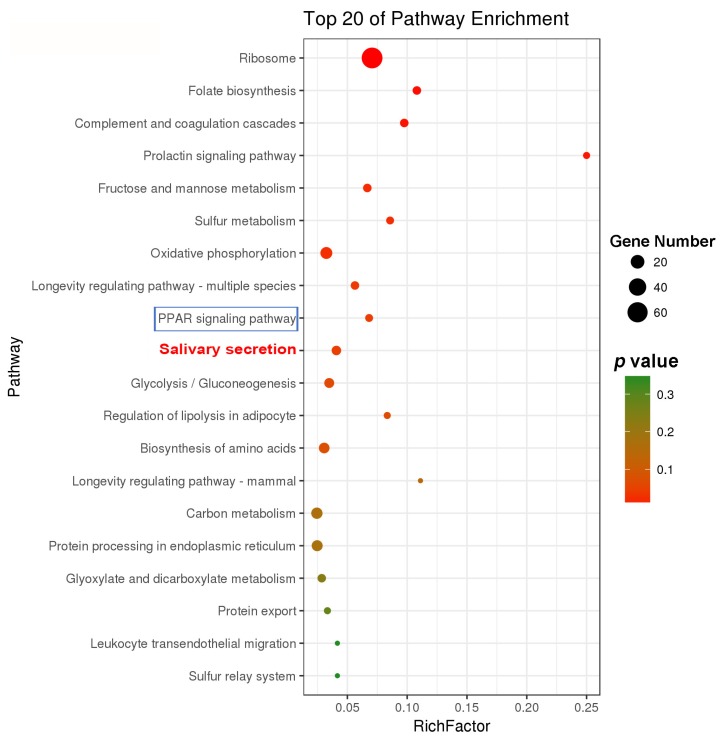
Barnacles represent one of the model organisms used for antifouling research, however, knowledge regarding the molecular mechanisms underlying barnacle cyprid cementation is relatively scarce. Here, RNA-seq was used to obtain the transcriptomes of the cement glands where adhesive is generated and the remaining carcasses of Megabalanus volcano cyprids. Comparative transcriptomic analysis identified 9060 differentially expressed genes, with 4383 upregulated in the cement glands. Four cement proteins, named Mvcp113k, Mvcp130k, Mvcp52k and Mvlcp1-122k, were detected in the cement glands. The salivary secretion pathway was significantly enriched in the Kyoto Encyclopedia of Genes and Genomes (KEGG) enrichment analysis of the differentially expressed genes, implying that the secretion of cyprid adhesive might be analogous to that of saliva. Lysyl oxidase had a higher expression level in the cement glands and was speculated to function in the curing of cyprid adhesive. Furthermore, the KEGG enrichment analysis of the 352 proteins identified in the cement gland proteome partially confirmed the comparative transcriptomic results. These results present insights into the molecular mechanisms underlying the synthesis, secretion and curing of barnacle cyprid adhesive and provide potential molecular targets for the development of environmentally friendly antifouling compounds.
Keywords: barnacle; cement gland; cement protein; cyprid adhesive; transcriptome.
Conflict of interest statement
The authors declare no conflicts of interest.
Figures
References
-
- Walker G. The Biochemical Composition of the Cement of two Barnacle Species, Balanus Hameri and Balanus Crenatus. J. Mar. Biol. Assoc. U. K. 1972;52:429–435. doi: 10.1017/S0025315400018786. - DOI
-
- Kamino K. Barnacle Underwater Attachment. In: Smith A.M., editor. Biological Adhesives. Springer International Publishing; Cham, Switzerland: 2016. pp. 153–176. - DOI
MeSH terms
Substances
Grants and funding
LinkOut - more resources
Full Text Sources
Molecular Biology Databases
