


Scrub Typhus: Historic Perspective and Current Status of the Worldwide Presence of Orientia Species
- PMID: 32244598
- PMCID: PMC7344502
- DOI: 10.3390/tropicalmed5020049
Scrub Typhus: Historic Perspective and Current Status of the Worldwide Presence of Orientia Species
Abstract
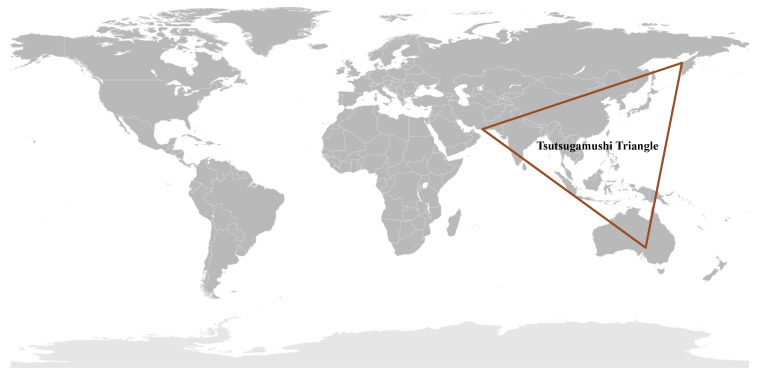
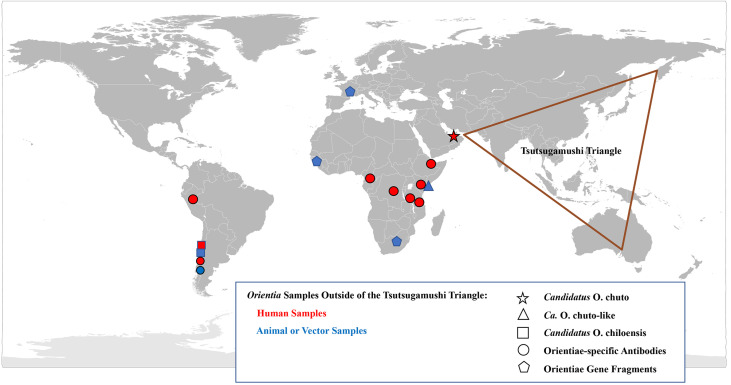
Scrub typhus and its etiological agents, Orientia species, have been around for a very long time. Historical reference to the rickettsial disease scrub typhus was first described in China (313 AD) by Hong Ge in a clinical manual (Zhouhofang) and in Japan (1810 AD) when Hakuju Hashimoto described tsutsuga, a noxious harmful disease in the Niigata prefecture. Other clinicians and scientists in Indonesia, Philippines, Taiwan, Australia, Vietnam, Malaysia, and India reported on diseases most likely to have been scrub typhus in the early 1900s. All of these initial reports about scrub typhus were from an area later designated as the Tsutsugamushi Triangle-an area encompassing Pakistan to the northwest, Japan to the northeast and northern Australia to the south. It was not until the 21st century that endemic scrub typhus occurring outside of the Tsutsugamushi Triangle was considered acceptable. This report describes the early history of scrub typhus, its distribution in and outside the Tsutsugamushi Triangle, and current knowledge of the causative agents, Orientia species.
Keywords: Orientia species; Tsutsugamushi Triangle; scrub typhus.
Conflict of interest statement
The authors declare no conflict of interest.
Figures
References
-
- Ashburn P.M., Craig C.F. A comparative study of tsutsugamushi disease and spotted or tick fever of Montana. Boston Med. Surg. J. 1908;158:749–761. doi: 10.1056/NEJM190805141582001. - DOI
-
- Watt G., Kantipong P. Orientia tsutsugamushi and scrub typhus. In: Raoult D., Parola P., editors. Rickettsial Diseases. Informa Healthcare USA, Inc.; New York, NY, USA: 2007. pp. 237–256.
Publication types
LinkOut - more resources
Full Text Sources
