


Effects of Nutrient Limitation on the Synthesis of N-Rich Phytoplankton Toxins: A Meta-Analysis
- PMID: 32244741
- PMCID: PMC7232484
- DOI: 10.3390/toxins12040221
Effects of Nutrient Limitation on the Synthesis of N-Rich Phytoplankton Toxins: A Meta-Analysis
Abstract
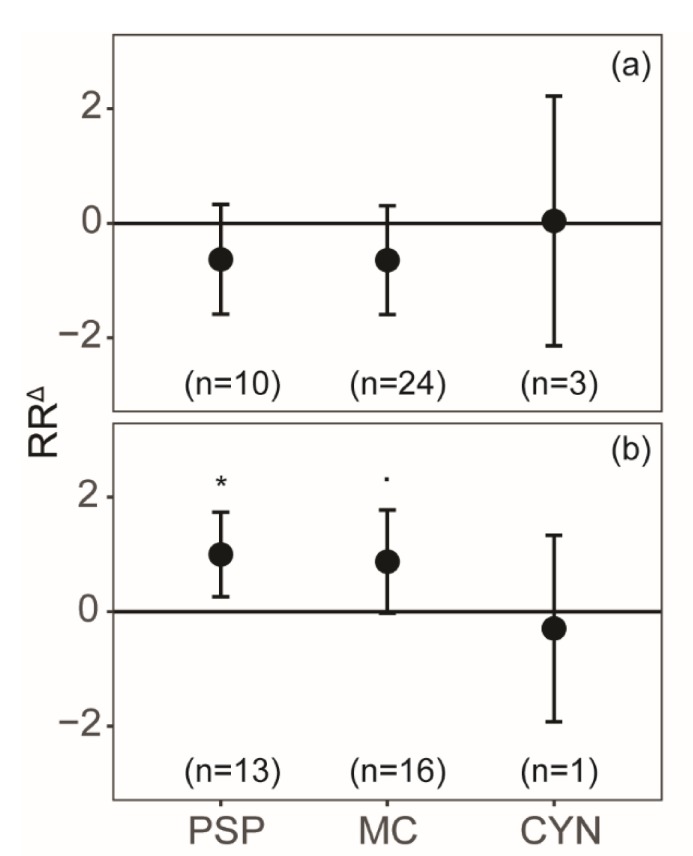
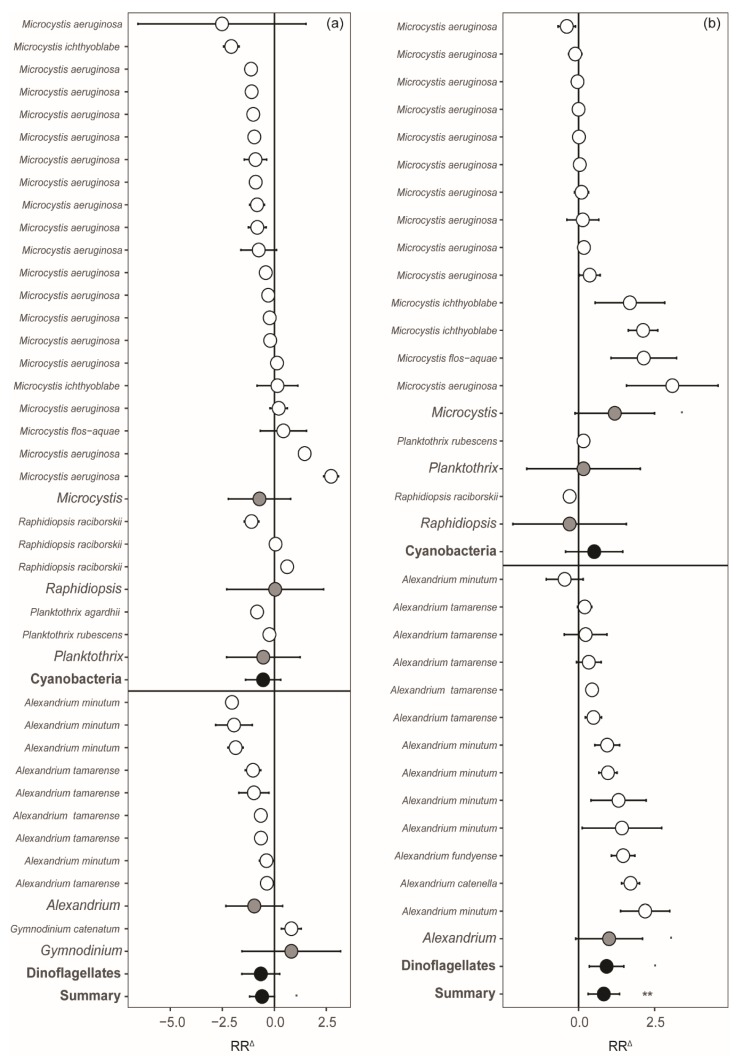
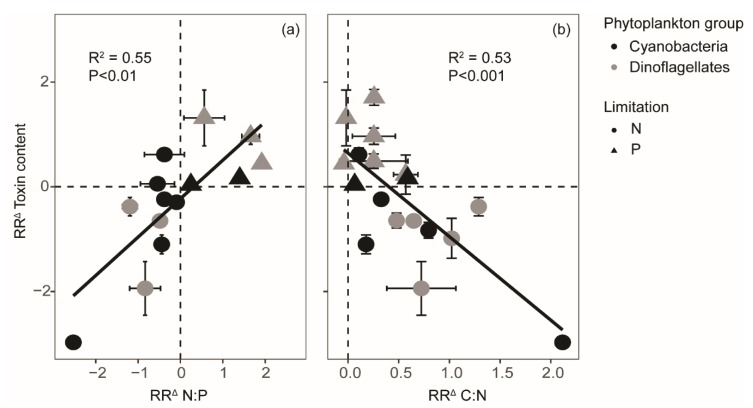
Eutrophication has played a major role in the worldwide increase of harmful algal blooms (HABs). Higher input of key nutrients, such as nitrogen (N) and phosphorus (P), can stimulate the growth of harmful algal species in freshwater, estuarine, and coastal marine ecosystems. Some HAB-forming taxa, particularly several cyanobacteria and dinoflagellate species, are harmful through the production of N-rich toxins that have detrimental effects on the environment and human health. Here, we test how changes in nutrient availability affect N-rich toxin synthesis in cyanobacteria and dinoflagellates using a meta-analysis approach. Overall, N-rich toxin content showed an increase with P limitation, while it tended to decrease with N limitation, but we also observed substantial variation in responses both within and across genera and toxin groups. For instance, in response to N limitation, microcystin content varied from a 297% decrease up to a 273% increase, and paralytic shellfish poisoning (PSP) toxin content varied from a 204% decrease to an 82% increase. Cylindrospermopsin, produced by N2-fixing cyanobacteria, showed no clear direction in response to nutrient limitation, and cellular contents of this compound may thus vary independently of nutrient fluctuations. Our results confirm earlier reported stoichiometric regulation of N-rich phytoplankton toxins, showing increased toxin content with an increase in cellular N:P ratios, and vice versa. Thus, changes in N-rich toxin content largely follow the changes in relative cellular N content. Consequently, although nutrient limitation may limit bloom biomass and thereby bloom toxicity, our results warn that P limitation can cause accumulation of cellular toxins and thus lead to unexpected increases in bloom toxicity.
Keywords: cylindrospermopsin; eutrophication; harmful algal blooms; microcystin; paralytic shellfish poisoning toxins; phycotoxins; stoichiometry.
Conflict of interest statement
The authors declare no conflict of interest. The funders had no role in the design of the study; in the collection, analyses, or interpretation of data; in the writing of the manuscript, or in the decision to publish the results.
Figures
References
-
- Anderson D.M., Burkholder J.M., Cochlan W.P., Glibert P.M., Gobler C.J., Heil C.A., Kudela R., Parsons M.L., Jack J.E., Townsend D.W., et al. Harmful algal blooms and eutrophication: Examining linkages from selected coastal regions of the United States. Harmful Algae. 2008;8:39–53. doi: 10.1016/j.hal.2008.08.017. - DOI - PMC - PubMed
-
- Glibert P.M., Seitzinger S., Heil C., Burkholder J.M., Parrow M., Codispoti L., Kelly V. The role of eutrophication in the global proliferation of harmful algal blooms. Oceanography. 2005;18:198–209. doi: 10.5670/oceanog.2005.54. - DOI
-
- Glibert P.M., Burkholder J.M. The complex relationships between increases in fertilization of the earth, coastal eutrophication and proliferation of harmful algal blooms. In: Graneli E., Turner J.T., editors. Ecology of Harmful Algae. Volume 189. Springer; Berlin/Heidelberg, Germany: 2006. pp. 341–354.
-
- Parsons M.L., Dortch Q. Sedimentological evidence of an increase in Pseudo-nitzschia (Bacillariophyceae) abundance in response to coastal eutrophication. Limnol. Oceanogr. 2002;47:551–558. doi: 10.4319/lo.2002.47.2.0551. - DOI
Publication types
MeSH terms
Substances
Grants and funding
LinkOut - more resources
Full Text Sources
Other Literature Sources
Miscellaneous
