


Effective Risk Communication for Public Health Emergency: Reflection on the COVID-19 (2019-nCoV) Outbreak in Wuhan, China
- PMID: 32245157
- PMCID: PMC7151105
- DOI: 10.3390/healthcare8010064
Effective Risk Communication for Public Health Emergency: Reflection on the COVID-19 (2019-nCoV) Outbreak in Wuhan, China
Abstract
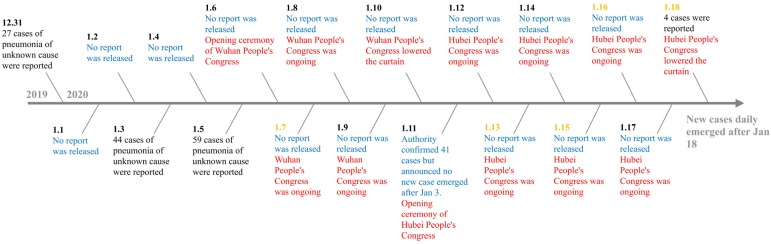
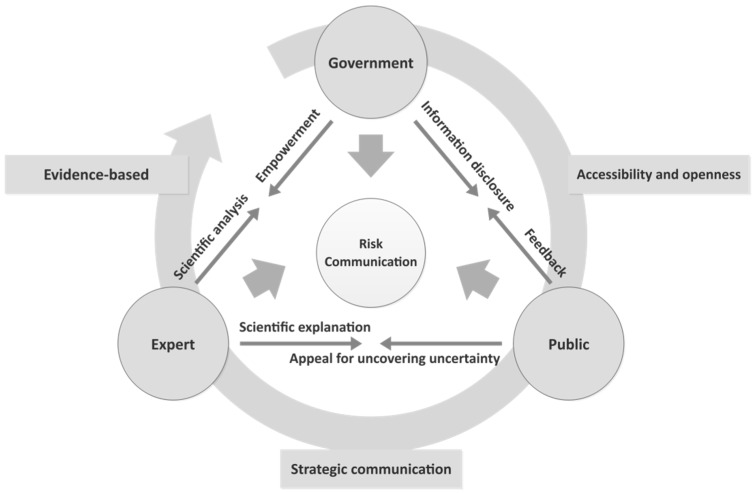
Risk communication is critical to emergency management. The objective of this paper is to illustrate the effective process and attention points of risk communication reflecting on the COVID-19 (2019-nCoV) outbreak in Wuhan, China. We provide the timeline of risk communication progress in Wuhan and use a message-centered approach to identify problems that it entailed. It was found that the delayed decision making of the local government officials and the limited information disclosure should be mainly responsible for the ineffective risk communication. The principles for effective risk communication concerning Wuhan's outbreak management were also discussed. The whole communication process is suggested to integrate the accessibility and openness of risk information, the timing and frequency of communication, and the strategies dealing with uncertainties. Based on these principles and lessons from Wuhan's case, this paper employed a simplified Government-Expert-Public risk communication model to illustrate a collaborative network for effective risk communication.
Keywords: COVID-19; outbreak management; public health; risk communication.
Conflict of interest statement
The authors declare no conflicts of interest.
Figures
References
-
- Society for Risk Analysis. [(accessed on 10 February 2020)]; Available online: https://onlinelibrary.wiley.com/doi/toc/10.1002/1539-6924.risk-analysis-.... - DOI
-
- Kenis P., Schol L.G., Kraaj-Dirkzwager M.M., Timen A. Appropriate Governance Responses to Infectious Disease Threats: Developing Working Hypotheses. Risk Hazards Crisis. 2019;10:275–293. doi: 10.1002/rhc3.12176. - DOI
-
- Árvai J., Rivers L., III . Effective Risk Communication. Routledge; London, UK: 2014. p. 3.
Grants and funding
LinkOut - more resources
Full Text Sources
