


Prevalence of neonatal hypothermia and its associated factors in East Africa: a systematic review and meta-analysis
- PMID: 32245438
- PMCID: PMC7118870
- DOI: 10.1186/s12887-020-02024-w
Prevalence of neonatal hypothermia and its associated factors in East Africa: a systematic review and meta-analysis
Abstract
Background: Neonatal hypothermia is a global health problem and a major factor for neonatal morbidity and mortality, especially in low and middle-income countries. Therefore, this systematic review and meta-analysis aimed to assess the prevalence of neonatal hypothermia and its associated factors in Eastern Africa.
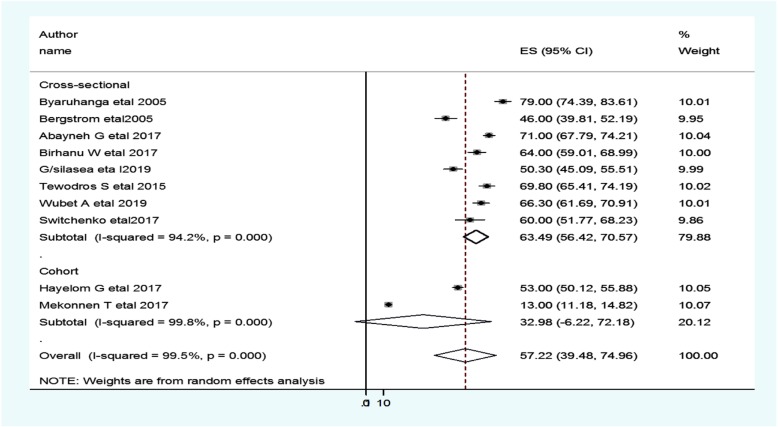
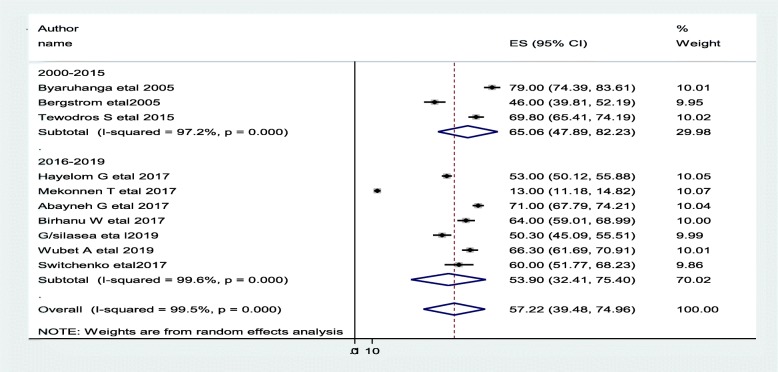
Methods: We used the Preferred Reporting Items for Systematic Review and Meta-Analysis (PRISMA) guidelines to search electronic databases (PubMed, Cochrane Library and Google Scholar; date of last search: 15 October 2019) for studies reporting the prevalence and associated factors of neonatal hypothermia. The data was extracted in the excel sheet considering prevalence, and categories of associated factors reported. A weighted inverse variance random-effects model was used to estimate the magnitude and the effect size of factors associated with hypothermia. The subgroup analysis was done by country, year of publication, and study design.
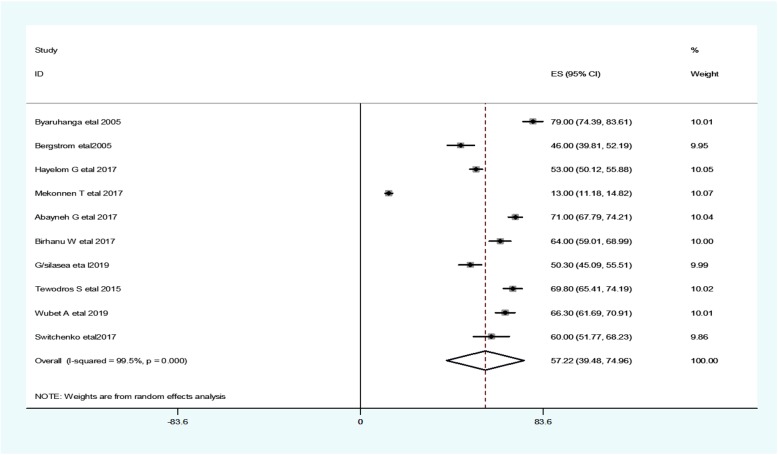
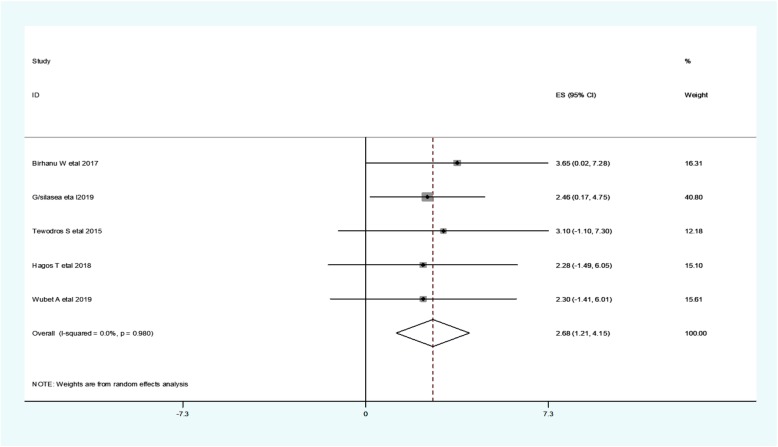
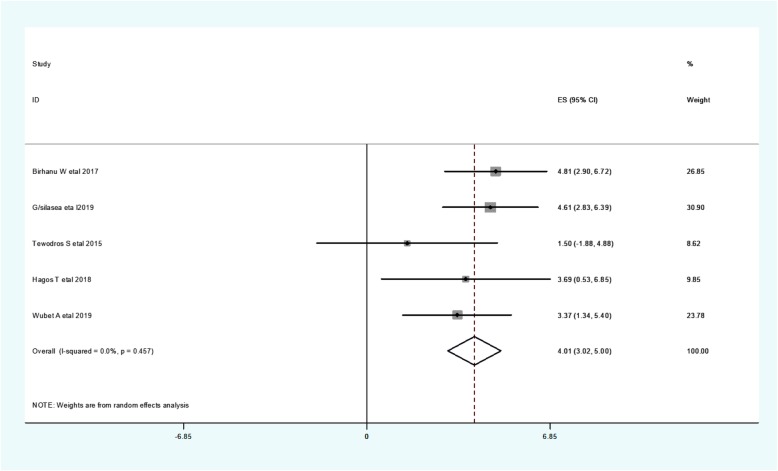
Results: A total of 12 potential studies with 20,911 participants were used for the analysis. The pooled prevalence of neonatal hypothermia in East Africa was found to be 57.2% (95%CI; 39.5-75.0). Delay in initiation of breastfeeding (adjusted Odds Ratio(aOR) = 2.83; 95% CI: 1.40-4.26), having neonatal health problem (aOR = 2.68; 95% CI: 1.21-4.15), being low birth weight (aOR =2.16; 95%CI: 1.03-3.29), being preterm(aOR = 4.01; 95%CI: 3.02-5.00), and nighttime delivery (aOR = 4.01; 95% CI:3.02-5.00) were identified associated factors which significantly raises the risk of neonatal hypothermia.
Conclusions: The prevalence of neonatal hypothermia in Eastern Africa remains high. Delay in initiation of breastfeeding, having a neonatal health problem, being low birth weight, preterm, and nighttime delivery were identified associated factors that significantly raises the risk of neonatal hypothermia.
Keywords: Determinants; Eastern Africa; Hypothermia; Meta-analysis; Neonates.
Conflict of interest statement
The authors declare that they have no competing interests.
Figures





References
-
- World Health Organization (WHO). Thermal control of the newborn: a practical guide. Geneva: World Health Organization; 1993.
Publication types
MeSH terms
LinkOut - more resources
Full Text Sources
Medical
