


Data-Driven Respiratory Gating Outperforms Device-Based Gating for Clinical 18F-FDG PET/CT
- PMID: 32245898
- PMCID: PMC7116324
- DOI: 10.2967/jnumed.120.242248
Data-Driven Respiratory Gating Outperforms Device-Based Gating for Clinical 18F-FDG PET/CT
Abstract
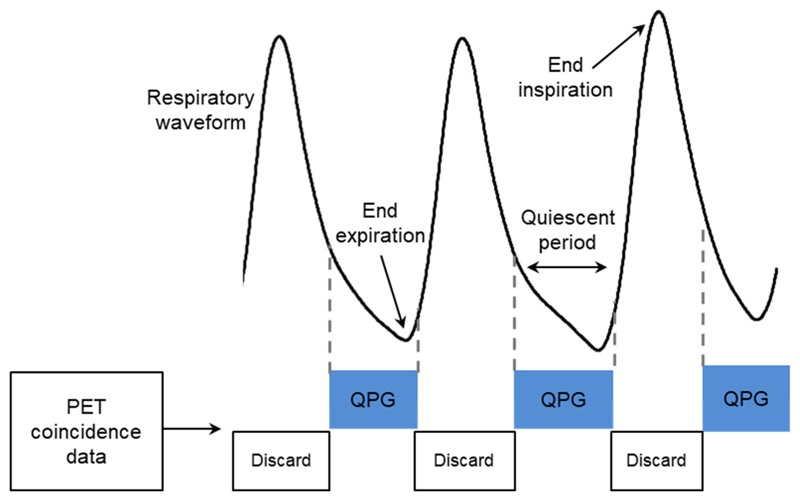
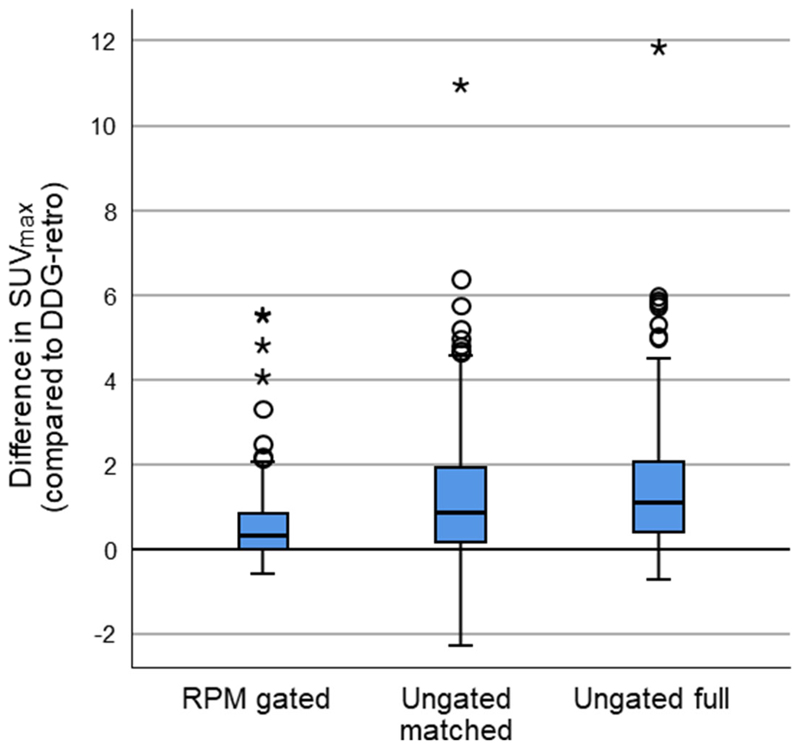
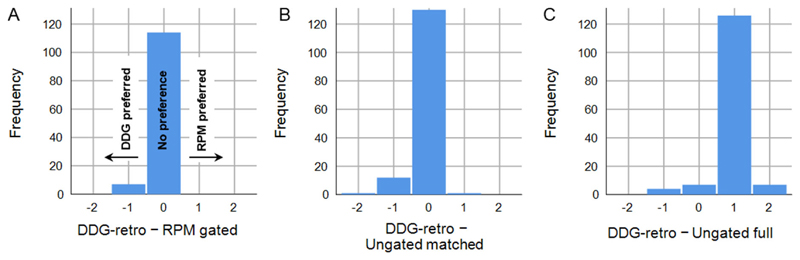
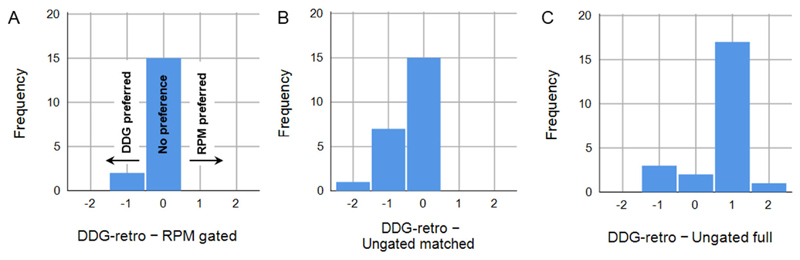
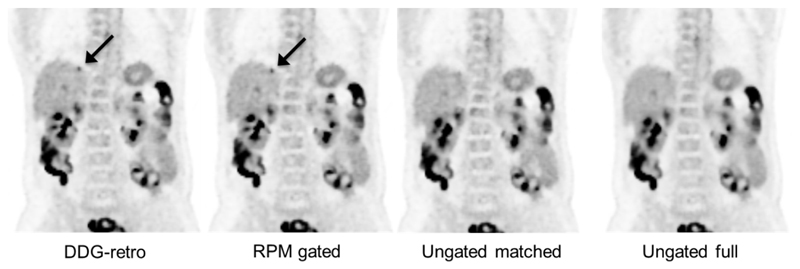
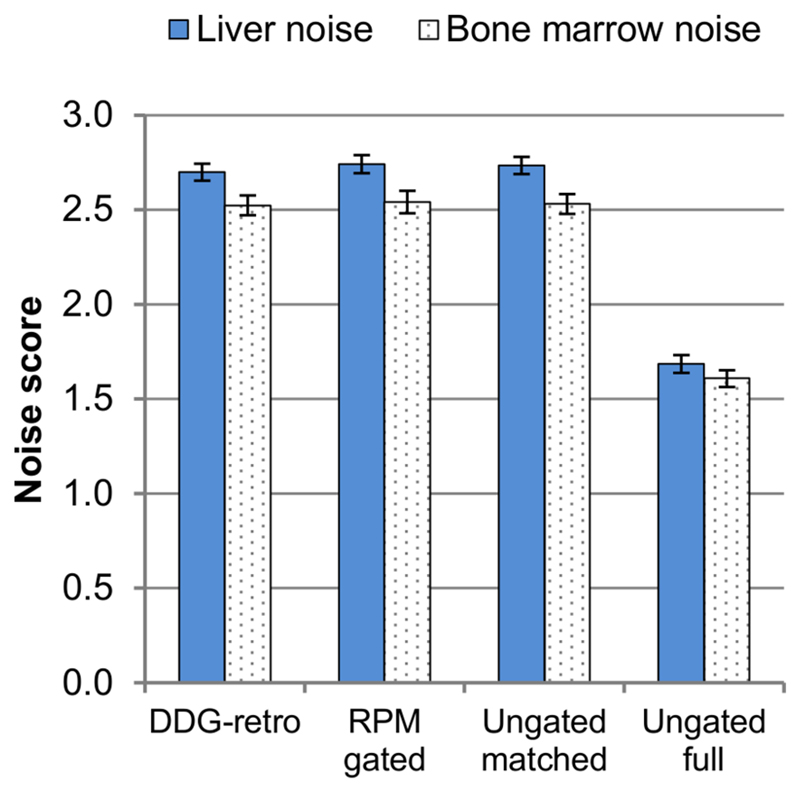
A data-driven method for respiratory gating in PET has recently been commercially developed. We sought to compare the performance of the algorithm with an external, device-based system for oncologic 18F-FDG PET/CT imaging. Methods: In total, 144 whole-body 18F-FDG PET/CT examinations were acquired, with a respiratory gating waveform recorded by an external, device-based respiratory gating system. In each examination, 2 of the bed positions covering the liver and lung bases were acquired with a duration of 6 min. Quiescent-period gating retaining approximately 50% of coincidences was then able to produce images with an effective duration of 3 min for these 2 bed positions, matching the other bed positions. For each examination, 4 reconstructions were performed and compared: data-driven gating (DDG) (we use the term DDG-retro to distinguish that we did not use the real-time R-threshold-based application of DDG that is available within the manufacturer's product), external device-based gating (real-time position management (RPM)-gated), no gating but using only the first 3 min of data (ungated-matched), and no gating retaining all coincidences (ungated-full). Lesions in the images were quantified and image quality scored by a radiologist who was masked to the method of data processing. Results: Compared with the other reconstruction options, DDG-retro increased the SUVmax and decreased the threshold-defined lesion volume. Compared with RPM-gated, DDG-retro gave an average increase in SUVmax of 0.66 ± 0.1 g/mL (n = 87, P < 0.0005). Although the results from the masked image evaluation were most commonly equivalent, DDG-retro was preferred over RPM-gated in 13% of examinations, whereas the opposite occurred in just 2% of examinations. This was a significant preference for DDG-retro (P = 0.008, n = 121). Liver lesions were identified in 23 examinations. Considering this subset of data, DDG-retro was ranked superior to ungated-full in 6 of 23 (26%) cases. Gated reconstruction using the external device failed in 16% of examinations, whereas DDG-retro always provided a clinically acceptable image. Conclusion: In this clinical evaluation, DDG-retro provided performance superior to that of the external device-based system. For most examinations the performance was equivalent, but DDG-retro had superior performance in 13% of examinations, leading to a significant preference overall.
Keywords: FDG; PET/CT; RPM; data-driven gating; respiratory gating.
© 2020 by the Society of Nuclear Medicine and Molecular Imaging.
Conflict of interest statement
Oxford University Hospitals NHS Foundation Trust has a research contract with GE Healthcare covering loan of equipment, but without financial support. No other potential conflicts of interest relevant to this article exist.
Figures
References
-
- Clifford MA, Banovac F, Levy E, Cleary K. Assessment of hepatic motion secondary to respiration for computer assisted interventions. Comput Aided Surg. 2002;7:291–299. - PubMed
-
- Bussels B, Goethals L, Feron M, et al. Respiration-induced movement of the upper abdominal organs: a pitfall for the three-dimensional conformal radiation treatment of pancreatic cancer. Radiother Oncol. 2003;68:69–74. - PubMed
-
- Thielemans K, Rathore S, Engbrant F, Razifar P. Device-less gating for PET/CT using PCA. 2011 IEEE Nucl Sci Symp Conf Rec; 2011. pp. 3904–3910.
Publication types
MeSH terms
Substances
Grants and funding
LinkOut - more resources
Full Text Sources
