


Targeting of radioactive platinum-bisphosphonate anticancer drugs to bone of high metabolic activity
- PMID: 32246003
- PMCID: PMC7125202
- DOI: 10.1038/s41598-020-62039-2
Targeting of radioactive platinum-bisphosphonate anticancer drugs to bone of high metabolic activity
Abstract
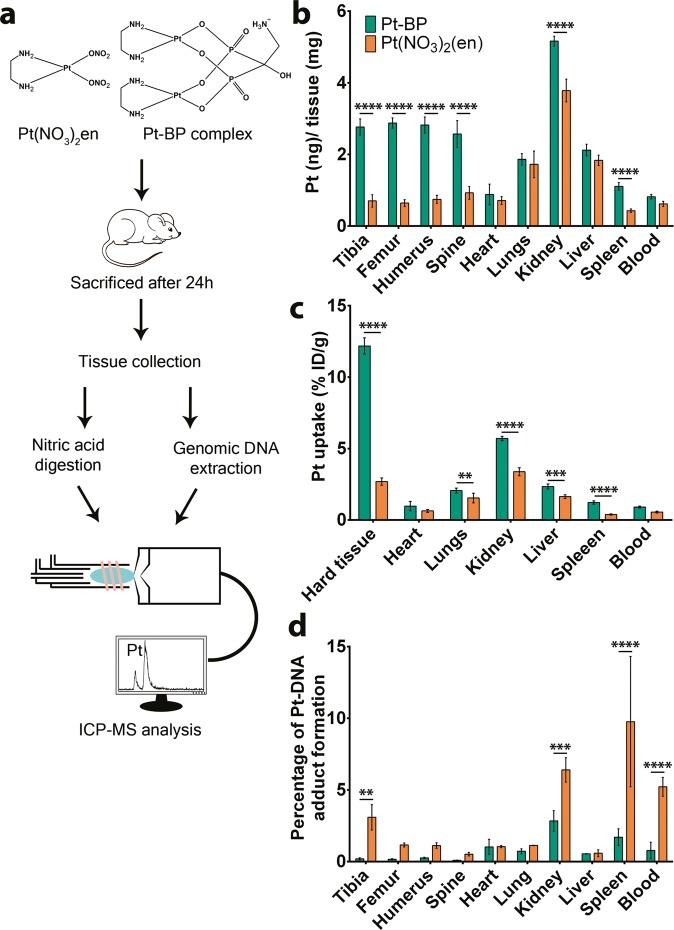
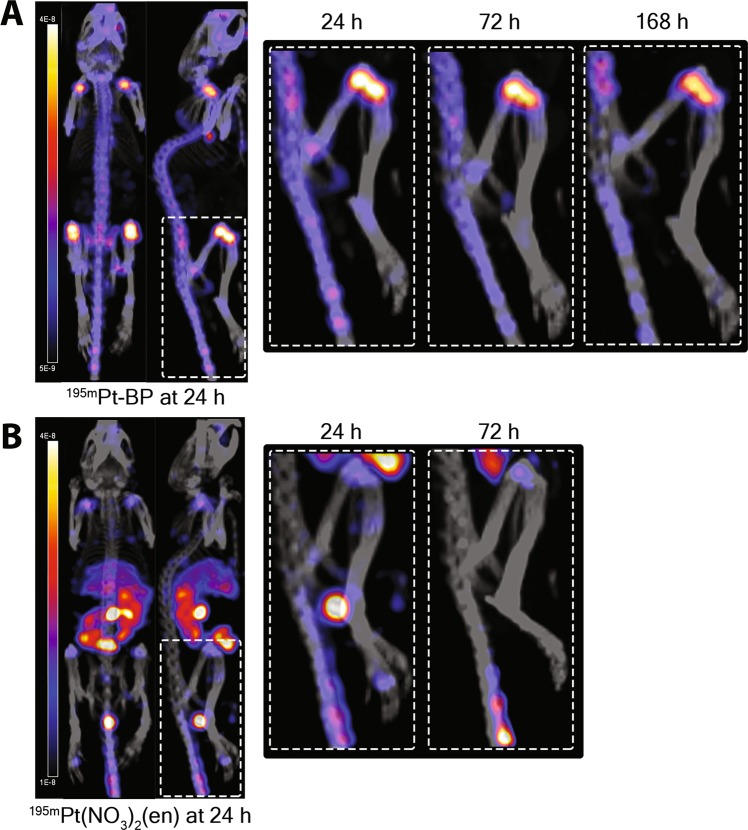
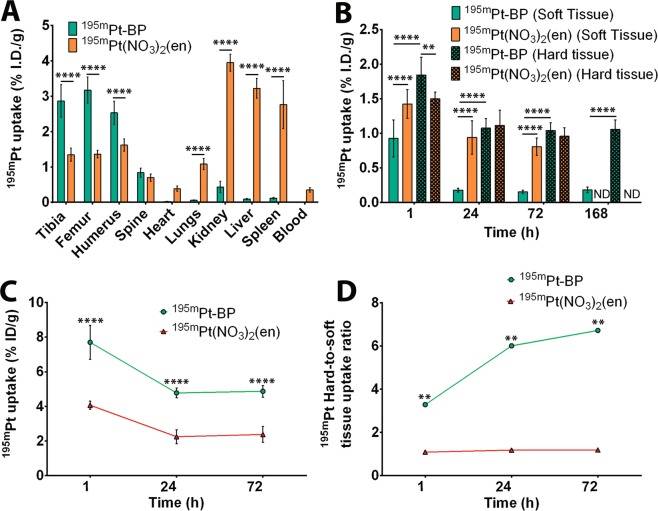
Platinum-based chemotherapeutics exhibit excellent antitumor properties. However, these drugs cause severe side effects including toxicity, drug resistance, and lack of tumor selectivity. Tumor-targeted drug delivery has demonstrated great potential to overcome these drawbacks. Herein, we aimed to design radioactive bisphosphonate-functionalized platinum (195mPt-BP) complexes to confirm preferential accumulation of these Pt-based drugs in metabolically active bone. In vitro NMR studies revealed that release of Pt from Pt BP complexes increased with decreasing pH. Upon systemic administration to mice, Pt-BP exhibited a 4.5-fold higher affinity to bone compared to platinum complexes lacking the bone-seeking bisphosphonate moiety. These Pt-BP complexes formed less Pt-DNA adducts compared to bisphosphonate-free platinum complexes, indicating that in vivo release of Pt from Pt-BP complexes proceeded relatively slow. Subsequently, radioactive 195mPt-BP complexes were synthesized using 195mPt(NO3)2(en) as precursor and injected intravenously into mice. Specific accumulation of 195mPt-BP was observed at skeletal sites with high metabolic activity using micro-SPECT/CT imaging. Furthermore, laser ablation-ICP-MS imaging of proximal tibia sections confirmed that 195mPt BP co-localized with calcium in the trabeculae of mice tibia.
Conflict of interest statement
The authors declare no competing interests.
Figures

References
Publication types
MeSH terms
Substances
LinkOut - more resources
Full Text Sources
Research Materials
