. 2020 Apr 3;3(1):162.
doi: 10.1038/s42003-020-0877-5.

Anti-HIV agent azidothymidine decreases Tet(X)-mediated bacterial resistance to tigecycline in Escherichia coli

Affiliations

Anti-HIV agent azidothymidine decreases Tet(X)-mediated bacterial resistance to tigecycline in Escherichia coli

Yuan Liu et al. Commun Biol. .

Abstract

Recent emergence of high-level tigecycline resistance mediated by Tet(X3/X4) in Enterobacteriaceae undoubtably constitutes a serious threat for public health worldwide. Antibiotic adjuvant strategy makes antibiotic more effective against these resistant pathogens through interfering intrinsic resistance mechanisms or enhancing antibiotic actions. Herein, we screened a collection of drugs to identify compounds that are able to restore tigecycline activity against resistant pathogens. Encouragingly, we discovered that anti-HIV agent azidothymidine dramatically potentiates tigecycline activity against clinically resistant bacteria. Meanwhile, addition of azidothymidine prevents the evolution of tigecycline resistance in E. coli and the naturally occurring horizontal transfer of tet(X4). Evidence demonstrated that azidothymidine specifically inhibits DNA synthesis and suppresses resistance enzyme activity. Moreover, in in vivo infection models by Tet(X4)-expression E. coli, the combination of azidothymidine and tigecycline achieved remarkable treatment benefits including increased survival and decreased bacterial burden. These findings provide an effective regimen to treat infections caused by tigecycline-resistant Escherichia coli.


Conflict of interest statement

The authors declare no competing interests.

Figures

Fig. 1
Fig. 1. Tigecycline in combination with other representative antibiotics or nonantibiotic compounds against Tet(X4)-expressing E. coli B3-1.
Interactions between tigecycline and compounds were divided into synergy, indifference and antagonism based on the bacterial growth inhibition rate in the presence of different combinations.
Fig. 2
Fig. 2. Potential tigecycline adjuvants.
Synergistic activity between enrofloxacin/bacitracin/azidothymidine and tigecycline against tet(X4) carrying E. coli B3-1 or tet(X)-negative E. coli B2. Checkerboard broth microdilution assays were performed and absorbance at 600 nm after 18 h co-incubation was recorded. The blue regions represent higher cell density. Data represent the mean absorbance of two biological replicates.
Fig. 3
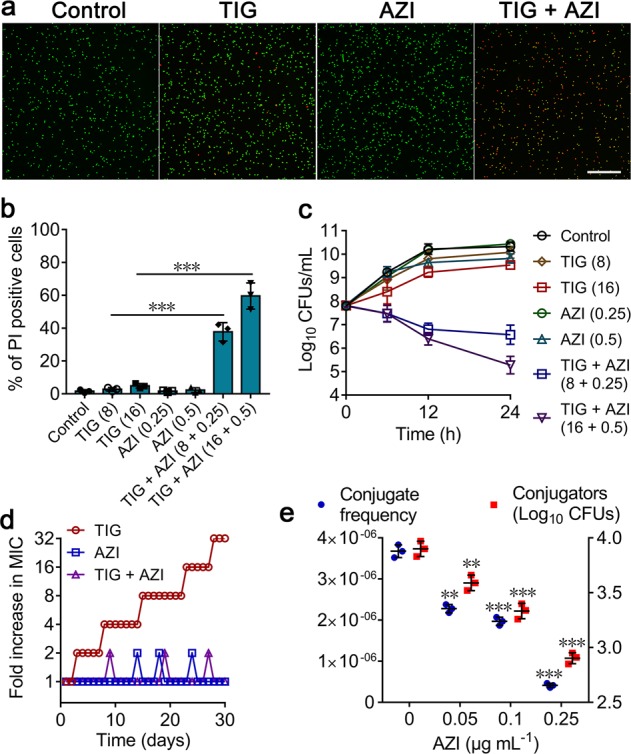
Fig. 3. Azidothymidine potentiates tigecycline activity against resistant bacteria and prevents the evolution and spread of resistance.
a Confocal micrographs of resuspended E. coli B3-1 cells after treated with PBS, tigecycline (TIG, 16 μg mL−1), azidothymidine (AZI, 0.5 μg mL−1) alone and their combination for 4 h. Viable cells were stained in green by SYTO9, whereas dead cells were in red by propidium iodide (Scale bar: 50 μm). b Flow cytometry analysis of propidium iodide (PI) uptake after incubation with tigecycline (TIG), or azidothymidine (AZI) or their combination at various concentrations for 4 h. All data are presented as mean ± SD and analyzed by unpaired t test (***P < 0.001). c Time-dependent killing of resistant E. coli B3-1 cells by the combination of tigecycline and azidothymidine. E. coli were grown to exponential phase and challenged with tigecycline, azidothymidine alone, and their combination during 24 h. Data are representative of three independent experiments and presented as mean ± SD. d Combination of tigecycline and azidothymidine prevents the evolution of resistance during 30 days serial passaging experiment. e Azidothymidine suppresses the horizontal transfer of tet(X4) from exconjugant (E. coli S2-1) to recipient bacteria (E. coli EC600). The left y-axis and right y-axis represent conjugate frequency and conjugators (Log10 CFUs), respectively. Experiments were performed three times, and the mean ± SD is shown. Significance compared with untreated group determined by nonparametric one-way ANOVA (**P < 0.01, ***P < 0.001). AZI azidothymidine, TIG tigecycline.
Fig. 4
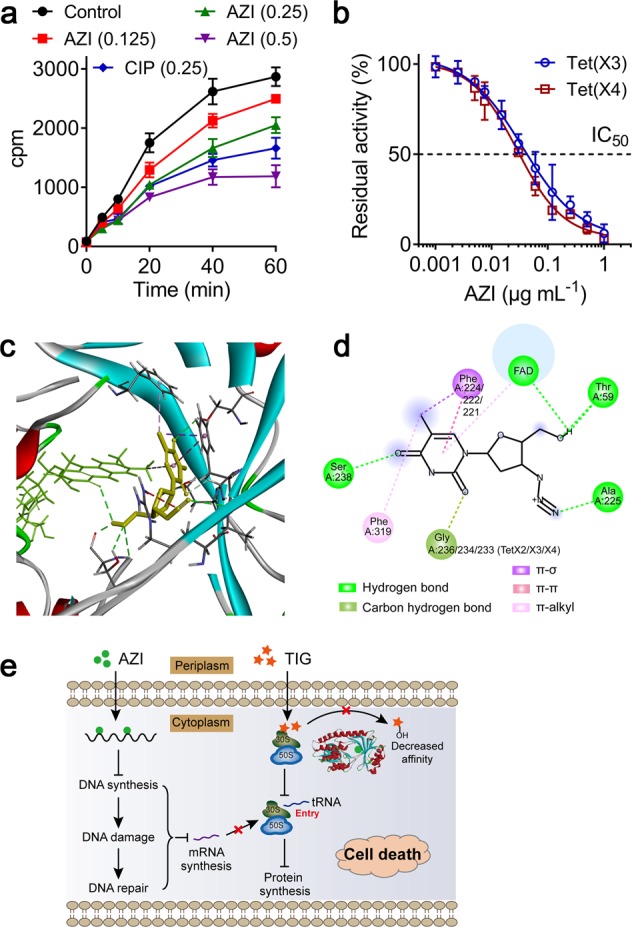
Fig. 4. Potentiation mechanisms of azidothymidine with tigecycline.
a Azidothymidine suppresses the DNA synthesis of E. coli. Incorporation of 3H-thymidine into DNA after treatment with sub-MICs of azidothymidine were measured. Ciprofloxacin (one-half MIC) was used as a positive control. Data are representative of three independent experiments and presented as mean ± SD. b Azidothymidine inhibits tet(X3/X4) activity purified from E. coli B3-1 in a dose-dependent manner (IC50, 0.0358 and 0.0284 μg mL−1). Data are representative of three independent experiments and presented as mean ± SD. c Molecular docking analysis of the complexes of Tet(X2/3/4) with FAD and azidothymidine. Structure of complexes of Tet(X2/3/4) with FAD (green) and azidothymidine (yellow). d Interactions between azidothymidine and the residues of the binding sites in Tet(X2/X3/X4) are shown using a two-dimensional diagram. e Scheme of azidothymidine potentiates tigecycline activity. Azidothymidine enhances tigecycline activity through two pathways: (1) Azidothymidine inhibits DNA synthesis and leads to DNA damage and SOS response, which subsequently affects synthesis of specific mRNA. This action displayed a complementary mechanism with tigecycline in inhibiting protein synthesis. (2) Azidothymidine could localize to Tet(X) catalytic pocket and inhibit its enzymatic activity, then restore tigecycline activity against resistant bacteria.
Fig. 5
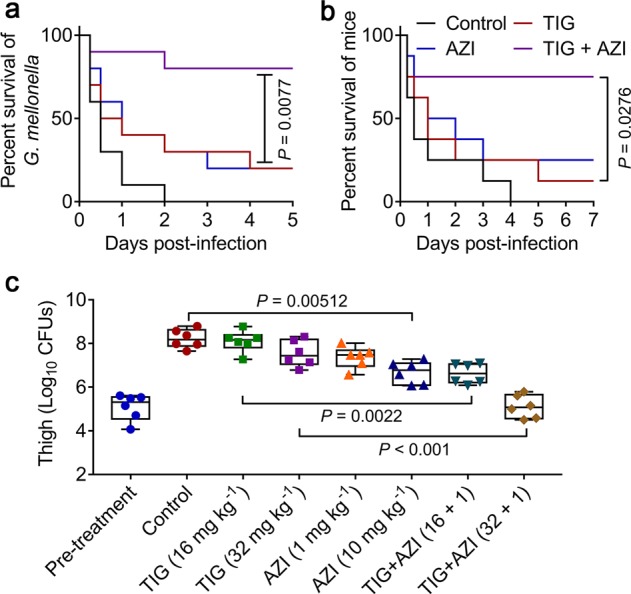
Fig. 5. Azidothymidine rescues tigecycline activity in vivo.
a, b In vivo synergy between tigecycline and azidothymidine in a G. mellonella larvae (a) and mouse peritonitis model (b). G. mellonella larvae (n = 10 per group) or CD-1 female mice (n = 8 per group) were infected with a lethal dose of E. coli B3-1. After 2 hours post infection, mice were treated with a single dose of PBS, tigecycline (32 mg kg−1), azidothymidine (1 mg kg−1) or combination of tigecycline (32 mg kg−1) plus azidothymidine (1 mg kg−1) by intraperitoneal injection. Survival of G. mellonella larvae and mice were recorded at 5- or 7-days post infection, respectively. P values were determined by log-rank (Mantel–Cox) test. c Bacterial burden of right thigh muscle in a neutropenic mouse thigh infection model by a nonlethal dose of E. coli B3-1 significantly decreased after a single intraperitoneal dose of combination treatment. P values were determined by Mann–Whitney U test.

References

    1. Walsh TR, Weeks J, Livermore DM, Toleman MA. Dissemination of NDM-1 positive bacteria in the New Delhi environment and its implications for human health: an environmental point prevalence study. Lancet Infect. Dis. 2011;11:355–362. doi: 10.1016/S1473-3099(11)70059-7. - DOI - PubMed
    1. Liu Y-Y, et al. Emergence of plasmid-mediated colistin resistance mechanism MCR-1 in animals and human beings in China: a microbiological and molecular biological study. Lancet Infect. Dis. 2016;16:161–168. doi: 10.1016/S1473-3099(15)00424-7. - DOI - PubMed
    1. Pankey GA. Tigecycline. J. Antimicrob. Chemother. 2005;56:470–480. doi: 10.1093/jac/dki248. - DOI - PubMed
    1. Stein GE, Babinchak T. Tigecycline: an update. Diagn. Microbiol. Infect. Dis. 2013;75:331–336. doi: 10.1016/j.diagmicrobio.2012.12.004. - DOI - PubMed
    1. Whittle G, Hund BD, Shoemaker NB, Salyers AA. Characterization of the 13-kilobaseermF region of the Bacteroides conjugative transposon CTnDOT. Appl. Environ. Microbiol. 2001;67:3488–3495. doi: 10.1128/AEM.67.8.3488-3495.2001. - DOI - PMC - PubMed

Publication types

MeSH terms