


Frequency of radiation-induced malignancies post-adjuvant radiotherapy for breast cancer in patients with Li-Fraumeni syndrome
- PMID: 32246378
- PMCID: PMC7285877
- DOI: 10.1007/s10549-020-05612-7
Frequency of radiation-induced malignancies post-adjuvant radiotherapy for breast cancer in patients with Li-Fraumeni syndrome
Abstract
Purpose: Women with Li-Fraumeni syndrome (LFS), a cancer predisposition syndrome caused by germline mutations in TP53, have an over 50% risk of developing breast cancer by age 70. Patients with LFS are at risk for radiation-induced malignancies; however, only small case series have prior investigated radiation risks in the treatment of breast cancer. We therefore aimed to investigate the risk of malignancy in breast cancer patients with LFS following adjuvant radiotherapy.
Methods: A single-institution retrospective chart review was conducted for female breast cancer patients with confirmed germline TP53 mutation. The frequency of radiation-induced malignancies in LFS patients was compared to non-LFS breast cancer cases reported in the Penn Medicine Cancer Registry via statistical analyses.
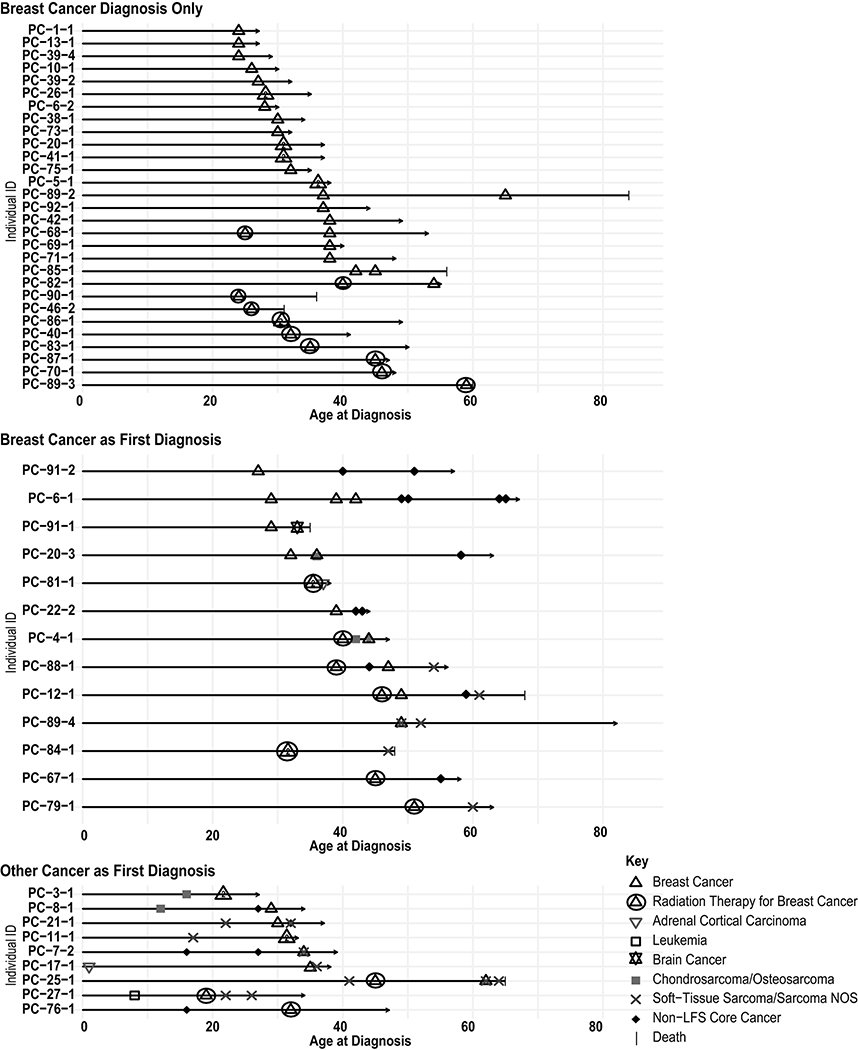
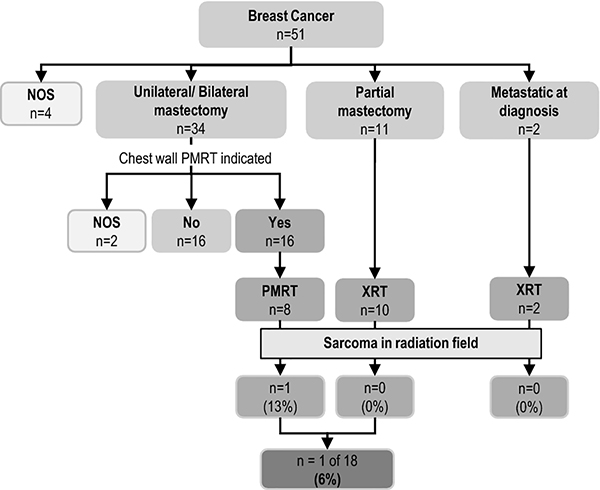
Results: We identified 51 female LFS breast cancer patients with 74 primary diagnoses. Fifty-seven% had a history of breast cancer only, and 25% had breast cancer as their presenting diagnosis of LFS. LFS-associated breast cancers were predominantly invasive ductal carcinoma (48%) and HER2+ (58%). Twenty patients underwent adjuvant radiotherapy with a median follow-up of 12.5 (2-20) years. Of 18 patients who received radiation in a curative setting, one (6%) patient developed thyroid cancer, and one (6%) patient developed sarcoma in the radiation field. This risk for radiation-induced malignancy associated with LFS was higher for both sarcoma and thyroid cancer in comparison with the control cohort.
Conclusions: We found a lower risk of radiation-induced secondary malignancies in LFS breast cancer patients than previously reported in the literature (33% risk of radiation-induced sarcoma). These findings suggest that LFS may not be an absolute contraindication for radiotherapy in breast cancer. The potential risk for locoregional recurrence without radiotherapy must be weighed against the long-term risk for radiation-induced malignancies in consideration of adjuvant radiotherapy for LFS breast cancer patients.
Keywords: Breast cancer; Li-Fraumeni syndrome; Radiation-induced malignancy; Radiotherapy.
Conflict of interest statement
COMPLIANCE WITH ETHICAL STANDARDS
Figures
References
-
- Bougeard G, Renaux-Petel M, Flaman J-M, Charbonnier C, Fermey P, Belotti M, Gauthier-Villars M, Stoppa-Lyonnet D, Consolino E, Brugieres L, Caron O, Benusiglio PR, Bressac-de Paillerets B, Bonadona V, Bonaiti-Pellie C, Tinat J, Baert-Desurmont S, Frebourg T (2015) Revisiting Li-Fraumeni Syndrome From TP53 Mutation Carriers. Journal of clinical oncology : official journal of the American Society of Clinical Oncology 33 (21):2345–2352 - PubMed
-
- Kratz CP, Achatz MI, Brugieres L, Frebourg T, Garber JE, Greer MC, Hansford JR, Janeway KA, Kohlmann WK, McGee R, Mulli ghan CG, Onel K, Pajtler KW, Pfister SM, Savage SA, Schiffman JD, Schneider KA, Strong LC, Evans DGR, Wasserman JD, Villani A, Malkin D (2017) Cancer Screening Recommendations for Individuals with Li-Fraumeni Syndrome. Clin Cancer Res 23 (11):e38–e45. doi:10.1158/1078-0432.CCR-17-0408 - DOI - PubMed
-
- Abdel Razek AAK, Gaballa G, Denewer A, Tawakol I (2010) Diffusion weighted MR imaging of the breast. Acad Radiol 17 (3):382–386 - PubMed
MeSH terms
Substances
Grants and funding
LinkOut - more resources
Full Text Sources
Medical
Research Materials
Miscellaneous
