


Engagement with LGBTQ community moderates the association between victimization and substance use among a cohort of sexual and gender minority individuals assigned female at birth
- PMID: 32247953
- PMCID: PMC7282985
- DOI: 10.1016/j.addbeh.2020.106414
Engagement with LGBTQ community moderates the association between victimization and substance use among a cohort of sexual and gender minority individuals assigned female at birth
Abstract
Background: Research has documented higher levels of substance use among sexual and gender minority (SGM) individuals - particularly sexual minority women (SMW) and transgender people - than among their heterosexual and cisgender peers. Because SGM substance use is linked to stigma-based victimization, it is crucial to identify social contexts that may buffer the association between victimization and substance use among SGM.
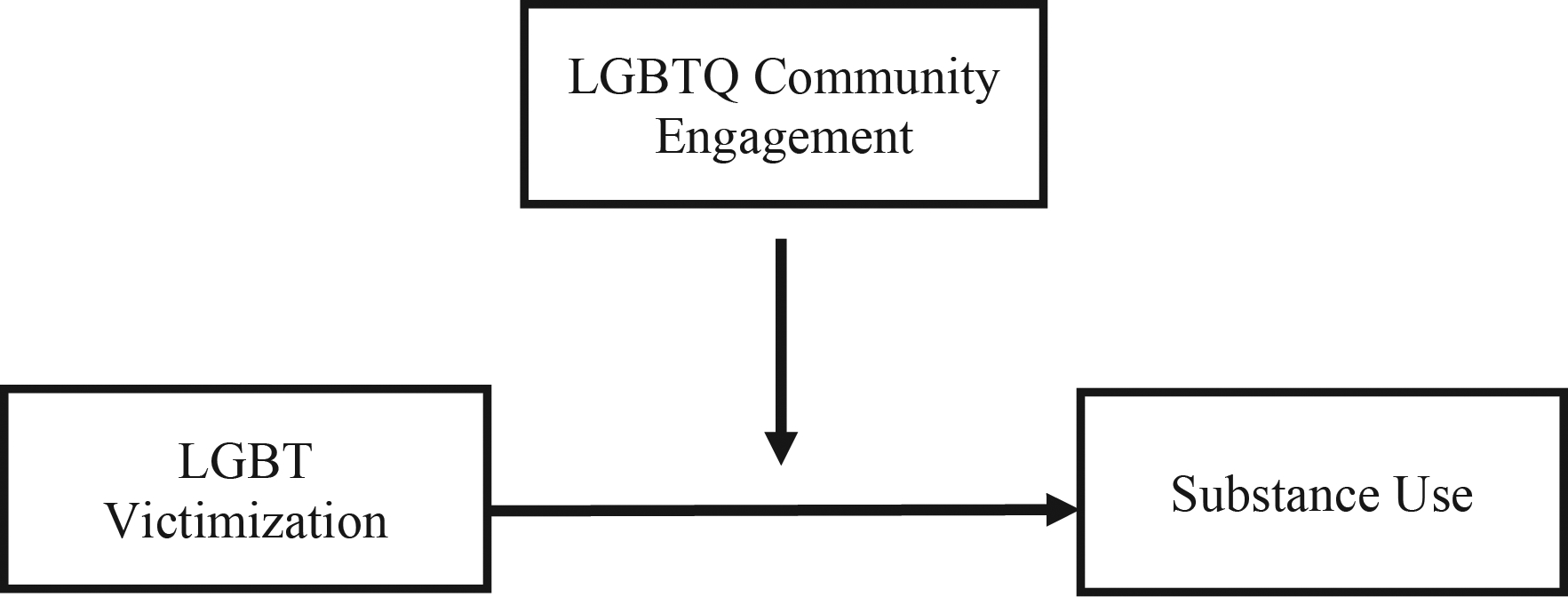
Methods: We explored how engagement with LGBTQ-specific community influences victimization experiences and substance use among 488 SGM individuals assigned female at birth (FAB-SGM; ages 16-32; 26% White) in a large Midwestern city. We tested whether participants who used LGBTQ community spaces differed from those who do not in levels of victimization and substance use, and whether use of LGBTQ spaces buffered SGM from the negative effects of victimization on substance use.
Results: Results demonstrated significant associations between victimization and alcohol and use of specific drugs. Contrary to expectations, participants who used LGBTQ spaces reported more victimization and more use of certain substances; however, when controlling for being out about non-heterosexual identity, this association remained only for LGBTQ community centers and school groups. Evidence was mixed for community engagement as a moderator of the association between victimization and substance use.
Conclusions: Overall, results indicated that LGBTQ spaces may be associated with adaptive and maladaptive coping functions and should be considered a potential target for health interventions. Findings emphasize the need for increased research on FAB-SGM, including SMW and transgender individuals, and provide actionable recommendations to reduce incidence of victimization and substance use.
Keywords: LGBTQ; Neighborhoods; Outness; Substance use; Victimization.
Copyright © 2020 Elsevier Ltd. All rights reserved.
Conflict of interest statement
Declaration of Competing Interest The authors declare that they have no known competing financial interests or personal relationships that could have appeared to influence the work reported in this paper.
Figures
References
-
- Babor TF, Higgins-Biddle J, Saunders J, and Monteiro M 2001. AUDIT, the Alcohol Use Disorders Identification Test: Guidelines for Use in Primary Care. Geneva: World Health Organization
-
- Baiocco R, D’Alessio M, and Laghi F 2010. Binge drinking among gay, and lesbian youths: The role of internalized sexual stigma, self-disclosure, and individuals’ sense of connectedness to the gay community. Addictive Behaviors, 35(10), 896–899. - PubMed
-
- Bellis MA, Hughes K, and Lowey H 2002. Healthy nightclubs and recreational substance use - From a harm minimisation to a healthy settings approach. Addictive behaviors, 27(6), 1025–1035. doi:Pii S0306–4603(02)00271-X - PubMed
