


Flavor education and training in olfactory dysfunction: a pilot study
- PMID: 32248300
- PMCID: PMC7286942
- DOI: 10.1007/s00405-020-05950-8
Flavor education and training in olfactory dysfunction: a pilot study
Abstract
Purpose: Olfactory training is recommended in olfactory dysfunction (OD) showing promising results. OD patients frequently ask for training modifications in the hope of a better outcome. Also, a lack of knowledge of the flavor system is evident. This investigation sought to implement flavor education (FE) and encourage patients to experience flavors in terms of a flavor training (FT).
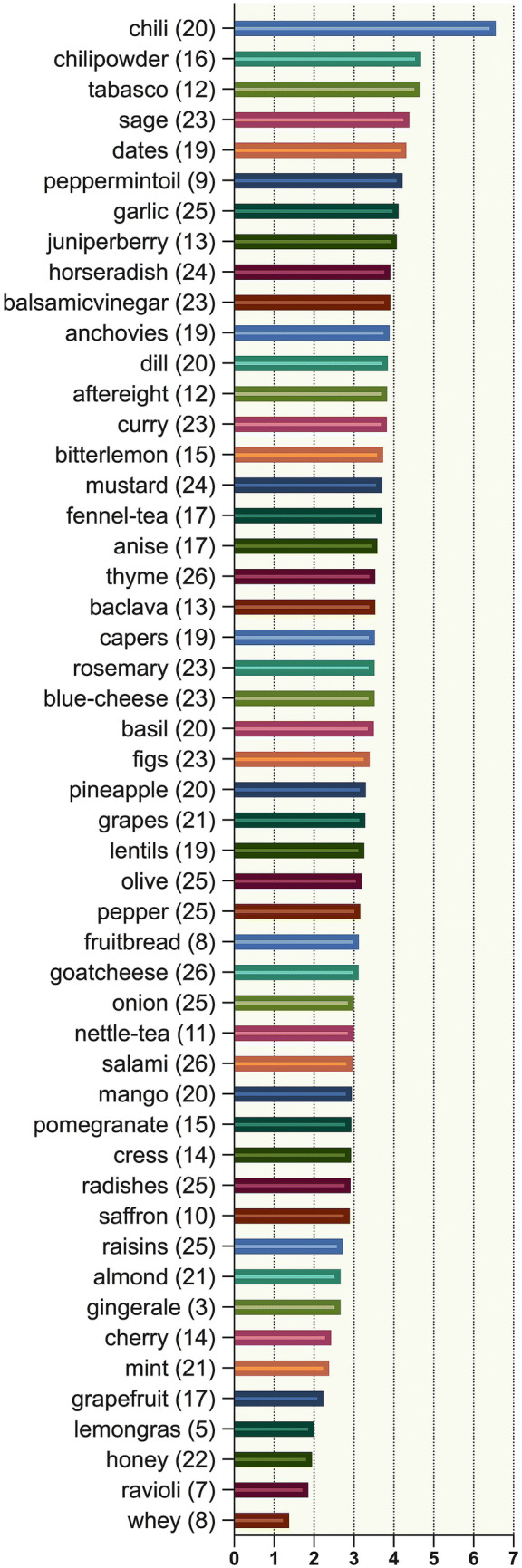
Methods: In included patients (n = 30), OD was either of postinfectious (86.7%) or posttraumatic (13.3%) cause. Chemosensory abilities were tested orthonasally (using Sniffin Sticks = TDI) and retronasally (using the Candy Smell Test = CST). Key points of flavor perception were demonstrated in an educative session. Subjects were instructed to consciously experience flavors out of a list of 50. Effects of FT were explored in two groups (group A and B), with group B starting FT 17 weeks later.
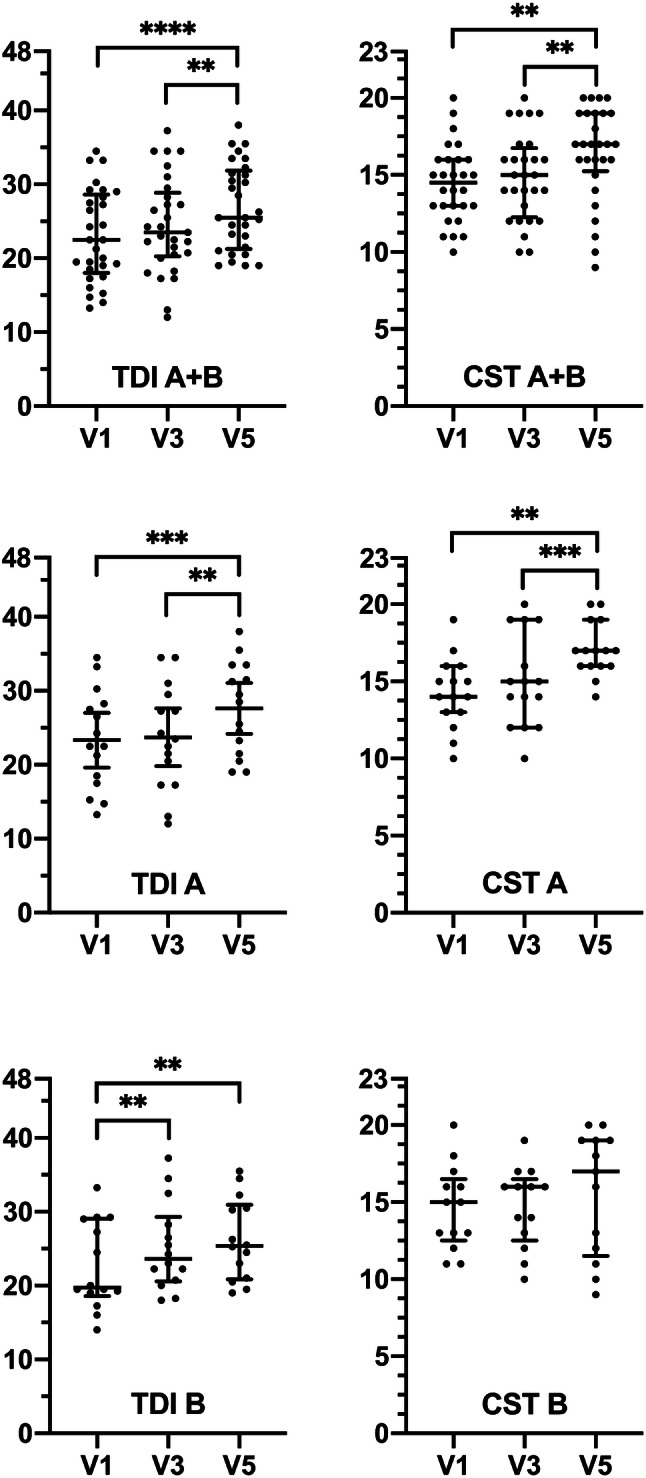
Results: FE was appreciated and drop-out rate stayed very low (one participant). Compliance was high and 30.4 ± 12.9 flavors were tried. Overall TDI scores improved in 10 patients (6 group A, 4 group B) in a clinically significant way (> 5.5). For group A (starting FT earlier) rm-ANOVA showed a significant effect of session (timepoint) on CST (p < 0.01).
Conclusion: Flavor education is demonstrated as feasible and appreciated in a clinical setting. FT seems to be a welcomed second-line therapy in patients with olfactory dysfunction. This study shows beneficial trends of FT; however, further studies with larger sample sizes and standardized training protocols are needed.
Keywords: Anosmia; Hyposmia; Olfactory training; Quality of life; Retronasal.
Conflict of interest statement
The authors declare that they have no conflict of interest.
Figures

References
-
- Shepherd GM. Smell images and the flavour system in the human brain. Nature. 2006;444:316–321. - PubMed
-
- Aschenbrenner K, Hummel C, Teszmer K, Krone F, Ishimaru T, Seo HS, Hummel T. The influence of olfactory loss on dietary behaviors. Laryngoscope. 2008;118:135–144. - PubMed
-
- Deems DA, Doty RL, Settle RG, et al. Smell and taste disorders, a study of 750 patients from the University of Pennsylvania Smell and Taste Center. Arch Otolaryngol Head Neck Surg. 1991;117:519–528. - PubMed
-
- Hunt JD, Reiter ER, Costanzo RM. Etiology of subjective taste loss. Int Forum Allergy Rhinol. 2019;9:409–412. - PubMed
MeSH terms
LinkOut - more resources
Full Text Sources
Medical
