


Photovoltaic Restoration of Central Vision in Atrophic Age-Related Macular Degeneration
- PMID: 32249038
- PMCID: PMC7384969
- DOI: 10.1016/j.ophtha.2020.02.024
Photovoltaic Restoration of Central Vision in Atrophic Age-Related Macular Degeneration
Abstract
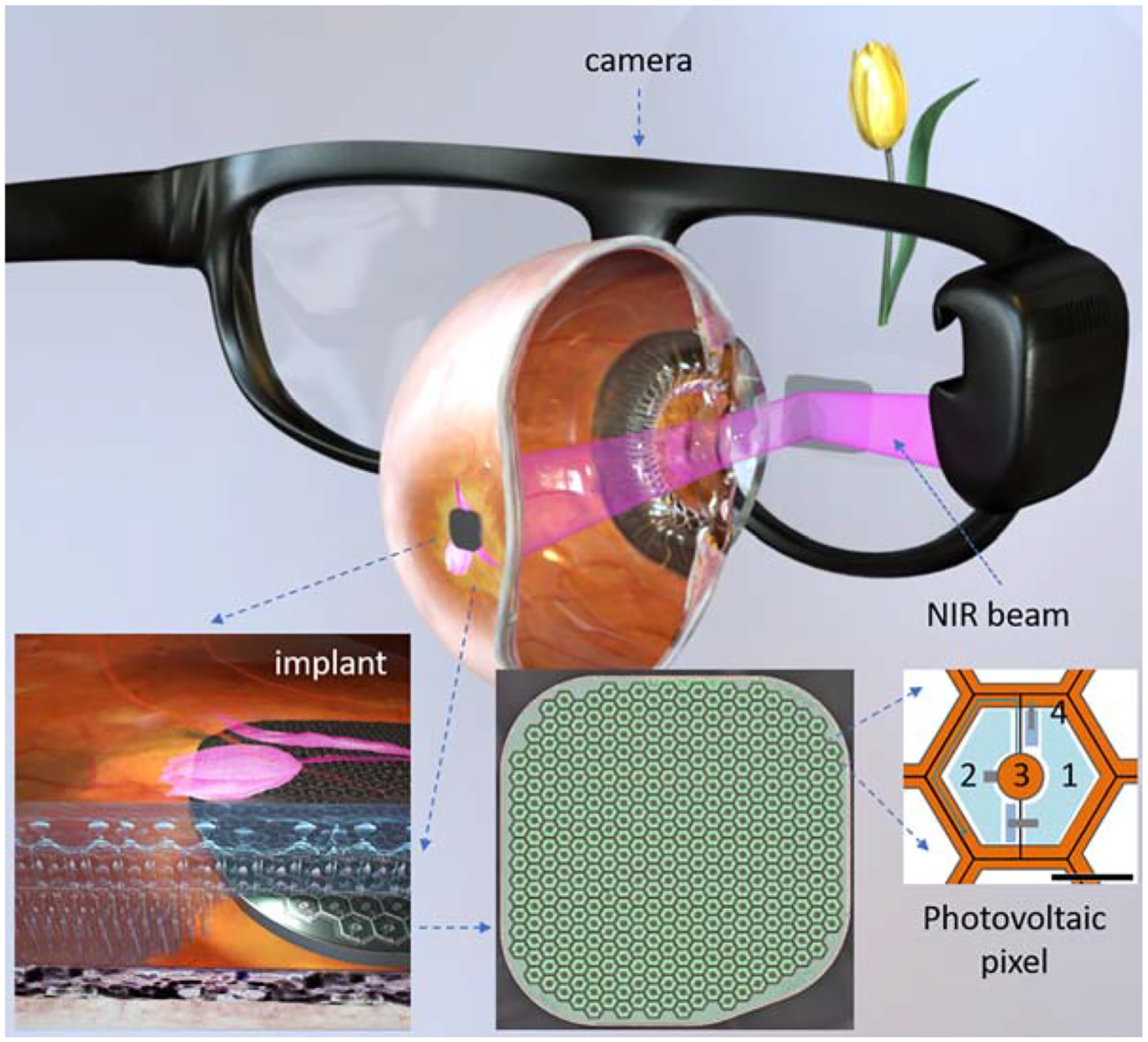
Purpose: Loss of photoreceptors in atrophic age-related macular degeneration results in severe visual impairment, although some peripheral vision is retained. To restore central vision without compromising the residual peripheral field, we developed a wireless photovoltaic retinal implant (PRIMA; Pixium Vision, Paris, France) in which pixels convert images projected from video glasses using near-infrared light into electric current to stimulate the nearby inner retinal neurons.
Design: We carried out a first-in-human clinical trial to test the safety and efficacy of the prosthesis in patients with geographic atrophy (ClinicalTrials.gov identifier, NCT03333954).
Participants: Five patients with geographic atrophy zone of at least 3 optic disc diameters, no foveal light perception, and best-corrected visual acuity of 20/400 to 20/1000 in the worse-seeing study eye.
Methods: The 2-mm wide, 30-μm thick chip, containing 378 pixels (each 100 μm in diameter), was implanted subretinally in the area of atrophy (absolute scotoma).
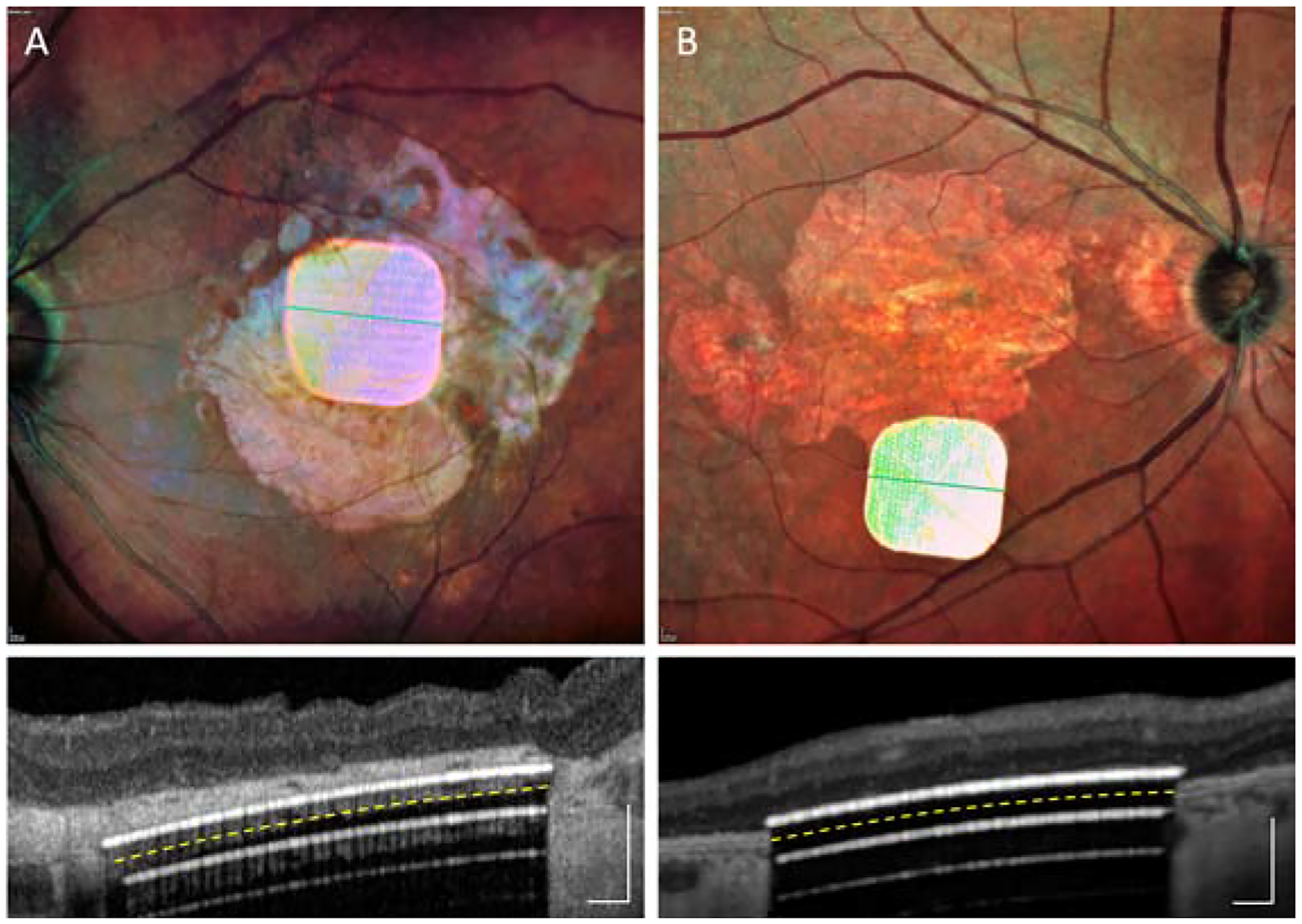
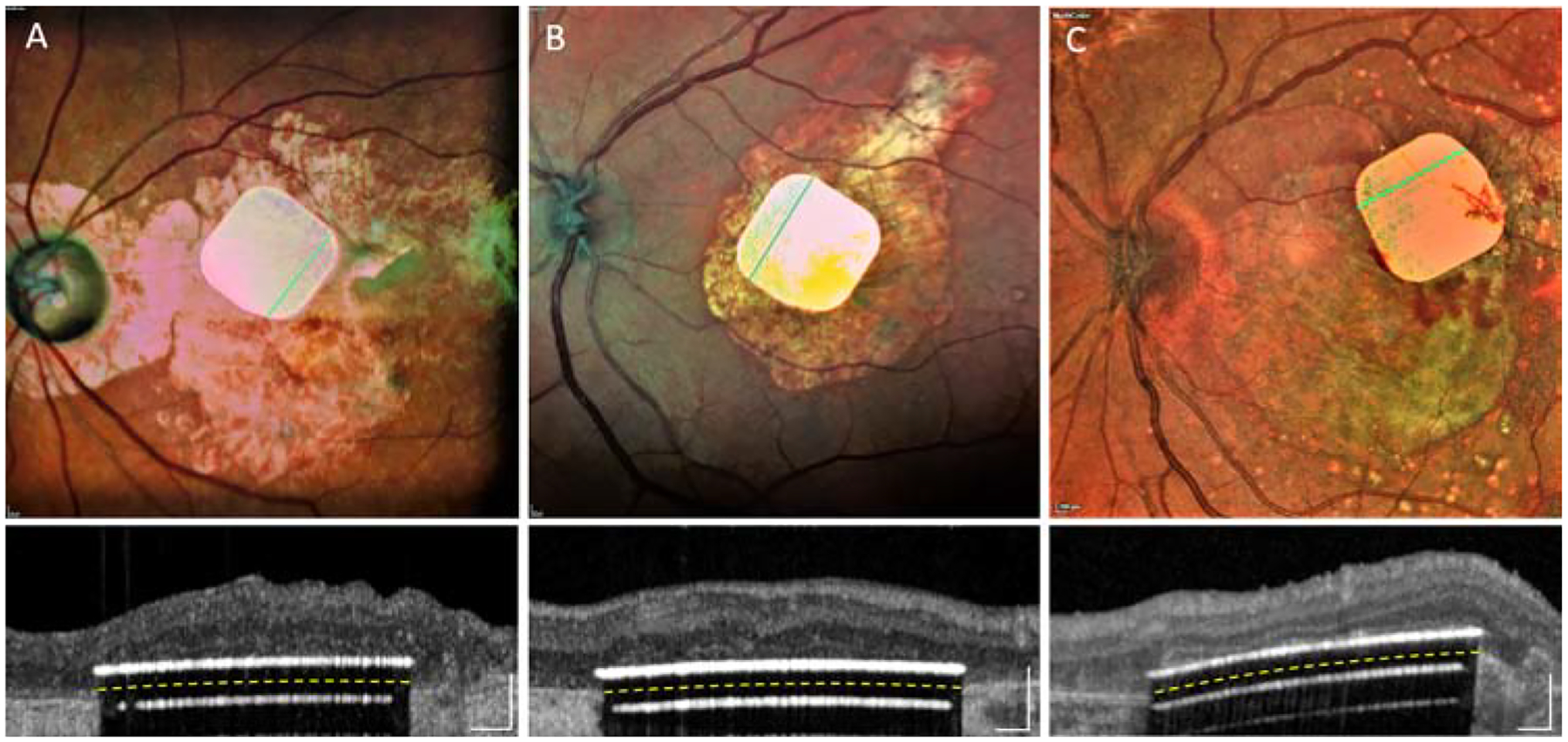
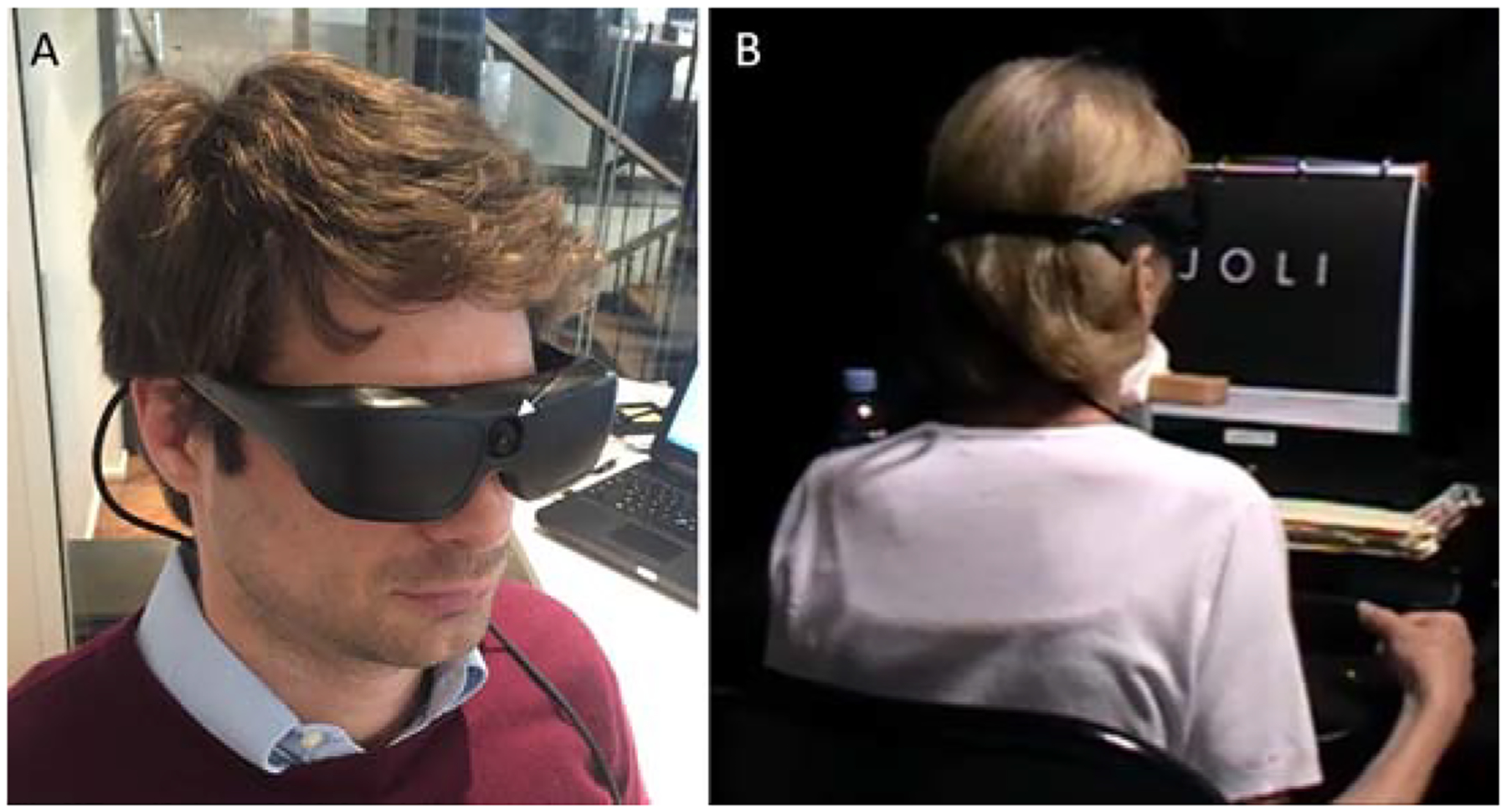
Main outcome measures: Anatomic outcomes were assessed with fundus photography and OCT for up to 12 months of follow-up. Prosthetic vision was assessed by mapping light perception, bar orientation, letter recognition, and Landolt C acuity.
Results: In all patients, the prosthesis was implanted successfully under the macula, although in 2 patients, it was implanted in unintended locations: within the choroid and off center by 2 mm. All 5 patients could perceive white-yellow prosthetic visual patterns with adjustable brightness in the previous scotomata. The 3 with optimal placement of the implant demonstrated prosthetic acuity of 20/460 to 20/550, and the patient with the off-center implant demonstrated 20/800 acuity. Residual natural acuity did not decrease after implantation in any patient.
Conclusions: Implantation of the PRIMA did not decrease the residual natural acuity, and it restored visual sensitivity in the former scotoma in each of the 5 patients. In 3 patients with the proper placement of the chip, prosthetic visual acuity was only 10% to 30% less than the level expected from the pixel pitch (20/420). Therefore, the use of optical or electronic magnification in the glasses as well as smaller pixels in future implants may improve visual acuity even further.
Copyright © 2020 American Academy of Ophthalmology. Published by Elsevier Inc. All rights reserved.
Conflict of interest statement
Figures
References
-
- Wong WL, Su X, Li X, et al. Global prevalence of age-related macular degeneration and disease burden projection for 2020 and 2040: a systematic review and meta-analysis. Lancet Glob Health 2014;2:e106–16. - PubMed
-
- Friedman DS, Tomany SC, McCarty C, De Jong P. Prevalence of age-related macular degeneration in the United States. Arch ophthalmol 2004;122:564–72. - PubMed
-
- Humayun MS, Prince M, de Juan E, et al. Morphometric analysis of the extramacular retina from postmortem eyes with retinitis pigmentosa. Invest Ophth Vis Sci 1999;40:143–8. - PubMed
-
- Kim SY, Sadda S, Pearlman J, et al. Morphometric analysis of the macula in eyes with disciform age-related macular degeneration. Retina 2002;22:471–7. - PubMed
Publication types
MeSH terms
Associated data
Grants and funding
LinkOut - more resources
Full Text Sources
Other Literature Sources
Medical
