


Effects of time-based administration of abstinence reinforcement targeting opiate and cocaine use
- PMID: 32249414
- PMCID: PMC7387179
- DOI: 10.1002/jaba.702
Effects of time-based administration of abstinence reinforcement targeting opiate and cocaine use
Abstract
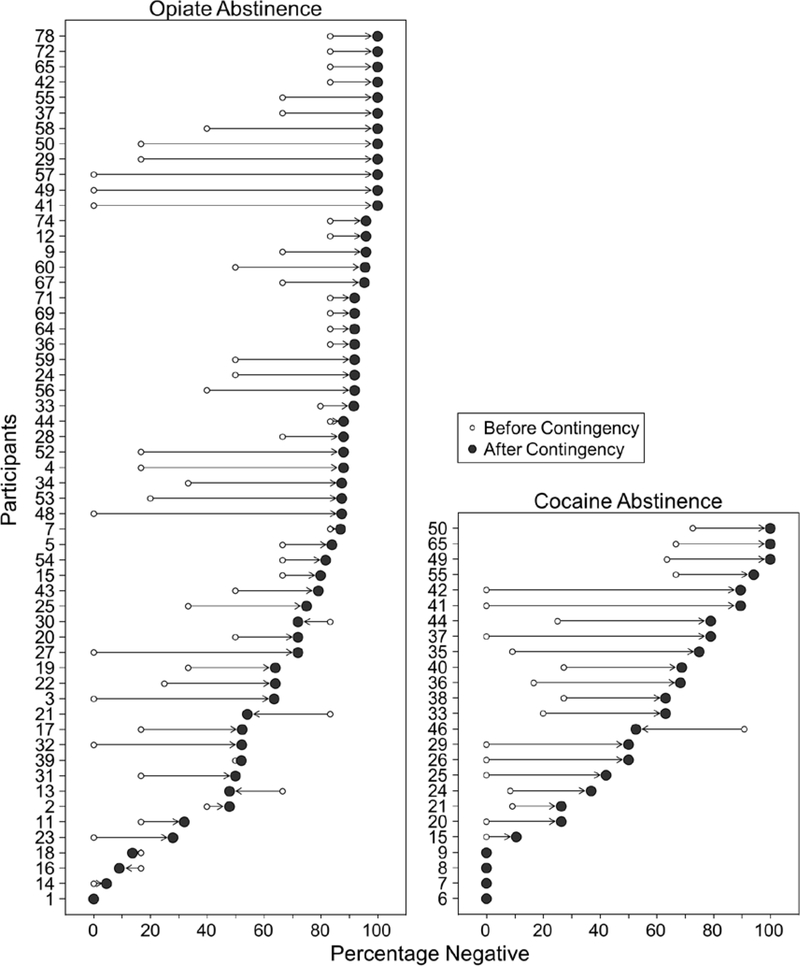
Polydrug use is a common problem among patients in opioid-substitution treatment. Polydrug use has been reduced by administering abstinence-reinforcement contingencies in a sequence, such that a single drug is targeted until abstinence is achieved, and then an additional drug is targeted. The present study examined effects of administering abstinence-reinforcement contingencies sequentially based on time rather than on achieved abstinence. Participants accessed paid work (about $10/hr maximum) in the Therapeutic Workplace by providing urine samples 3 times per week. The urine samples were tested for opiates and cocaine. During an induction period, participants earned maximum pay independent of drug abstinence. Then, maximum pay depended upon urine samples that were negative for opiates. Two weeks later, maximum pay depended upon urine samples that were negative for both opiates and cocaine. Opiate and cocaine abstinence increased following administration of the respective contingencies. The time-based administration of abstinence reinforcement increased opiate and cocaine abstinence.
Keywords: abstinence reinforcement; contingency management; drug addiction; incentives; therapeutic workplace.
© 2020 Society for the Experimental Analysis of Behavior.
Figures
References
-
- Aklin WM, Wong CJ, Hampton J, Svikis DS, Stitzer ML, Bigelow GE, & Silverman K (2014). A therapeutic workplace for the long-term treatment of drug addiction and unemployment: Eight-year outcomes of a social business intervention. Journal of Substance Abuse Treatment, 47, 329–338. 10.1016/j.jsat.2014.06.013 - DOI - PMC - PubMed
-
- Bigelow GE & Silverman K (1999). Theoretical and empirical foundations of contingency management treatments for drug abuse In Higgins ST and Silverman K (Eds.), Motivating Behavior Change Among Illicit-Drug Abusers (pp. 3–31). Washington DC: American Psychological Association; 10.1037/10321-001 - DOI
-
- Bigelow GE, Stitzer ML, Griffiths RR, & Liebson IA (1981). Contingency management approaches to drug self-administration and drug abuse: Efficacy and limitations. Addictive Behaviors, 6, 241–252. https://doi.org/0306-4603(81)90022-8 - PubMed
-
- Center for Behavioral Health Statistics and Quality. (2018). 2017 National Survey on Drug Use and Health: Detailed Tables. Substance Abuse and Mental Health Services Administration, Rockville, MD: Retrieved from https://www.samhsa.gov/data/sites/default/files/cbhsq-reports/NSDUHDetai...
Publication types
MeSH terms
Substances
Grants and funding
LinkOut - more resources
Full Text Sources
Medical
